The story of the kukri Nepal produces is one of constant adaptation. While the traditional blades of the 19th century were designed for the jungles of Southeast Asia, the modern era demanded a different kind of evolution. Enter the Afghan kukri knife, a specialized variant that gained legendary status during the recent deployments of the British Gurkhas in the rugged terrain of Afghanistan.
This isn’t just a relic of the past; it is a modern tactical powerhouse designed for the 21st-century warrior.
The Evolution: From the Himalayas to the Hindu Kush
The Afghan kukri (often referred to by soldiers as the “Operation Enduring Freedom” model) was born out of necessity. Modern warfare in arid, rocky environments required a blade that was more compact and durable than the longer, traditional Gurka knife.
During missions in the Helmand Province, Gurkhas needed a tool that could fit comfortably on a MOLLE vest alongside high-tech gear while remaining ready for the close-quarters combat for which they are world-famous.
Design Characteristics: Built for the Shadows
What separates an Afghan-spec kukiri knife from a standard village model? It’s all in the tactical refinements:
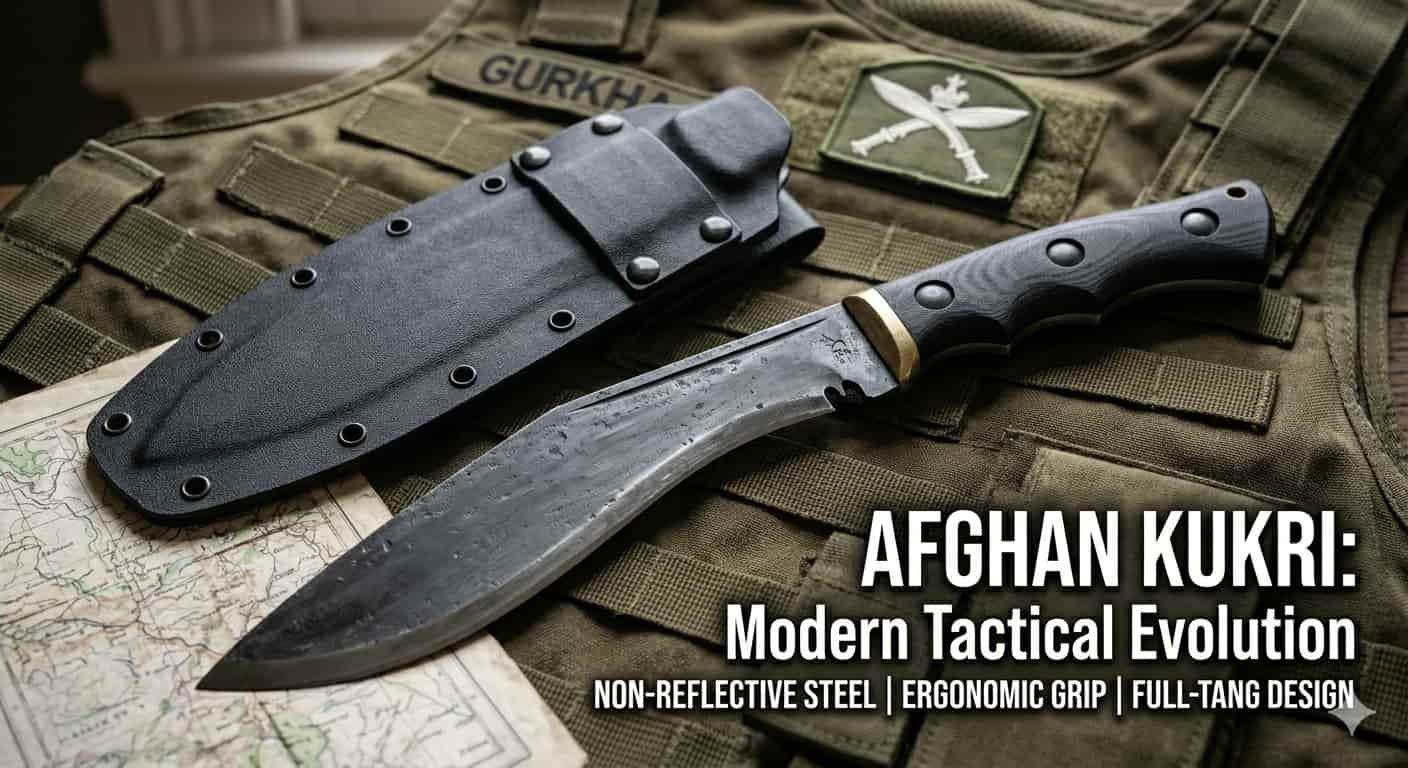
- Non-Reflective Finish: Unlike the polished blades of ceremony, the Afghan version often features a “raw” or “blackened” forged finish. This prevents sun glints from giving away a soldier’s position.
- Tactical Grips: These knives typically feature a “Panawal” (full-tang) handle with ergonomic finger grooves, ensuring the knife stays in the hand even when wet, bloody, or covered in dust.
- Compact Power: The blade is usually slightly shorter (approx. 10 to 11 inches) and thicker, providing a more robust “chunk” of steel for prying and heavy breaching tasks.
Why It’s a Favorite for Modern Tactical Gear
In the world of tactical equipment, weight and space are premium “real estate.” The Afghan kukri is prized because it offers the chopping power of a large bowie knife with the portability of a standard combat dagger.
Modern collectors and military contractors favor this model because it balances perfectly at the bolster. This allows for rapid “draw and strike” movements, making it a formidable defensive tool in environments where a primary firearm may not be accessible.
How to Spot a Real Nepalese Afghan Kukri Knife
Because of its popularity, the market is flooded with cheap “Pakistan-made” or factory-stamped knock-offs. To ensure you are getting an authentic Afghan kukri forged in the shadows of the Himalayas, look for these markers:
- The Notch (Cho/Kaudi): An authentic kukri Nepal export will have a cleanly hand-carved “cow hoof” notch near the handle, used to redirect blood away from the grip.
- Forging Marks: Look for slight irregularities. A perfectly smooth, mirror-finish blade without any hammer marks is often a sign of a mass-produced “wall hanger.”
- Balance: A real Gurka knife should be able to stand on its edge on a flat surface, perfectly balanced, without tipping over.
Conclusion
The Afghan variant is the bridge between ancient tradition and modern combat. Whether you are an active-duty professional or a collector of military history, this blade represents the peak of tactical evolution.
Do you prefer the classic polished look of the traditional Kukri, or the rugged, blackened finish of the modern Afghan tactical models?