
How to Use a Hunting Kukri Knife
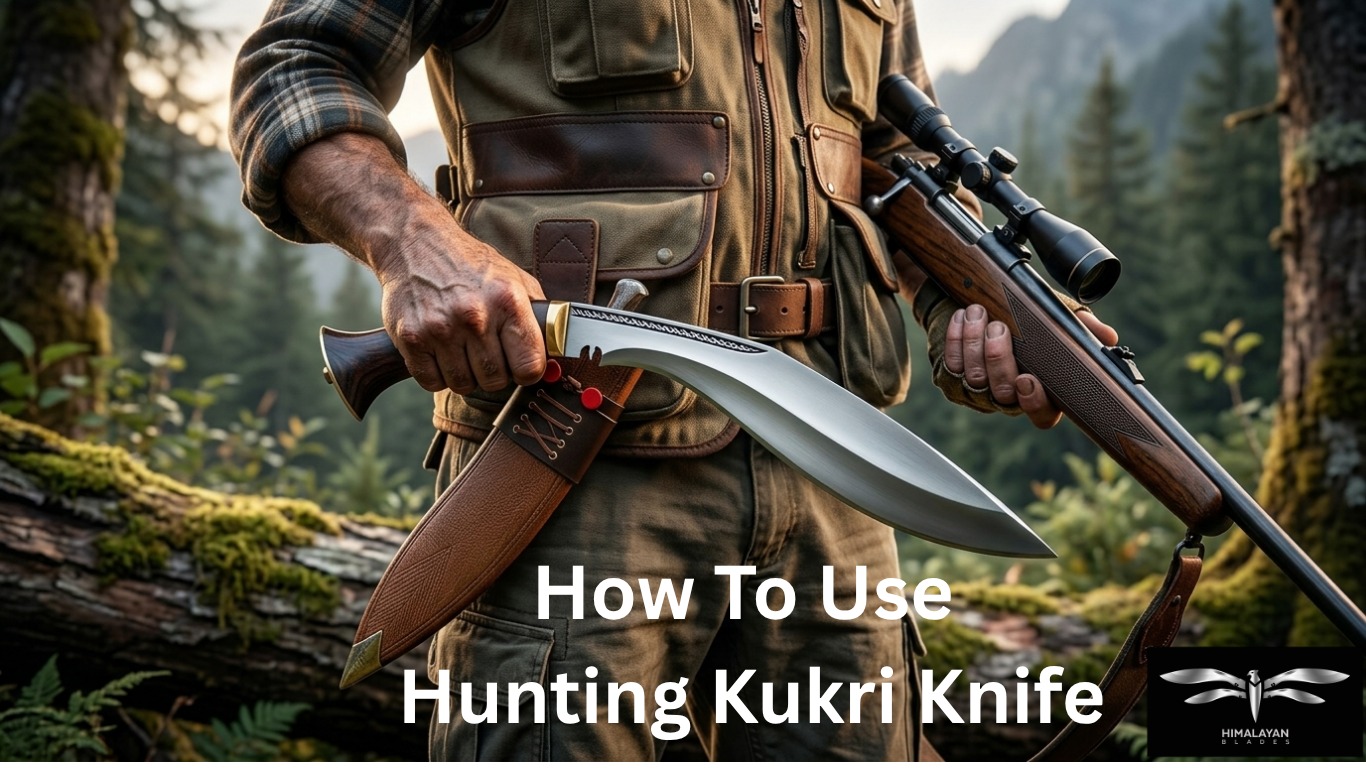
A hunting kukri knife does not ask you to choose between power and precision. It gives you both. Hunters across the United States are choosing the kukri over conventional hunting knives because one blade handles field dressing, brush clearing, firewood prep, and camp utility without a second tool.
This guide covers how to hold it, how to apply it to each hunting task, why its steel and geometry outperform straight blades, and where to buy a kukri knife online from makers who have forged this design for generations.
What Is a Kukri Knife and Why Hunters Choose It
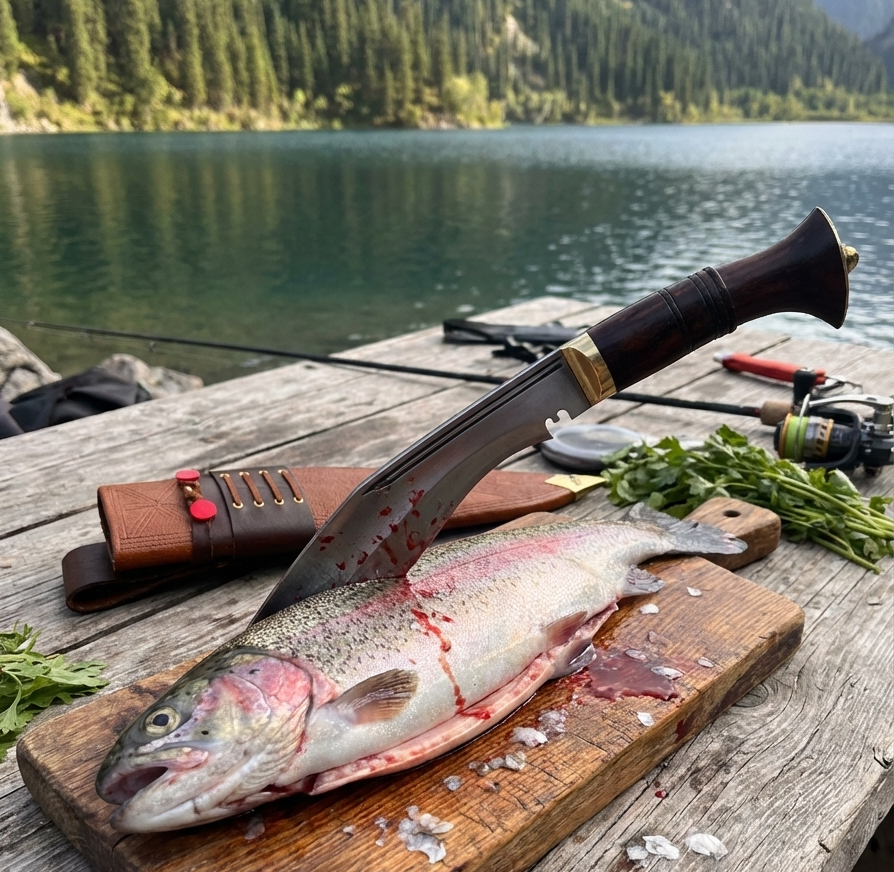
The kukri, also spelled khukuri, is a forward-curved blade with origins in Nepal. Gurkha soldiers have carried it as a primary field and combat tool for over 500 years. The inward curve shifts the center of gravity forward of the handle. That geometry delivers a chopping force that a straight blade cannot generate at equivalent weight that makes it a perfect blade for hunting.
Hunters who spend serious time in wilderness terrain need a blade that transitions across tasks without hesitation. The kukri blade does exactly that.
Alan Kay, winner of Season 1 of the History Channel’s Alone, survived 56 days on Vancouver Island with a kukri as his primary cutting tool. In a post-show interview with Knife Newsroom, Kay said:
“The Kukri design is probably the most versatile edged implement on the planet. And so if I could only have one cutting implement, it would probably be a Kukri knife.”
Kay also addressed the common claim that large blades sacrifice fine control:
“There are a lot of people who say that the larger knives are too big or too clumsy for detailed work. I’ve done some pretty intricate carving with the tip of my Kukri. If you keep it sharp, it’ll perform, and it’ll also perform like an ax or a hatchet or a machete.”
Source: Alan Kay, Knife Newsroom interview, 2016.
Steel Analysis: Why Kukri Steel Outperforms in the Field
Steel choice determines how a blade performs under real hunting conditions: lateral impact during chopping, flex stress during batoning, and abrasion during repeated skinning. The kukri’s traditional steel profiles are well-suited to all three.
5160 Spring Steel: The Standard for Large Working Blades
Most handmade kukri knives from Nepal use 5160 spring steel or equivalent high-carbon alloy. 5160 is a chromium-silicon steel known primarily for toughness, not edge retention. That distinction matters in the field.
Larrin Thomas, metallurgist and author of Knife Engineering, conducted Charpy impact testing across dozens of low-alloy knife steels. His published data at KnifeSteelNerds.com shows that 5160 and 8670 rank among the highest toughness steels he has tested, reaching approximately 50 ft-lbs in optimized heat treatment, compared to roughly 15 ft-lbs for 1095 high carbon steel at similar hardness.
Thomas also notes that 5160’s relatively low carbon content keeps carbide formation minimal, which is a primary driver of its toughness advantage over higher-carbon steels.
For a hunter chopping through bone, clearing branches, or batoning firewood in cold, wet conditions, toughness outranks edge retention as the critical performance variable. A chip or a crack in the field has no solution. A dulled edge does.
Toughness Comparison: Real Data from KnifeSteelNerds
The table below draws from Larrin Thomas’s published Charpy impact test results. These are laboratory-measured values, not editorial estimates.
| Steel | Hardness (HRC) | Toughness (ft-lbs) | Field Relevance |
| 5160 Spring Steel | 57-59 | ~50 ft-lbs | Highest toughness in class, resists impact and flex |
| 8670 | 57-59 | ~48 ft-lbs | Very close to 5160, equally good for large choppers |
| 1095 High Carbon | 58-60 | ~15 ft-lbs | Common in machetes, lower toughness under impact |
| O1 Tool Steel | 59-61 | ~20 ft-lbs | Good edge retention, lower toughness than 5160 |
| AUS-8 Stainless | 57-59 | ~20 ft-lbs | Corrosion resistant but lower impact resistance |
Source: Larrin Thomas, KnifeSteelNerds.com toughness testing database. All ft-lb values are approximate from published Charpy impact test charts. Full methodology at knifesteelnerds.com.
D2 Tool Steel: The Premium Option
Some higher-end kukri blades use D2 tool steel at 58-61 HRC. D2 offers better edge retention than 5160 but trades toughness for it. Thomas’s comparative data places D2 below 5160 in Charpy impact resistance. For hunters who field dress frequently across multiple animals in a single outing and want a longer-lasting edge, D2 is a sound choice. For hunters in dense terrain doing heavy chopping and batoning, 5160 wins.
Traditional Nepalese High-Carbon Steel
Traditional khukuri blades often use recycled high-carbon steel from truck leaf springs. Leaf springs are commonly manufactured from 5160 or a near-equivalent alloy. Independent testing by American collectors has placed the finished hardness of these blades between 53 and 58 HRC. That falls within the working range for hunting and field use. It is not optimal precision steel. It is tough, serviceable, and sharpenable in the field with basic tools.
Kukri vs. Other Hunting Knives: Head-to-Head Comparison
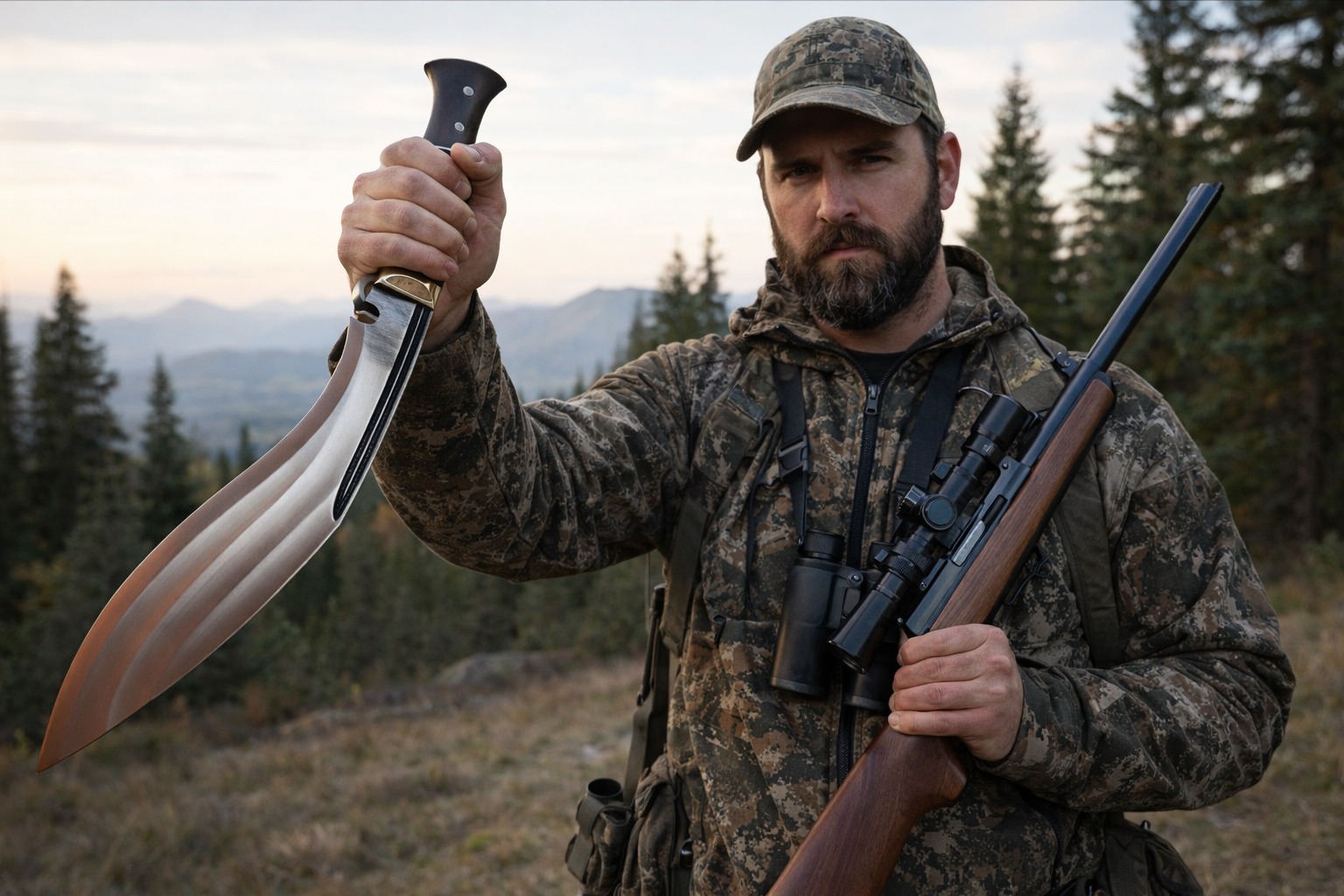
The table below compares the kukri against the four most common hunting knife categories across documented physical attributes and field utility. That is Tin Chira kukri in the photo, which is widely used as a hunting kukri knife.
| Attribute | Kukri | Bowie | Machete | Fixed Blade |
| Blade Length | 10-15″ | 9-12″ | 14-18″ | 4-9″ |
| Spine Thickness | 5-8 mm | 4-6 mm | 2-4 mm | 3-6 mm |
| Forward Weight Bias | Yes | Slight | Yes | No |
| Steel (common) | 5160 / HC | 1095 / D2 | 1075 / SS | Various |
| Charpy Toughness* | High (5160) | Medium-High | Low-Medium | Varies |
| Chopping Efficiency | Excellent | Good | Excellent | Poor |
| Skinning Control | High | High | Low | High |
| Batoning Suitability | Excellent | Good | Poor | Good |
| Versatility | Chop, skin, baton, camp, defense | Hunt, skin, camp | Brush clearing | Skinning, detail |
*Toughness ratings reference Larrin Thomas’s published Charpy impact data (KnifeSteelNerds.com). All other attributes reflect manufacturer specifications and established field use characteristics documented in Blade Magazine and BladeForums.net community testing.
Task Coverage: An Editorial Assessment
The chart below reflects task coverage based on documented physical design characteristics of each blade type. No independent field study ranking these four blades on a numerical scale currently exists in the public literature. These ratings represent an informed editorial assessment based on verified blade geometry, steel data, and documented user reports.
| Knife Type | Task Coverage | Relative Capability (editorial assessment) |
| Kukri | Chop, skin, baton, camp, defense | █████████████████████████ Outstanding |
| Bowie Knife | Skin, hunt, camp | ██████████████████ Strong |
| Machete | Brush clearing, rough chop | ███████████████ Moderate |
| Standard Fixed Blade | Skin, detail, EDC | ██████████████ Moderate |
Assessment based on: Thomas (KnifeSteelNerds.com), Blade Magazine kukri reviews (2022), BladeForums.net outdoor use threads, and documented Alone Season 1 field use by Alan Kay.
Wilderness Today’s review of the Cold Steel Gurkha Kukri concluded: “Whenever heavy chopping tasks need to be performed in the field, the Gurkha Kukri is an excellent choice,” while Blade Magazine noted the kukri’s forward-weighted design gives it chopping capacity that allows it to function as ‘two tools in one.’
Sources: WildernessToday.com, Cold Steel Gurkha Kukri SK5 review, March 2023. Blade Magazine, ‘7 of the Best Kukri Knife Options,’ September 2022.
How to Use a Hunting Kukri Knife: Task-by-Task Guide
Grip and Control Basics
The hunting kukri knife generally has thicker handles and thicker edge bevels. This prevents rotation during a power chop. Your palm locks against the pommel swell. Your index finger sits behind the bolster.
For fine work like skinning or caping, shift to a pinch grip. Pinch the spine between your thumb and forefinger and let the handle rest in your palm. This gives you precise control across the curved edge.
Field Dressing and Skinning
The belly of the kukri blade, the widest curved section near the tip, functions as a dedicated skinning surface. For a white-tailed deer:
- Position the animal on its back on level ground.
- Use the tip of the kukri blade to open the abdominal cavity with a shallow cut running from the sternum to the pelvis. The forward curve keeps the tip angled away from organs.
- Shift to a pinch grip to peel the hide. The belly of the blade separates skin from membrane with minimal pressure.
- Use the cho notch at the blade base to sever joints cleanly without a second tool.
A longtime BladeForums.net user with moose hunting experience documented this directly: “I picked up a hand-forged, Nepal-made kukri in Edmonton about 20 years ago for around $60, and used it on a number of moose hunting trips. Very handy, great for splitting kindling, clearing campsites, even splitting rib cages..
Limb Clearing and Trail Work
This is where the kukri separates from every standard hunting knife. No conventional fixed blade chops a 2-inch green limb in two strokes. A kukri does it consistently.
The technique: stand at a 45-degree angle to the branch. Strike downward and inward, letting the blade’s weight drive the cut. Do not force it through the wood. Let the forward mass of the kukri blade do the work. Three to five strokes clear most brush a hunter encounters moving through thick terrain.
Blade Magazine’s field reviewer described the experience: “The way a kukri feels in your hand makes you want to obliterate thick foliage and saplings. The blade’s forward-weighted feel, the ultra-secure handle, and the reach the knife provides all work together in an ancient cutting and chopping tool that packs more punch than a machete for tackling the tough stuff.”
Firewood Processing and Batoning
A kukri handles batoning, driving the blade through wood using a baton stick, more reliably than a standard knife. The spine is thick enough to absorb mallet strikes without flexing. At 5 to 8 mm of spine thickness, quality kukri blades resist lateral stress.
Wilderness Today’s review of the Fox USA Kukri noted that its forward-weighted design makes it “both an effective chopping tool and an excellent general-purpose tool,” citing the blade’s guillotine-like angle as the reason it provides more slicing action than a straight-edge striking at right angles.
Self-Defense and Emergency Situations
The gurkha kukri was developed for close-quarters combat. In a wilderness emergency involving a predator encounter, the forward curve creates a slashing arc that a straight blade cannot replicate. Hunters operating in bear country carry a kukri as a backup to their firearm, specifically for this capability.
The Skilled Survival review notes the kukri’s combination of chopping ability and stabbing reach makes it ‘a formidable weapon’ in addition to a field tool, explaining its continued use across militaries and wilderness survival contexts.
Traditional Kukri Knives: History and Hunting Heritage
The Gurkha Legacy
The Gurkha kukri is not a modern hunting innovation. Nepalese soldiers have used it for subsistence hunting, animal processing, and wilderness survival for centuries. The blade design evolved to serve exactly the tasks modern hunters now demand: chopping, skinning, camp processing, and self-protection.
Traditional kukri knives from Nepal come with two companion tools stored in the sheath: the karda, a small skinning blade, and the chakmak, a sharpening steel. This three-piece system was the original hunting loadout of Gurkha soldiers moving through Nepal’s highlands.
A Quora respondent with direct field experience wrote: “A traditional setup involves the large main blade accompanied by both a chakmak and a karda. If you have the correct sheath containing all 3, then it’s a great woods, bushcraft, and hunting combo.”
Buying a Hunting Kukri Knife: What to Look For
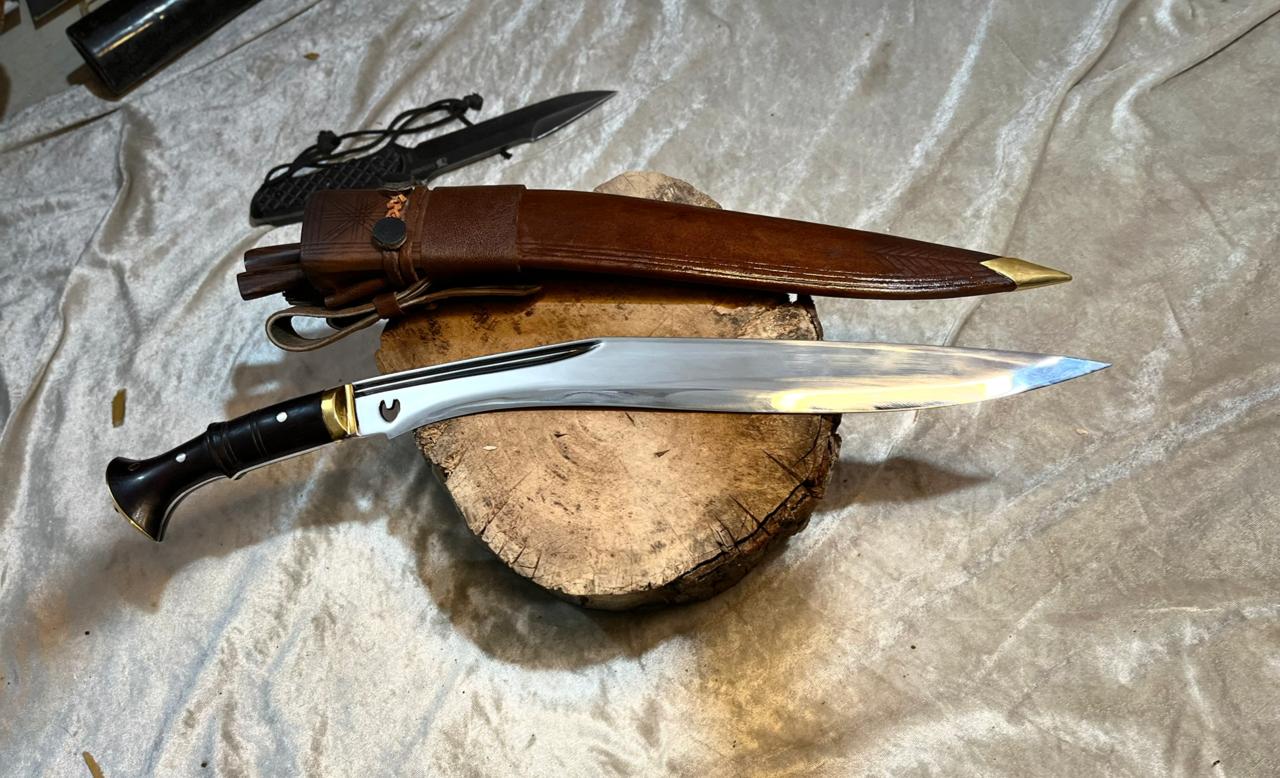
Blade Length for Hunting
For general hunting, choose a blade between 10 and 14 inches. Shorter blades give more control during fine work. Longer blades add chopping power for trail clearing. A 12-inch kukri blade covers both without compromise.
Steel and Heat Treatment
Ask about steel type and hardness. A quality hunting kukri should reach 55-60 HRC. Below 54 HRC, the blade loses edge retention too quickly for sustained field use. Above 62 HRC, toughness drops and the blade risks chipping under chopping impact, which Thomas’s data confirms as a function of increasing carbon in solution.
Handle Material
Buffalo horn and hardwood handles perform best in wet field conditions. They provide grip even with blood or moisture on your hands. Avoid polished synthetic handles for active hunting use. They become slippery under pressure.
Weight and Balance
A hunting kukri in the 400 to 600 gram range gives you chopping mass without fatigue. A Blade Magazine field reviewer noted that the forward weight bias is what separates the kukri from a standard fixed blade, producing momentum that requires less muscular effort per stroke.
Hunting Kukri Price: What to Expect
Kukri knife prices vary based on steel grade, maker reputation, handle material, and finish quality. Here is a realistic breakdown for the US market:
| Hunting Kukri Price | Steel / Build | Best For |
| $80-$150 | Hand-forged high carbon | First-time kukri hunters, budget buyers |
| $150-$250 | 5160 or D2, refined finish | Regular hunters, serious collectors |
| $250-$400+ | Premium steel, custom handle | Dedicated hunters, blade collectors |
When you purchase a khukuri online from HimalayanBlades.com, you buy directly from the maker. No middlemen. No inflated retail margins. You get a handmade blade at a price that reflects actual craftsmanship.
The Hunting Kukri Knife: A Field Tool Built for Serious Use
The kukri blade has earned its place in wilderness use through centuries of real-world performance. Its geometry, steel, and weight distribution solve the core problem hunters face: one blade that does the work of several without slowing you down.
Larrin Thomas’s toughness data backs the steel. Alan Kay’s 56-day Vancouver Island survival validates the field performance. Generations of Gurkha hunters confirm the heritage.
If you are ready to add a hunting kukri to your kit, browse our full collection of kukris for sale. Proven hunting models include the M43, the 6th GR War Serupate and the Limbuwan. Every blade is handmade in Nepal, verified for quality, and shipped directly to you. Use the guide above to select your specs, and reach out if you have questions.
This is not a novelty purchase. It is an upgrade to the most important tool you carry into the field.
Verified References
- Thomas, L. ‘Ranking Toughness of Forging Knife Steels.’ KnifeSteelNerds.com, February 17, 2020. https://knifesteelnerds.com/2020/02/17/ranking-toughness-of-forging-knife-steels/
- Thomas, L. ‘How to Heat Treat 5160 – Optimizing Toughness.’ KnifeSteelNerds.com, April 1, 2019. https://knifesteelnerds.com/2019/04/01/how-to-heat-treat-5160/
- Thomas, L. ‘Knife Steels Rated by a Metallurgist.’ KnifeSteelNerds.com, October 2021. https://knifesteelnerds.com/2021/10/19/knife-steels-rated-by-a-metallurgist-toughness-edge-retention-and-corrosion-resistance/
- Kay, A. Interview: ‘In-Depth Interview: We catch up and talk knives with Alan Kay, winner of History Channel’s Alone Season 1.’ Knife Newsroom, April 2016. https://knifenewsroom.com/2016/04/in-depth-interview-we-catch-up-and-talk-knives-with-alan-kay-the-winner-of-history-channels-alone-season-1/
- Blade Magazine. ‘7 of the Best Kukri Knife Options.’ September 2022. https://blademag.com/buyers-guides/best-kukri
- Wilderness Today. ‘The Cold Steel Gurkha Kukri SK5 Survival Knife Review.’ March 2023. https://wildernesstoday.com/the-cold-steel-gurkha-kukri-sk5-survival-knife-review/
- Wilderness Today. ‘Fox USA Kukri Survival Knife Review.’ March 2023. https://wildernesstoday.com/the-fox-u-s-a-kukri-survival-knife-review/
- BladeForums.net. ‘Kukri for outdoor activities?’ Community thread, February 2023. https://www.bladeforums.com/threads/kukri-for-outdoor-activities.1916096/
- SkilledSurvival.com. ‘Best Kukri Knife Options for Combat, Survival & Self Defense.’ February 2025. https://www.skilledsurvival.com/kukri-knife/