Himalayan Imports: The End of an Era and Where to Find Real Kukris
Himalayan Imports was never just a name — it was a way of life built on tradition, master craftsmanship, and legacy. In the late 1980s, Bill Martino and his team forged a bridge between Nepal’s traditional kamis (blacksmiths) and a worldwide community of collectors, survivalists, and martial artists.
They didn’t just sell blades; they shared a heritage, one kukri at a time.
For 36 years, Himalayan Imports stood as a symbol of authenticity — a connection between the mountains of Nepal and the hands of those who valued true craftsmanship. But in December 2024, the legendary brand closed its doors, marking the end of an era.
Their final post on BladeForums announced the closure with grace — a farewell that honored the past and inspired a new generation to carry forward the art of genuine kukri making.
The Beginning of Himalayan Imports (1988–1990s): A Bridge Between Worlds
In 1988, a man lovingly referred to as “Uncle Bill” — born Bill Martino — founded Himalayan Imports. His goal was simple yet audacious: to make real, handmade Nepali kukris available to the world, particularly the United States, at a time when few outside South Asia had ever seen a genuine wood-handled khukuri.
Bill partnered with the master kamis of Nepal — traditional blacksmiths whose families have been forging weapons for generations since the time of the Gorkha Kingdom. These craftsmen didn’t merely make knives; they made living symbols of Nepalese heritage and infused strength, loyalty, and spirit into every blade.
Each kukri was hand-forged from 5160 spring steel — the same durable steel used in truck leaf springs. Craftsmen shaped handles of buffalo horn, rosewood, or bone, adding elegance and toughness. Every blade carried the soul of its creator — a personal imprint of hours spent at the forge.
As the mid-90s arrived, Himalayan Imports had become a household name among collectors and survivalists in America. The name became synonymous with authenticity, honesty, and quality — a standard kukri makers worldwide would soon emulate.
Why Himalayan Imports Became Legendary Among Kukri Enthusiasts

There was something intimate about sharing your life with an HI kukri. It wasn’t a factory product; it was a living piece of Nepalese culture. Moreover, the brand had its cult-like following because it stood firm on the three things every real blade enthusiast expects — tradition, performance, and integrity.
Each kukri was:
- Properly heat-treated for a razor-sharp edge and incredible shock resistance.
- Weighted for real use, from splitting wood to defensive handling.
- Signed by a known kami — often Bura, Sher, or Lalit — giving each piece an identity.
In a rapidly industrializing world, Himalayan Imports stood as a kind of silent rebellion — proof that handmade steel still mattered. To many, their kukri was no mere purchase; it was an inheritance. Collectors often called it “a blade with a soul.”
The End of an Era: Himalayan Imports to Close by 2024
On December 31, 2024, it became official: no longer would there be anything known as Himalayan Imports other than the many knives and kukris already sold — those made under Uncle Bill’s legacy.
The following was the official statement posted on BladeForums:
“Dear Friends and Customers,
It is with a heavy heart that I must inform you that after 36 years, Himalayan Imports can no longer continue. We have closed the Online Store. Effective as of December 31st, 2024, Himalayan Imports will cease all operations as a business due to ongoing issues with multiple services, shipping issues, credit card fraud, and other logistics making it impossible to maintain such a business.It was my heart’s desire that Uncle Bill’s legacy be maintained for as long as I was able to do so. Unfortunately, time is not kind, and I am no longer able to maintain the business as I once did.
Please know that I wish this day had not come… It has been a pleasure to serve and interact with you. Without you, his dream and legacy would not have gone on all these years in his memory. For that, I am very grateful.
My sincere blessings and best wishes to all of you,
Yangdu Martino”
It was a goodbye that felt true to the brand — warm, genuine, and human. The closure wasn’t a failure; it simply showed that time had finally caught up with a small, traditional business that had managed something rare: surviving far longer than most artisan companies ever could.
The Legacy of Himalayan Imports Continues
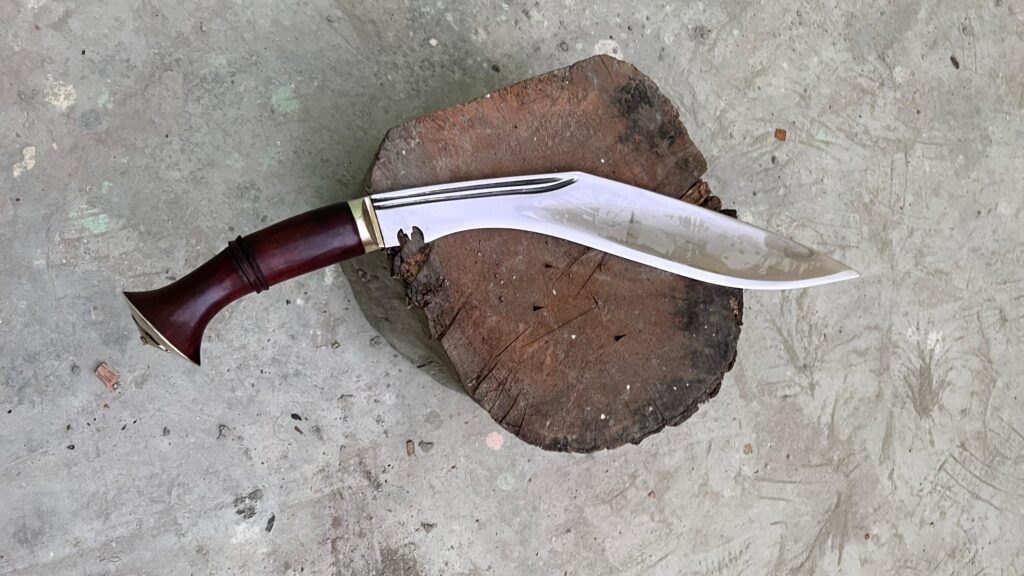
While the bellows may be silent, the legacy of Himalayan Imports lives on in the thousands of blades it brought into the world. Collectors throughout the United States still speak reverently of their pieces — not as relics, but as reminders of a time when work carried honesty, patience, and real craftsmanship.
In a world where few companies blended culture, community, and quality so seamlessly, Himalayan Imports did exactly that. It wasn’t merely selling knives; it was perpetuating a tradition that Nepalese people had relied on for generations.
Understanding the Kukri: A Weapon, a Tool, a Symbol

To see why Himalayan Imports mattered, you must first understand the kukri itself. The kukri — once spelled “khukuri” — stands as Nepal’s national blade and the signature weapon of the Gurkha soldiers. Its forward-curved edge channels power toward the tip, delivering devastating chopping force with minimal effort.
From the rugged hills of Gorkha to the fierce battlefields of World War II, the kukri carved its place in history. Soldiers and villagers alike used it to clear brush, prepare food, build shelters, and, when needed, defend their lives.
Even today, every Gurkha carries a kukri, keeping alive a legacy of courage, discipline, and protection. To survivalists and martial artists, the kukri remains the ultimate multitool — an axe, machete, and knife combined in one formidable form.
That’s why brands like Himalayan Imports earned such deep respect — they didn’t just forge a blade that looked like a kukri; they captured its spirit.
After Himalayan Imports: Where to Get Real Kukri Knife Analogues Today

Many kukri knife enthusiasts wondered where they would now find authentic and historical kukris. Fortunately, the tradition didn’t vanish — it evolved.
Today, that same spirit of Nepalese blade-making excellence lives on through Himalayan Blades, a respected modern alternative.
Himalayan Blades: Continuing the Legacy
Himalayan Blades, based in Nepal, works directly with traditional kamis — the same lineage of craftsmen whose ancestors forged blades for Gurkha warriors. Every kukri is hand-forged from 5160 high-carbon spring steel, just as Himalayan Imports once did.
There’s much to appreciate about Himalayan Blades and its blend of tradition and modern precision:
- Time-honed forging techniques deliver critically sharp blades that are ready for real work.
- Rosewood, micarta, and buffalo horn handles offer excellent grip and control.
- Solid metal fusion across most models ensures balance and strength.
- A wide variety of military kukri machetes, utility blades, karambits, and push daggers cater to outdoor and self-defense needs.
For American survivalists, martial artists, and collectors, Himalayan Blades has become a name associated with trust. It offers a chance to own a piece of living Nepali craftsmanship that can withstand modern use and still honor its roots.
Why Himalayan Imports and Himalayan Blades Are Two Sides of the Same Coin
The relationship between Himalayan Imports and Himalayan Blades is not competition but continuation. Both brands share key values:
- Respect for heritage and craftsmanship
- Honest portrayal of Nepal’s blacksmith culture
- Dedication to functional, handmade blades
Where Himalayan Imports first introduced the kukri to the world, Himalayan Blades now ensures it remains alive — forged for today’s generation, yet tempered in the same ancestral fire.
The Spirit of the Kukri Lives Through You
The kukri’s power doesn’t begin and end at the forge. Instead, it continues through those who wield it. With every swing, every cut, and every story shared, the tradition stays alive — carried forward by people who understand its meaning.
Whether you’re a historian preserving the past, a combat practitioner testing it in the wild, or an artist appreciating its balance and grace, you help keep the legacy alive.
Ultimately, we all belong to the same community that Himalayan Imports began serving in 1988. And though the forge at Himalayan Imports has cooled, the fire still burns — glowing in every real kukri handmade in the valleys of Nepal and carried proudly by those who know what it means to hold history itself.
Final Thoughts: Himalayan Imports Is Gone, but Its Spirit Still Cuts Deep

Himalayan Imports may have officially closed on December 31, 2024, but its effects remain everlasting. The company’s 36-year journey connected continents, cultures, and generations of craftsmen and collectors.
Now, the torch has passed to Himalayan Blades, with the same dedication to quality, authentic materials, and cultural fidelity — ensuring that the kukri, that immortal crescent of courage, remains as razor-sharp in purpose as it is in edge.
Disclaimer
Himalayan Blades is an independent, Nepal-registered kukri manufacturer. We are not affiliated with, endorsed by, or a continuation of Himalayan Imports (U.S.). All mentions of “Himalayan Imports” are for historical and informational purposes only.