The internet has made the world a smaller place, but it has also made it much easier for low-quality imitations to flood the market. For a collector or an outdoorsman, finding an original kukri knife for sale can feel like navigating a minefield of stainless steel “wall-hangers” and factory-stamped replicas labeled as “authentic.”
If you want a blade that carries the soul of the Himalayas and the strength to last a lifetime, you need to know exactly what to look for. Use this checklist before you buy khukri online.
1. The Forging Process: Hand-Hammered vs. Machine-Presse
The first thing to verify is how the steel was treated. A genuine kukri blade for sale is never stamped out of a sheet of metal in a factory.
- The Steel: Look for High-Carbon 5160 steel, typically sourced from recycled truck leaf springs. This steel is incredibly resilient and perfect for the heavy impact a kukri must endure.
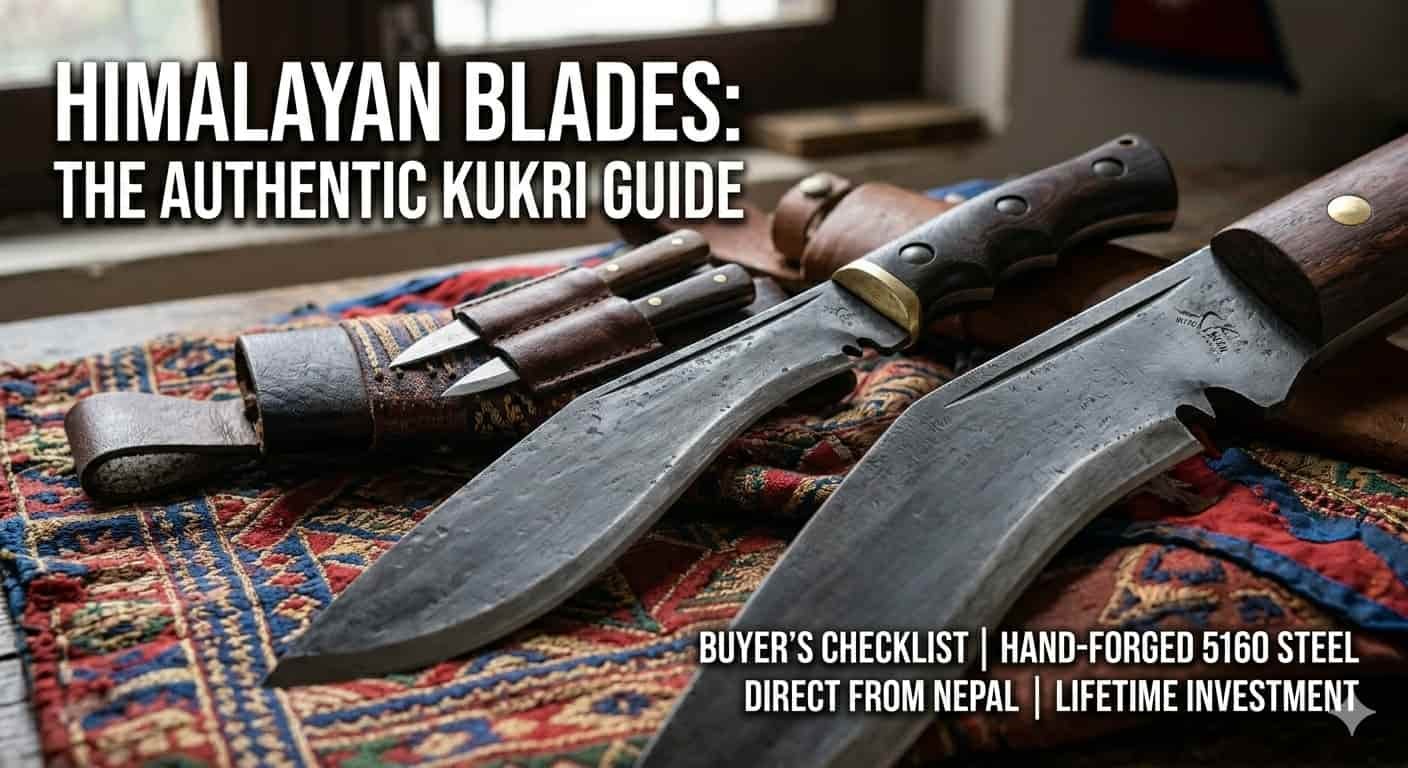
- The Hammer Marks: Real Himalayan blades are hand-forged. If you look closely at the unpolished sections of the blade, you should see subtle irregularities—the “fingerprints” of the blacksmith (Bishwakarma) who hammered it into shape.
- Differential Tempering: This is the “secret sauce.” An original blade is quenched with oil or water along the edge to make it hard, while the spine remains softer and flexible. This prevents the knife from snapping during heavy chopping.
2. The Source: Direct from the Heart of Nepal
Where is the knife actually coming from? Many “Kukri style” knives are made in China or Pakistan, but these lack the traditional geometry and heat treatment of a true Nepalese masterpiece.
To ensure authenticity, your source should have a direct link to the master smiths of Nepal, particularly from regions like Bhaktapur, Dharan, or Bhojpur. When you support Himalayan Blades, you aren’t just buying a tool; you are preserving a heritage craft that has been passed down through generations of Bishwakarmas.
3. Shipping, Customs, and Customization
Buying an original kukri knife for sale directly from the source often involves international logistics. Here is what a professional buyer’s experience should look like:
- Customization: Many authentic shops allow you to choose your handle material (Buffalo horn vs. Rosewood) or request a specific blade finish (matte tactical vs. mirror polish).
- Legal Compliance: Ensure the seller provides the necessary paperwork for customs. Genuine Nepalese exporters are well-versed in international shipping regulations to ensure your blade isn’t seized at the border.
- The “Extras”: A real service-grade kukri should always come with the Karda (small utility knife) and Chakmak (honing steel). If these are missing or made of plastic, it’s a red flag.
Conclusion: A Lifetime Investment
A handmade kukri is not a disposable tool. It is a functional piece of art that, with proper care, will be passed down to your children. While factory knives are cheaper, they cannot compete with the balance, durability, and “feel” of a hand-forged blade.
When you are ready to buy khukri online, don’t settle for a lookalike. Invest in a blade that was born in the fire and forged by hand.
Are you looking for a traditional ceremonial piece or a rugged tactical model for your next expedition?