
For over two centuries, the silhouette of a curved blade has struck fear into adversaries and commanded respect from historians. While the Kukri has many iterations, the MK4 kukri stands as a pinnacle of military evolution—a transition from the raw, heavy tools of the world wars to a more refined, balanced, and terrifyingly efficient combat instrument.
Whether you are a historian, a survivalist, or a collector hunting for an original kukri knife for sale, understanding the MK4 is essential to appreciating the Gurkha legacy.
The Evolution of a Legend: A Brief Historyarmy kukri
The MK4 (Mark 4) appeared as the polished descendant of the bulky MK2 and the tough MK3 utilized across the World War periods. When the British Army and the Indian Gorkha Regiments officially adopted the MK4, the goal was straightforward: preserve the renowned cutting strength of the army kukri while enhancing ease of transport and comfortable grip for contemporary troops.
It’s more than just a knife; it’s an officially supplied “service No. 1” piece of equipment signifying the Gurkha soldier’s shift into the current tactical age.
The Anatomy of an Authentic MK4
To the untrained eye, all kukris look similar. To a collector, the MK4 has a specific DNA that separates it from “Kukri-shaped objects” found in gift shops.
1. The Steel (High-Carbon 5160)
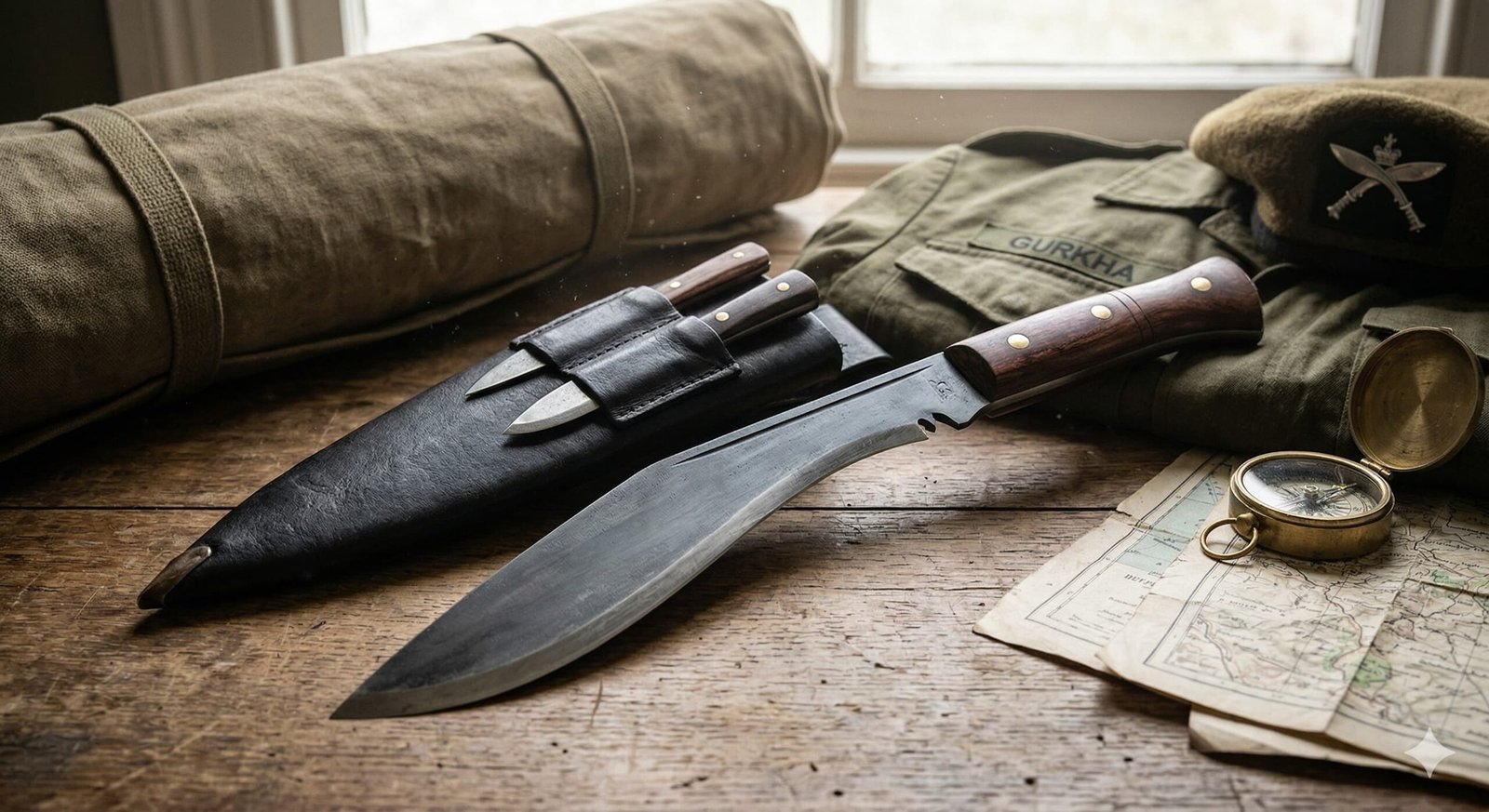
Authentic Gurkha military kukri knives are forged from 5160 high-carbon steel, often salvaged from truck leaf springs. This material is prized for its extreme toughness and ability to hold a “working edge” under duress.
2. Full-Tang Construction
Unlike many decorative versions, the MK4 features a full-tang (Panawal) design. The steel of the blade runs the entire length of the handle and is secured by heavy-duty rivets. This ensures the blade will never snap at the hilt, even when clearing dense jungle or splitting wood.
3. Weight and Balance
- Typical Blade Length: 10.5 to 12 inches.
- Weight: Approximately 600g to 750g.
- The “Sweet Spot”: The weight is forward-leaning, allowing gravity to do the work during a swing, a signature of the MK4 kukri.
Why Collectors Seek the “Service No. 1”
In the world of blade collecting, the term “Service No. 1” refers to the specific grade issued to recruits upon enlistment. There is a massive gulf between a tourist souvenir and an army-spec blade.
- Proof Marks: Authentic military-issued MK4s often carry inspection marks or dates near the bolster.
- The Scabbard (Dap): A true military issue comes in a wood-and-buffalo-hide scabbard, often accompanied by the Karda (small utility knife) and Chakmak (honing steel).
- Durability: A tourist blade is chrome-plated and brittle; an Army Kukri is heat-treated to withstand the rigors of active combat.
Performance in the Field: The Survivalist’s Edge
While the MK4 was born for the battlefield, it has become a staple for modern survivalists and bushcrafters. Its unique geometry allows it to function as three tools in one:
- The Draw-Knife: The curved inner “belly” is perfect for carving and shaving wood.
- The Axe: The weighted tip provides incredible chopping force for felling small trees.
- The Machete: Its length and sharpness make short work of vines and tall grass.
“The Kukri is the extension of the Gurkha’s arm. In the hands of a survivalist, it is the difference between struggling with the elements and mastering them.”
Finding an Original Kukri Knife for Sale
If you are looking to add an original kukri knife for sale to your collection, authenticity is everything. Look for reputable smiths (Bishwakarmas) in Nepal who still forge according to the 1948 and 1960s military specifications. Avoid stainless steel “wall hangers” and insist on hand-forged carbon steel with a traditional oil-quench temper.
The MK4 is more than a tool; it is a piece of living history. Whether you’re a collector or a woodsman, wielding an MK4 means carrying the spirit of the bravest soldiers the world has ever known.