
For centuries, the Kukri was known primarily as the devastating sidearm of the Gurkha soldier. However, in recent years, the outdoor community has rediscovered what the Nepalese have known for generations: the kukri Knife is perhaps the most versatile survival tool ever designed.
While a standard straight-back machete is fine for thin grass, it often fails when the going gets tough. That is where the kukri machete takes over, transforming a grueling day of clearing brush into a masterclass in efficiency.
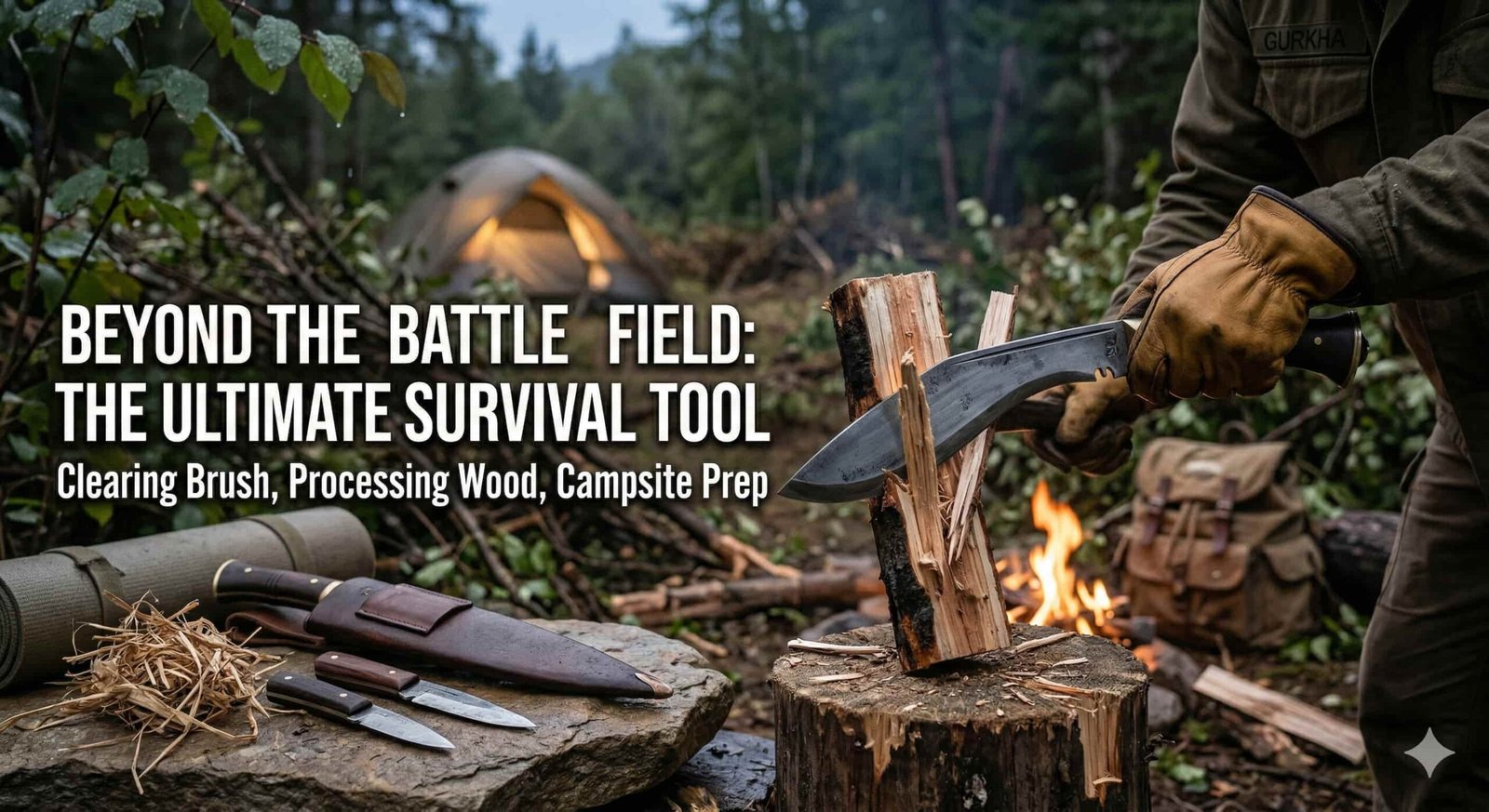
Kukri vs. Standard Machete: Why the Curve Wins
If you’ve ever used a traditional Latin-style machete, you know they can feel “whippy” and struggle with thick, woody vegetation. The khukuri solves this through superior physics.
- Forward-Leaning Weight: The weight of a kukri is concentrated toward the end of the blade. This creates a centrifugal force that acts like a hammer-stroke, allowing the knife to bite deep into wood with minimal effort.
- The Angle of Attack: Because the edge is curved, it creates a “slicing” motion even during a direct chop. This dual action makes it far more effective at clearing dense, fibrous vines than a flat blade.
- Versatile Zones: The area near the handle is perfect for fine carving, while the “belly” is for heavy chopping.
Top 3 Uses for the Outdoors
Whether you are deep in the backcountry or just prepping a backyard fire pit, a high-quality kukri knife earns its weight in your pack.
1. Wood Processing (The Axe Replacement)
A full-tang kukri can baton through logs and fell small trees just as well as a small hatchet. Its ability to split kindling makes it a one-tool solution for fire starting.
2. Clearing Brush and Trail Blazing
In overgrown terrain, the Kukri machete shines. Its balance allows you to swing it for longer periods without the wrist fatigue associated with heavier axes or poorly balanced long machetes.
3. Campsite Prep and Digging
The pointed tip and sturdy spine allow the kukri to be used for light digging (like a trench for a fire pit) or even as a draw-knife for smoothing out tent stakes and camp furniture.
Maintenance Tips: Keeping Your Blade Wild-Ready
Most of the best kukri knives for sale are made from high-carbon steel. While incredibly tough, this steel is prone to rust if neglected. Follow these three rules to keep your blade in top shape:
- Keep it Dry: After a day in the rain or humidity, wipe the blade completely dry.
- Oil is Your Friend: Apply a thin layer of mineral oil or gun oil to the steel before storing it in its leather scabbard.
- Sharpen the “Belly”: Focus your sharpening efforts on the widest part of the curve, as this is where the majority of the impact occurs.
Finding the Right Tool
If you are tired of flimsy hardware-store tools, it might be time to upgrade. When searching for the best kukri knife for sale, prioritize hand-forged carbon steel and a comfortable grip. A tool this powerful needs to feel like an extension of your arm, not just a weight in your hand.
Is the Kukri the ultimate survival tool, or do you still prefer a traditional axe and knife combo?