
Full Flat Tang Kukri details in depth
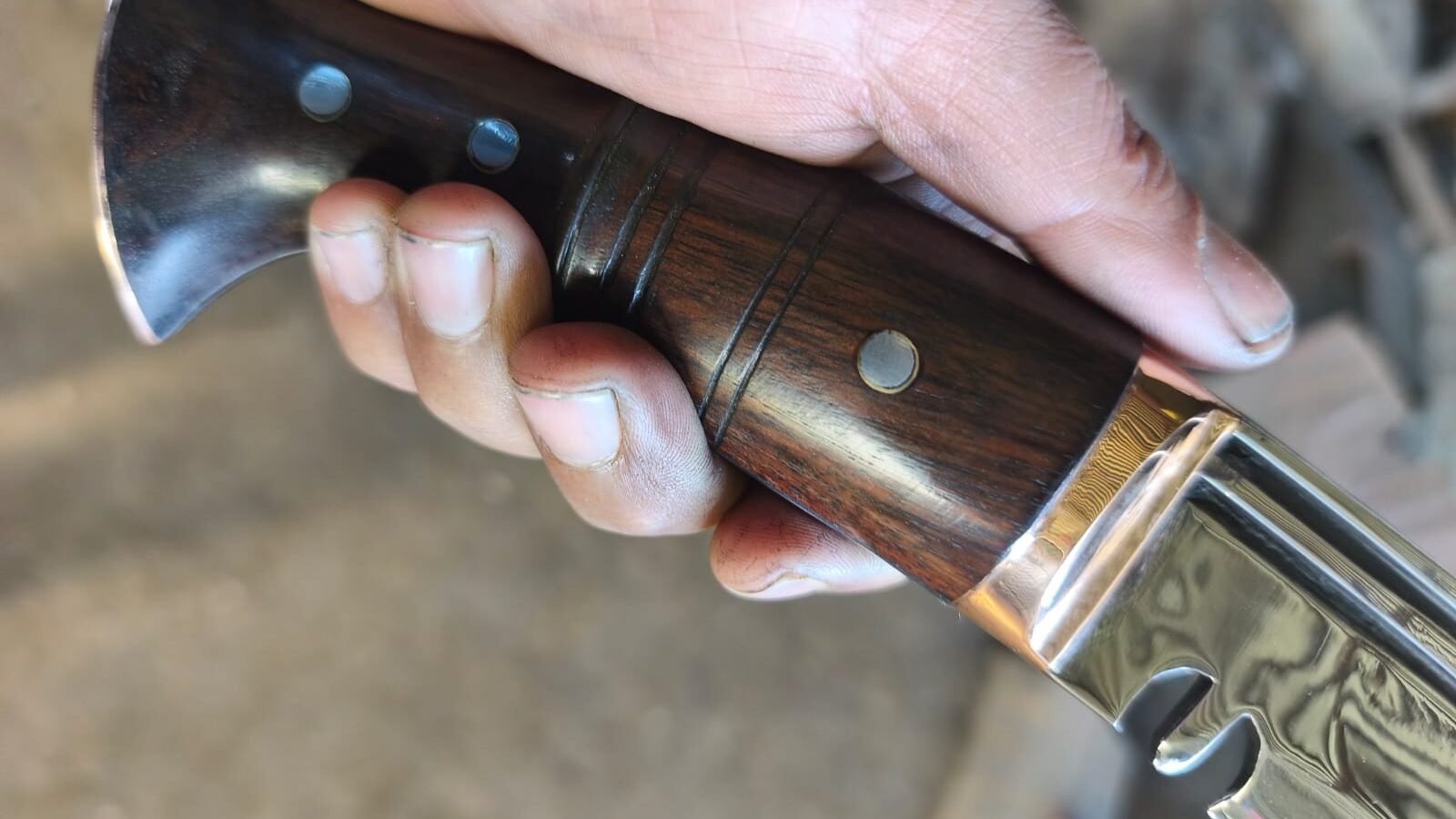
Full Flat Tang Kukri is not something that needs to be sugarcoated; it is not designed simply for looks. Instead, its purpose-driven construction exists to confront the harsh realities of abusive, real-world use. While the online world is full of ongoing tang debates, a kukri is not just a knife. Rather, it is a weighted impact tool built to absorb and deliver significant punishment. As a result, the tang becomes the most highly stressed component of the kukri.
Consequently, failing to understand why a tang is cut full and flat, and more importantly, when such a design becomes an absolute necessity, is the most reliable way to encounter tool breakdowns, safety risks, and a loss of confidence in the tool itself. This is particularly true for survival professionals, martial artists, self-defense practitioners, and knife users. Over more than twenty years of practice, I have gained access to direct and relevant insights into customer behavior and usage patterns, alongside extensive hands-on experience with tools grounded in real-world materials science rather than armchair theory. At the same time, I maintain an intentional U.S.-centric perspective, examining American purchasing habits, legal frameworks, and consumer expectations. For readers who wish to explore tang classifications and comparative design analysis in greater depth, these topics are addressed in an additional research paper. You can explore our production of kukri.
1. What Does a Full Tang Kukri Knife Mean?
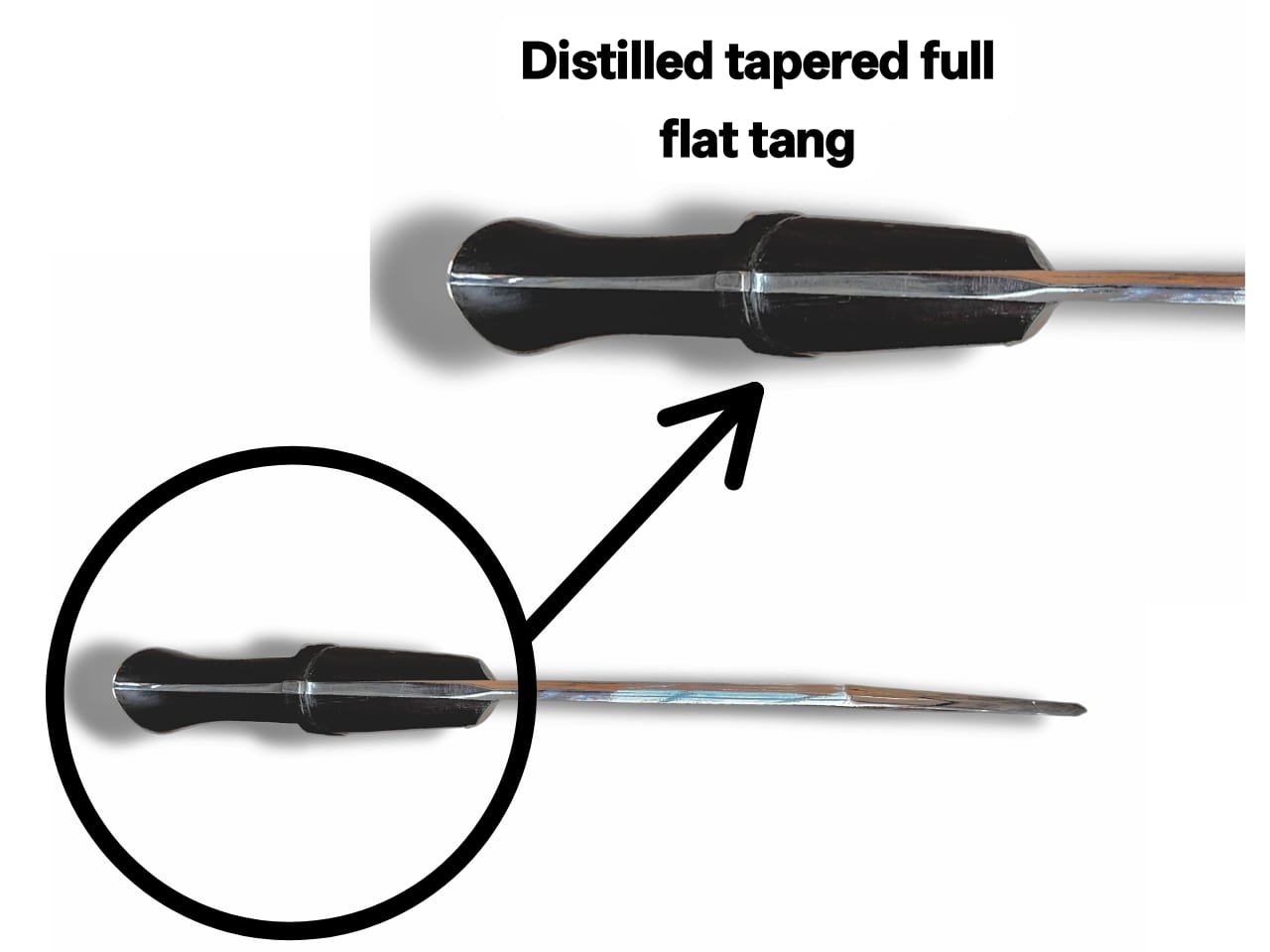
A full tang kukri has a tang that extends to the end of the handle so that some of the tang is actually visible. This design provides an extra layer of structural security and integrity between the blade and the handle.
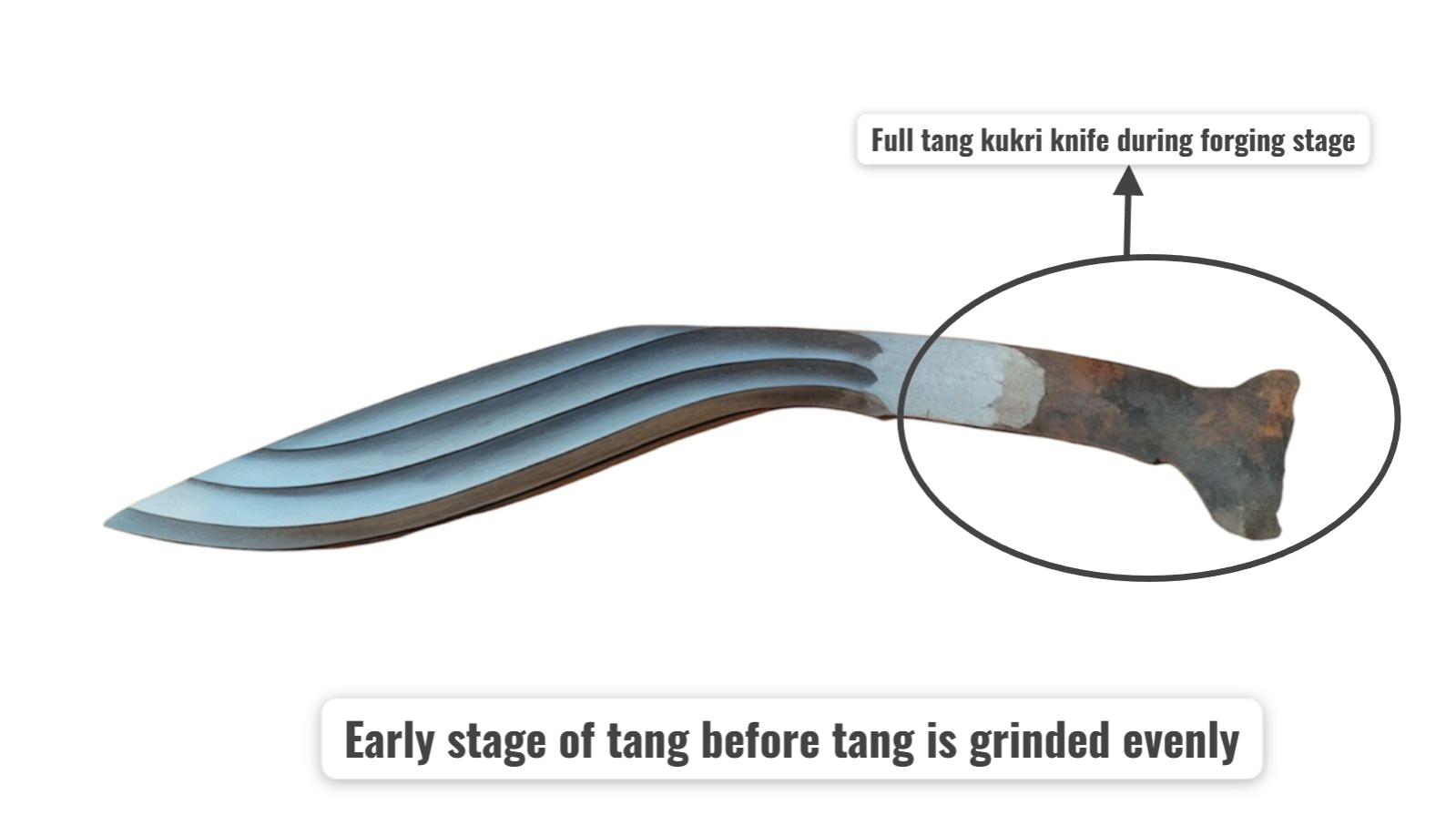
Here is what unequivocally defines a full flat tang kukri:
- First and foremost, the tang extends to the very end of the handle and also spans the full width of the handle, with no shortcuts taken in construction.
- Equally important, the width of the tang remains uniform from one end to the other; it does not narrow down into a thinner, rod-like form.
- In addition, the tang is positioned between two handle scales, which are generally composed of wood, horn, or Micarta.
- Finally, the handle is fastened together using either a two- or three-pin rivet system, ensuring mechanical security.
As a result, the full tang khukuri design increases overall strength and stability because it eliminates the need for adhesives to secure the handle. This is a critical design choice, since kukris are intended to deliver forceful impacts rather than function purely as slicing instruments.
Moreover, an average kukri blade will deliver more damage than a straight-edge knife. Over time, this repeated impact transfers cumulative stress into the tang of the blade, which is precisely why proper tang construction becomes essential.
2. Historical Context: Kukri Handle and Tang Evolution
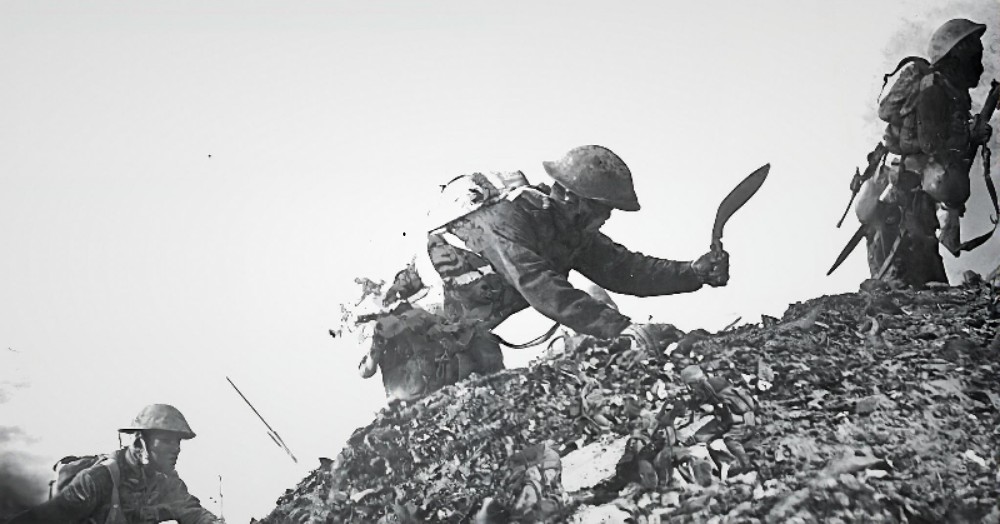
The kukri originates from a period long before modern blade making; nevertheless, it remains a well-thought-out design for its time. In that context, stick tangs were a purposeful design choice for village kukri makers, largely because repair shops were commonplace and handles were often treated as disposable components due to the limited availability and high cost of quality materials.
As time progressed, these khukris faced a very different set of challenges during the 19th to 20th centuries. During this period, they were increasingly tasked with sustained chopping, frequent contact with bone, and general battlefield woodworking, all of which placed far greater stress on the overall construction.
Consequently, once innovation in the steel industry led to the development of more durable blades, the weak link in khukuri construction shifted to the tang. Tang failure, therefore, became the primary risk factor in overall structural failure. In response, the MK2 khukuri emerged as the first model to be widely recognized for incorporating a complete, full flat tang construction. As a result, this model marked the industry’s first meaningful adoption of full flat tang construction. Importantly, these construction improvements were derived from battlefield lessons rather than from purely aesthetic considerations.
Ultimately, the modern full tang khukri does not reject tradition. Instead, it refines and strengthens it through modern construction methods. At the same time, it incorporates improved materials while blending them with centuries of accumulated construction wisdom.
3. Kukri Force and Stress Concentration
Kukris never chop like a chef’s knife because of the construction and overall design of the kukri. Instead, the forward curve, combined with the mass concentrated at the blade-to-handle transition, directs the force of the blade downward. As a result, this downward motion transfers shock into the tang, requiring it to absorb and manage repeated impact forces. At the same time, the construction of the tang dampens vibration and resists the twisting motion generated during chopping. Consequently, this explains the blade construction patterns commonly observed across the industry. In practice, most failures tend to occur before blade failures. Over time, thin tangs bend and flex under repeated stress, and therefore rivet placement becomes a true make-or-break engineering decision.
In this context, a proper tang construction creates the impression of a single, continuous piece of steel extending from the tip of the blade to the pommel. Accordingly, the MK4 khukuri serves as a prime example of a design that maintains one uninterrupted load path.
4. Kukri Tang Types: Structural Comparison
4.1 Full Flat Tang Kukri Fixed Blade Knife
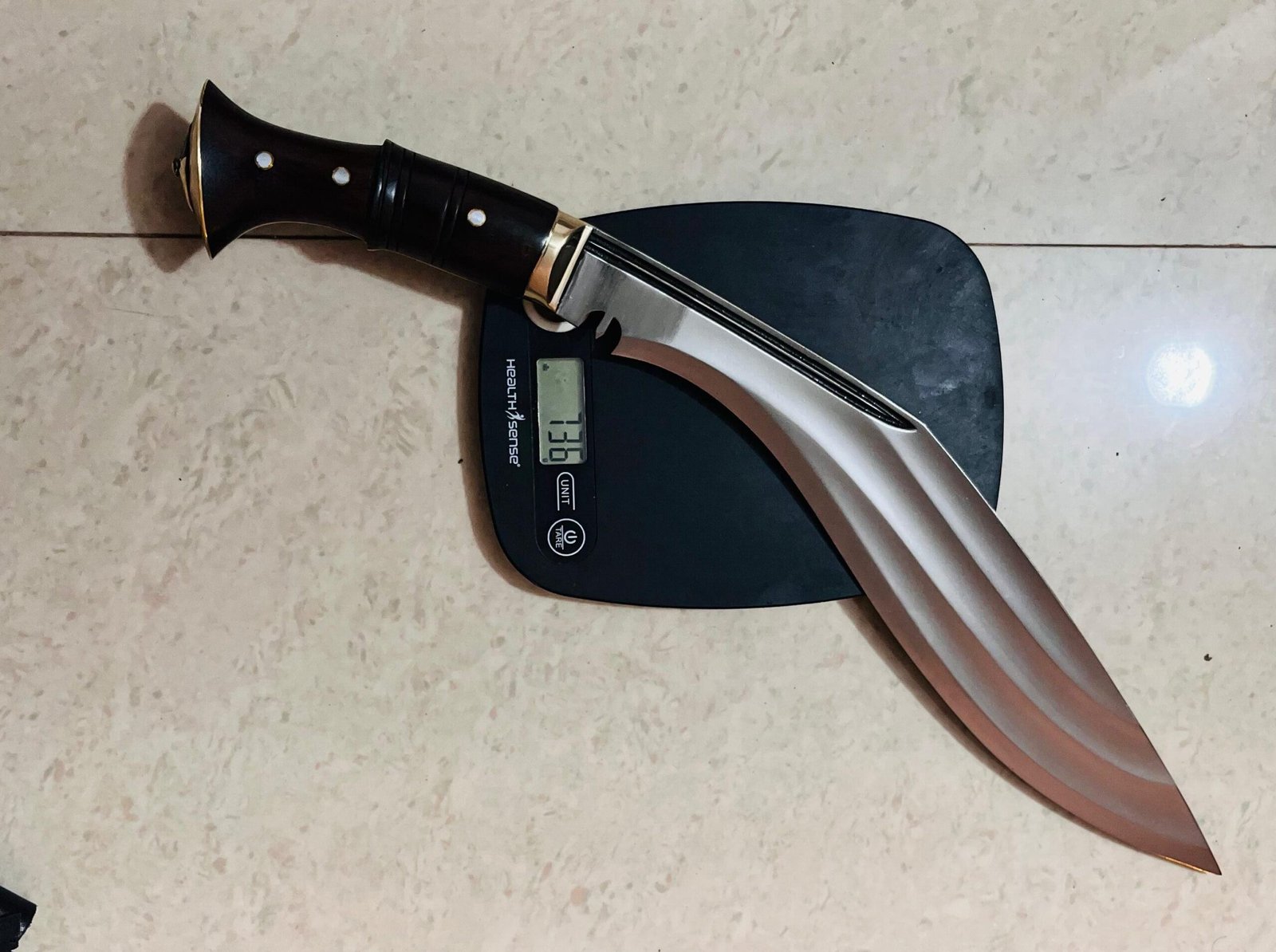
Advantages
- Delivers maximum structural integrity.
- Distributes shock efficiently across the entire system, further excelling in heavy chopping, batoning, and other intense survival work.
- Permits simple visual examination and prolonged upkeep.
Limitations
- Carries slightly more total weight.
- Needs more steel, increasing both material and production costs.
- Requires a high-level expert handle shaping to alleviate pressure hot spots.
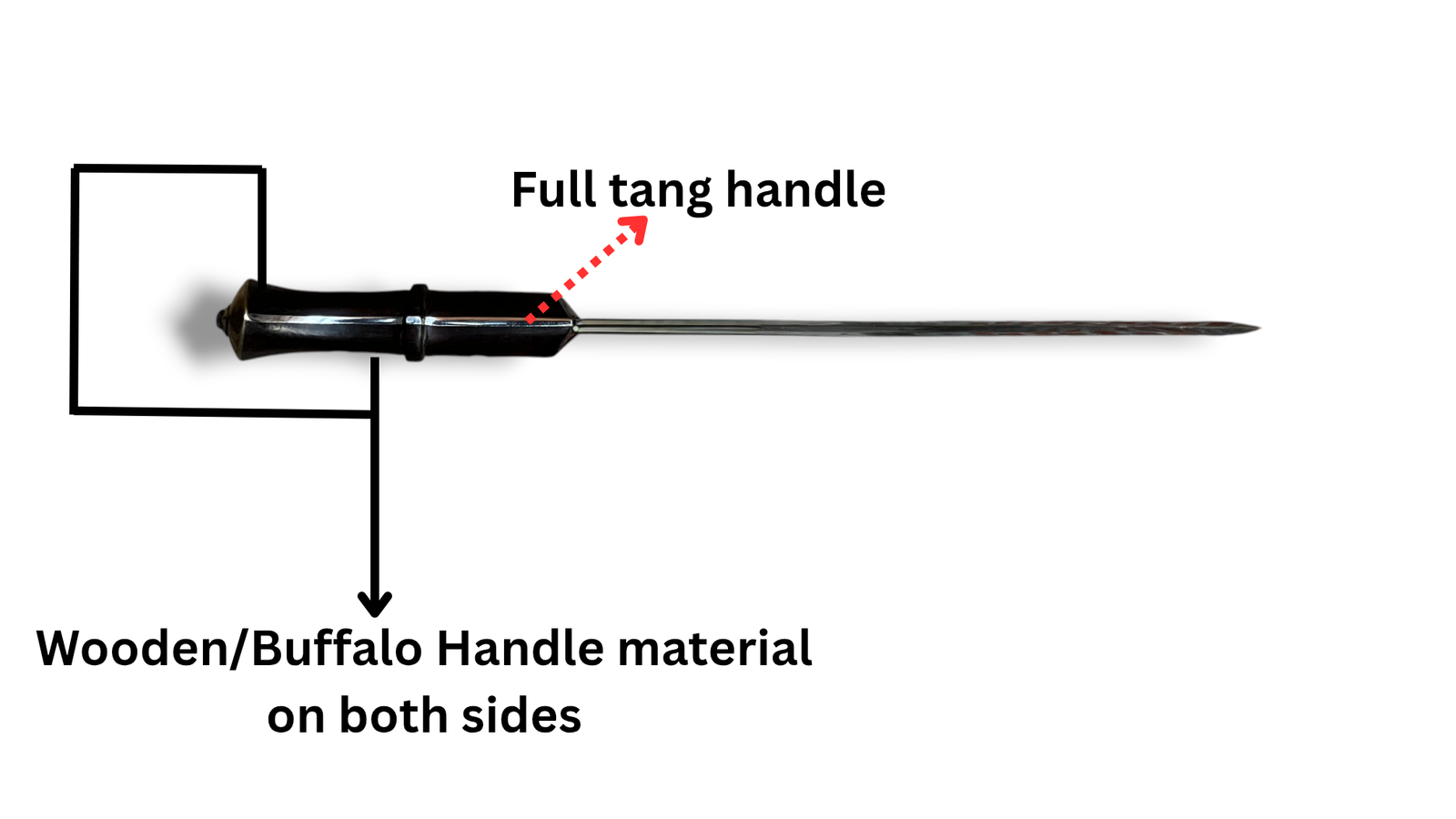
4.2 Stick / Rat Tail Tang Kukri Knife
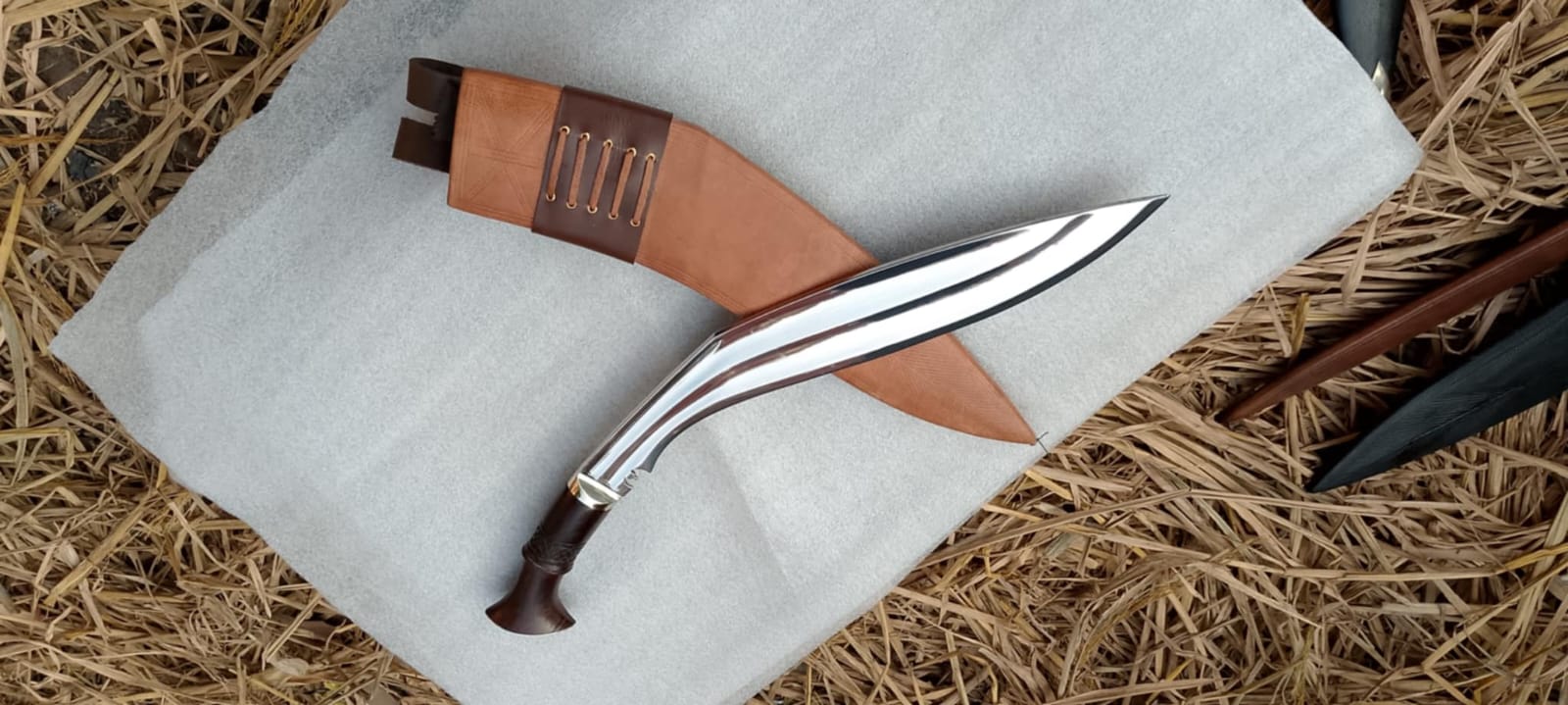
This design offers a narrower tang (rat tail or stick) that extends through the handle, which is typically secured with rivets and adhesive for a stronger hold.
Advantages
This design keeps the overall weight lower, which helps reduce fatigue during extended use. At the same time, it preserves the classic, traditional aesthetic that many users value in a kukri. As a result, it feels more comfortable and less demanding during lighter utility tasks and everyday work.
Limitations
As a result, stress concentrates sharply at welds or shoulders. Over time, handles loosen under repeated heavy impact, and consequently, the design becomes less effective during sustained chopping work.
When function truly outweighs form, and safety can’t be compromised, the full flat tang remains the superior engineering choice.
5. Rivets, Pins, and the Phenomenon of Mechanical Locking
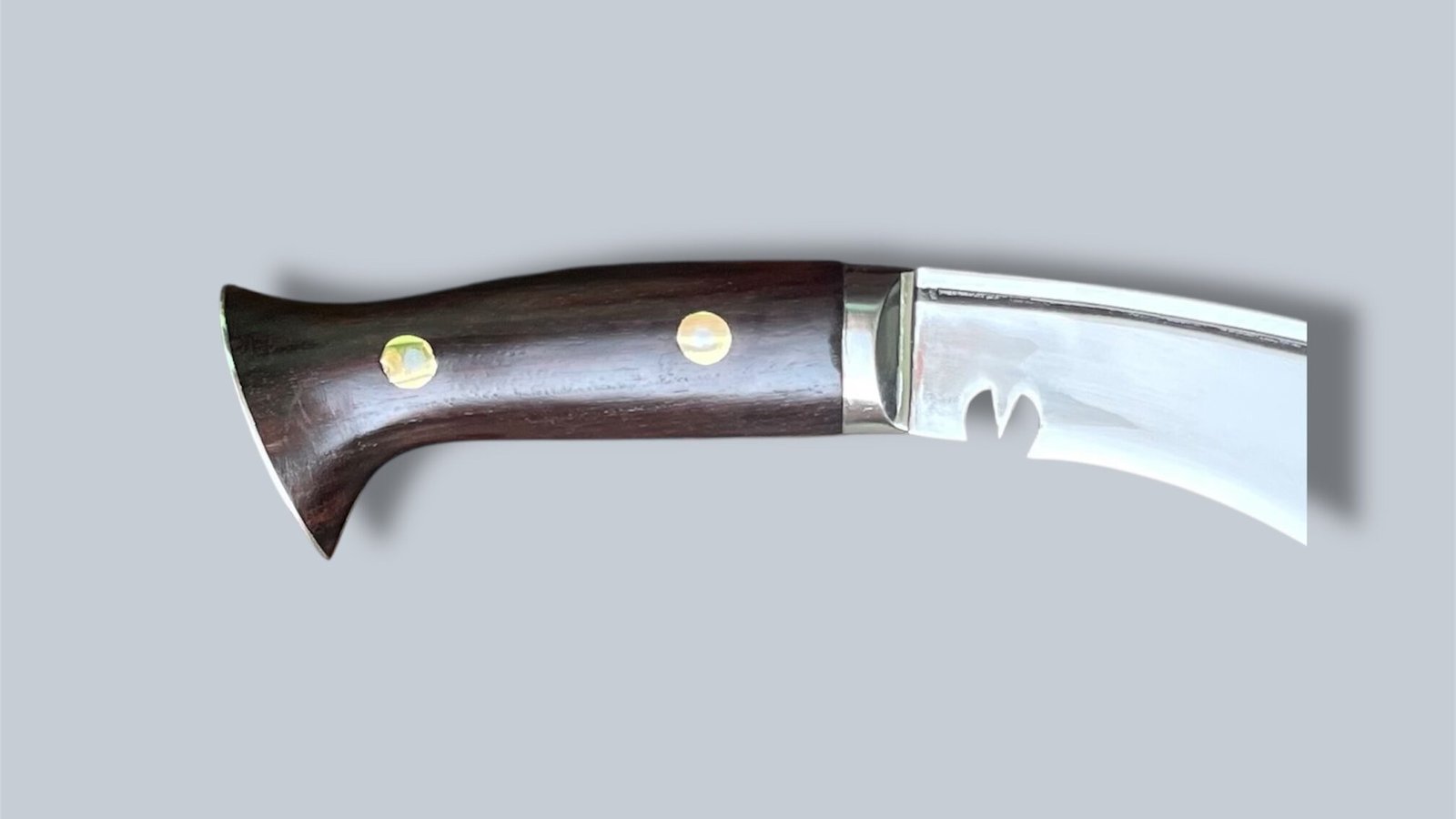
Design does not end with visible tangs; reliable mechanical fastening determines whether the kukri survives thousands of load cycles without failing mid-swing.
5.1 Two-Pin vs. Three-Pin Systems
- Smaller or shorter handles typically incorporate two pins.
- Longer handles require three pins to contain the additional leverage and improve stress distribution.
5.2 Rivet Diameter and Load Flow
- Heavier rivets better absorb impact load with less risk.
- Numerous smaller pins help in minimizing hazardous local stress concentrations.
- On a serious kukri, rivets serve only operational purposes. Impact forces follow along the tang width and distribute over every pin in the load path.
6. Materials for the Full Tang Gurkha Kukris
6.1 Blade Steels
High-carbon spring steels such as 5160 are among the ideal performers. However, while steel grade matters, the quality of heat treatment matters far more, and the former is almost always subordinate to the latter. As a result, differential tempering provides a dramatic boost to shock resistance.
6.2 Handle Materials
- Indian rosewood
- Buffalo horn
- Stabilized hardwoods
- Micarta (especially preferred in the U.S. survival and bushcraft market)
6.3 Pins and Fasteners
- Brass, carbon steel, or stainless steel
- Peened or press-fit construction—no glues
A kukri of quality construction demands that all parts of the kukri be engineered to function as one unified mechanical system.
7. Application-Based Performance Analysis Of Full Tang Khukuri
7.1 Survival and Bushcraft
- Wood processing
- Shelter construction
- Fire preparation
- Heavy chopping with complete confidence that the handle won’t let go
7.2 Martial Arts and Training
- Delivers consistent and predictable balance
- Builds structural confidence through thousands of repetitive drills
- Cuts down on vibration-induced fatigue
7.3 Self Defense (Contextual and Legal)
- Provides rock-solid reliability under adrenaline dumps
- Maintains grip stability through hard impacts
- Instills real mechanical trust that boosts user confidence
7.4 Utility and Outdoor Work
- Farming tasks
- Trail clearing
- General camp chores
- Long-term emergency preparedness
Full-tang Kukris don’t finish jobs faster—they simply finish them more reliably, swing after swing.
Himalayan Blades’ Data over 20+ Years

Based on order histories, custom modification requests, and repeat purchases at Himalayan Blades:
- Nearly 70% of customers now choose full flat tang kukris.
- A significant number of original stick-tang buyers later request full tang conversions.
- Repeat customers overwhelmingly place their trust almost exclusively in full tang designs.
This reflects observed real-world behavior—not marketing spin.
8.1 Why Customers Prefer Full Flat Tang Kukris
Thanks to direct customer feedback, some common topics include:
- “I trust it more.”
- “It feels solid.”
- “Feels more confident chopping.”
- “The handle feels secure.”
This growing trust is the result of actual use. New buyers worry about things like polish and blade length. But experienced users understand the importance of construction.
9. Checklist For Buying a Full Tang Kukri (U.S. Perspective)
9.1 Visual Inspection

- Tang width should be visible along the entire handle profile.
- Even, purposeful pin spacing (never random or decorative).
- Symmetrical and ergonomic handle shaping.
A balance in shaping and construction.
9.2 Questions to Ask the Maker
- Is the tang forge-welded or one-piece construction?
- What type of material is the pin made of?
- Did the tang and the blade undergo heat treatment together or separately?
9.3 Caution
In many cases, subpar construction hides under shiny finishes. Fine polishing and attention to detail can distract potential buyers from noticing that the blunt nose or the handle is made from substandard or poorly finished metal. Likewise, some builds are filled to the brim with glue, with the construction relying on adhesive-determined bonds between the handle and the blade instead of solid mechanical fasteners. A true full tang khukuri is able to handle impact and all the forces that come from it by engineering in the tang the pin that keeps the blade and the handle together, thus relying on metal strength, not glue.
Drawbacks Of Full Tang Khukri
No design is without compromise, and as a result, full flat tang kukri designs come with a few honest drawbacks, in particular, these include additional weight to carry, increased conductivity in winter conditions, and the need for skillful handle shaping to avoid discomfort; nevertheless, these trade-offs remain entirely acceptable when the payoff is true structural integrity.
Conclusion
If you choose a full flat tang khukri, you do so for clear, practical reasons. You are an active survivalist who actually swings tools and relies on them in demanding conditions. Likewise, you may be a martial artist who trains hard, trains often, and expects structural consistency through repeated impact. As a buyer, you place reliability far above nostalgia, and as a customer, you want one well-built kukri that lasts—not a drawer full of failed replacements. Ultimately, you do not simply “option into” a full flat tang kukri. You choose it because it is the right tool. The decision is not about looking tough; it is about performing under stress and delivering when it matters most.
Subscribe to us on YouTube.
Follow us on Instagram and Facebook.
Footnotes and References
- Hrisoulas, J. The Complete Bladesmith. Paladin Press.
- Rawson, P. The Indian Sword. Batsford Academic.
- ASM International. Metals Handbooks: Fractography.
- Wilkinson Sword Company Archives, British Military Tool Design Papers.
- Edge Impact Tool Mechanics. Journal of Materials Engineering.