
Is a Kukri Practical for Cooking? Real-World Insights
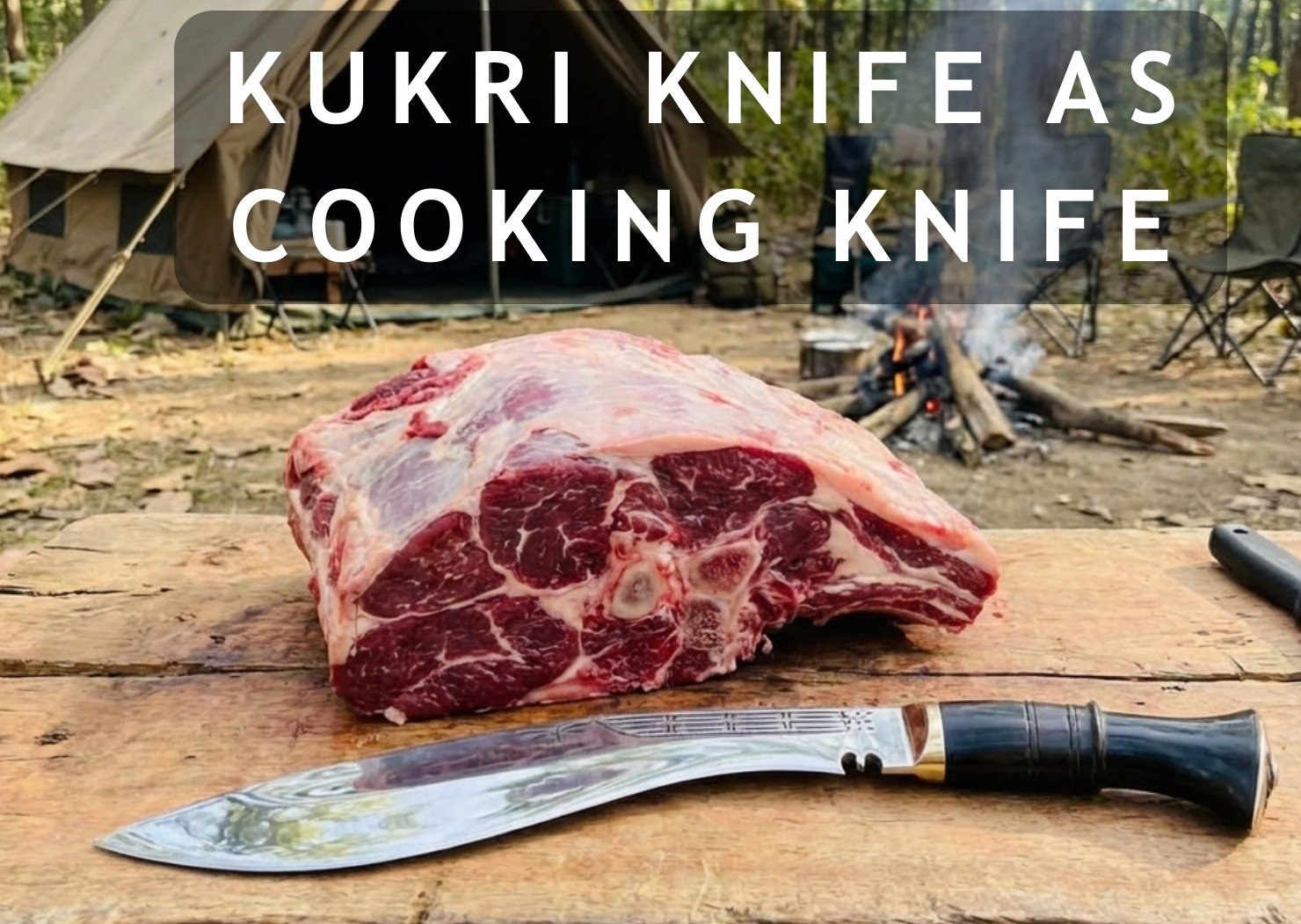
Many people know the kukri is a classic weapon of the Gurkha soldiers, while other people simply know it as a cool tool to bring on an outdoor survival trip. Meanwhile, people in the outdoor community in the US have started to ask a specific question: Is a kukri a practical cooking knife? Or Is it just an example of using the wrong tool for the wrong job?
Himalayanblades.com has to deal with these questions all the time. Customers, especially campers, survivalists, martial artists, and other knife fanatics, rely on their knives for actual work and not just for show. This article is clearly more focused on real-world experience rather than selling the product.
Himalayan Blades is interested in finding the kukri’s place among other outdoor and survival knives.
The Kukri is a work of art, but can also be extremely useful as a tool for the right situation. Kukri knives are not single-purpose tools, just as other classic knives should not be expected to have a single-purpose design. Other than the USA, most regions in the world, such as Nepal, where the design originated.
The use of an all-purpose single knife is traditional for all daily activities, including. cutting wood, collecting, preparing, and processing food. This is also true for the design of kukri knives, as with the other knives.
Modern handmade kukri knives keep this philosophy alive. When crafted properly, kukris balance control and power better than most expect, but just because this is true doesn’t mean it is ideal for any sort of cooking.
Kukri Knife for Cooking: The Real-World Use Case
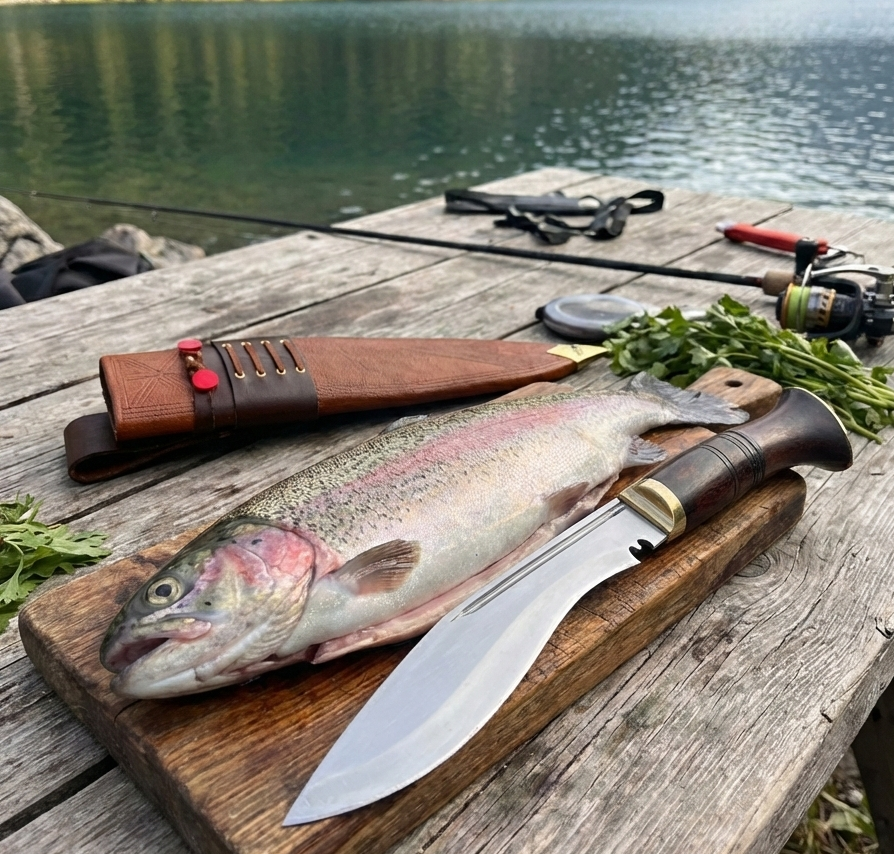
The reality most marketing leaves out is that kukris aren’t designed to replace your kitchen knives. If you have a full set of kitchen knives, including chef, boning, and slicer knives, using a kukri in the kitchen doesn’t make sense.
However, once you enter the wilderness, whether camping, hiking, or in a survival situation, the equation shifts.
Out in the wilderness, most users prefer:
• A minimalist tool set
• Reliability
• Strength
• Ease of maintenance
That’s the difference maker for cooking with a kukri.
Himalayan Blades Customer Survey Data: What Users Actually Do
Last month, we sent polled emails to about 8,400+ U.S. customers. We had one simple question:
“Do you ever use your kukri for food prep or cooking?”
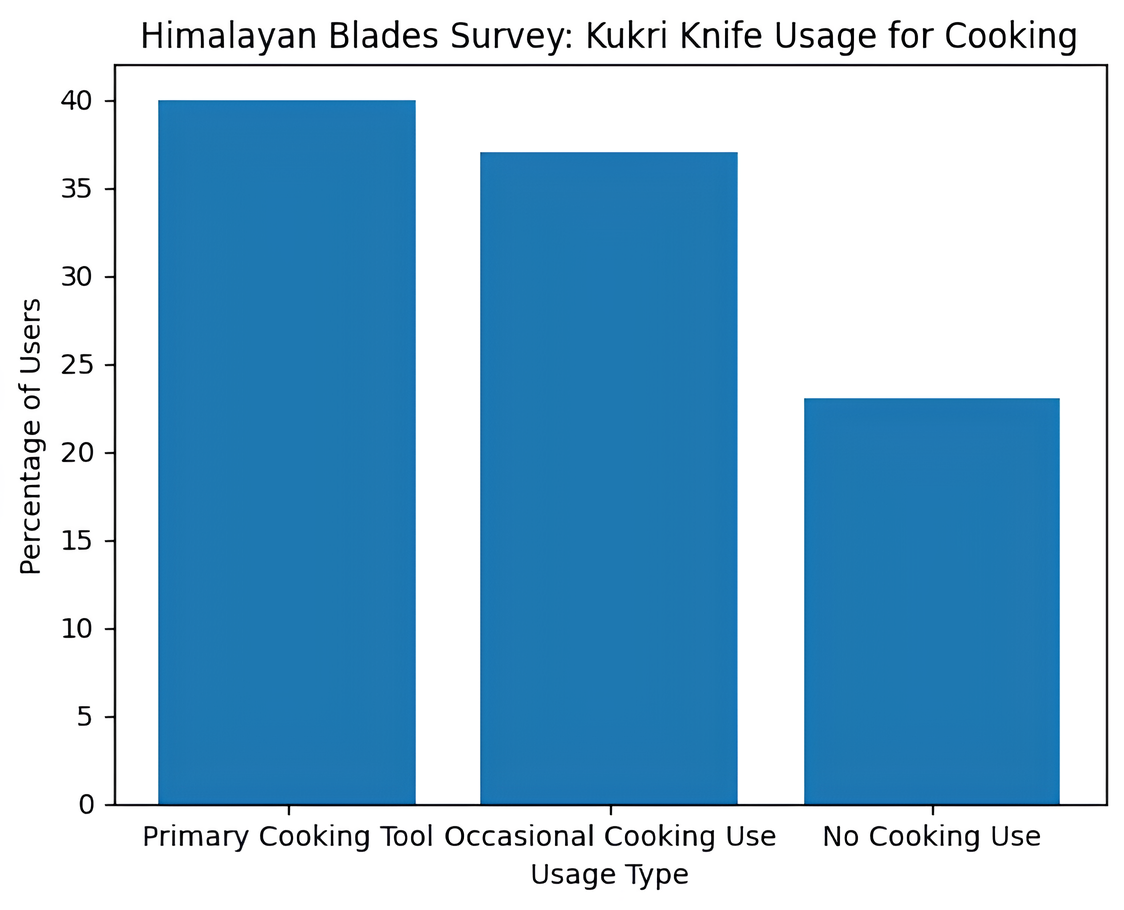
Here’s how they replied, with 1,837 people responding:
• 40% said: “Always. It’s my primary camp kitchen knife.” This group appears to be the backpackers, overlanders, or hunters. They use their kukri for a ton of stuff. Heavy bushcraft during the day, food prep at night. Their biggest piece of advice is that you should clean your kukri immediately after cutting acidic foods (tomatoes, onions, citrus) to prevent patina from turning into pitting.
• 37% said: “Sometimes—mostly for meat and bones. I carry a small stainless steel folder for veggies.” This group appears to like the kukri’s for the power that it provides to quarter game and chop through chicken bones with one strike, but they prefer a lighter blade for the fine work.
• 23% said: “Never. It’s strictly a chopper/machete for me.” I think that the rest of us can agree with this. Not everyone wants to dice carrots with a blade that can fell a tree.
Approximately 77% of the people responding used their kukri at least a little for food prep, which should tell you that using a kukri for food prep is a pretty prevalent use case, but only outdoors, and you want one blade to do the most of the work for you. A best practice that stands out from the rest is to clean the kukri after every use.
Neglecting that can quickly turn a great blade into a problem. Food residues and acids can be harmful; the kukri is high carbon steel.
Why the Kukri Excels at Certain Cooking Tasks
From personal experience, and what the customers say, the kukri is definitely great and highly recommended for:
- Meat and bone processing. Along the blade’s weight and the curve that enables chopping, bone processing is also very much achievable and easier than what most camping knives can do.
- Root vegetables and hard produce Break down dense vegetables like potatoes and squash.
- One-tool efficiency minimalist campers and survivalists, it’s a real plus to be able to use one blade to do all, prep food, chop shelter, and firewood.
It’s the reason many customers buy a kukri, especially for outdoor activities, and why, year after year, customers continue to use the outdoor kukri for a long time. For camp food prep and bone work, the M43 and the 6th GR War Serupate are strong picks.
Reasons for the Kukri Not Being a Good Choice for Cooking
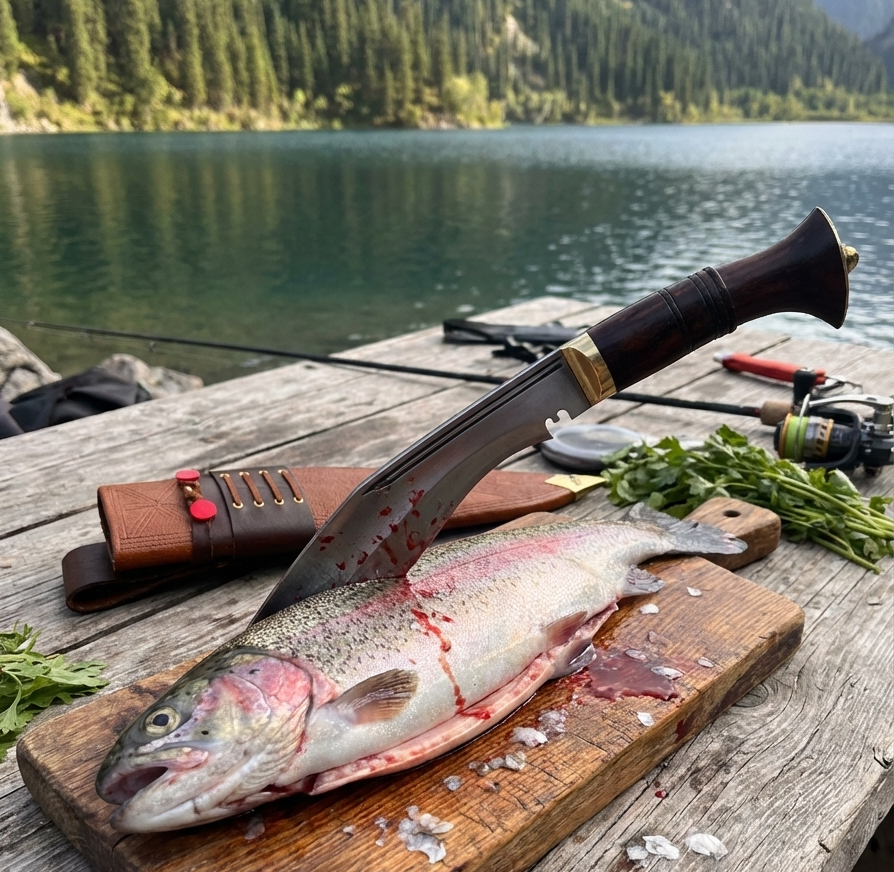
Because kukri knives are not completely accurate for cooking. Some examples are:
• They are not accurate when making precision cuts without draining your energy.
• They are difficult when getting ready for different prepping tasks due to the wider belly and recurve blade.
• They can be too long, which means they can be very uncomfortable to use at first.
These are the same reasons shared by Knife Center on a video on food prep with a kukri. We also conclude that the kukri knife does not come to mind when someone thinks of cooking. But with some creativity and techniques, it can serve multiple purposes as they do in the video.
(We do not own the rights to this video: https://youtu.be/20yI5afUQW8)
Kukri Knife Tang and Cooking Safety
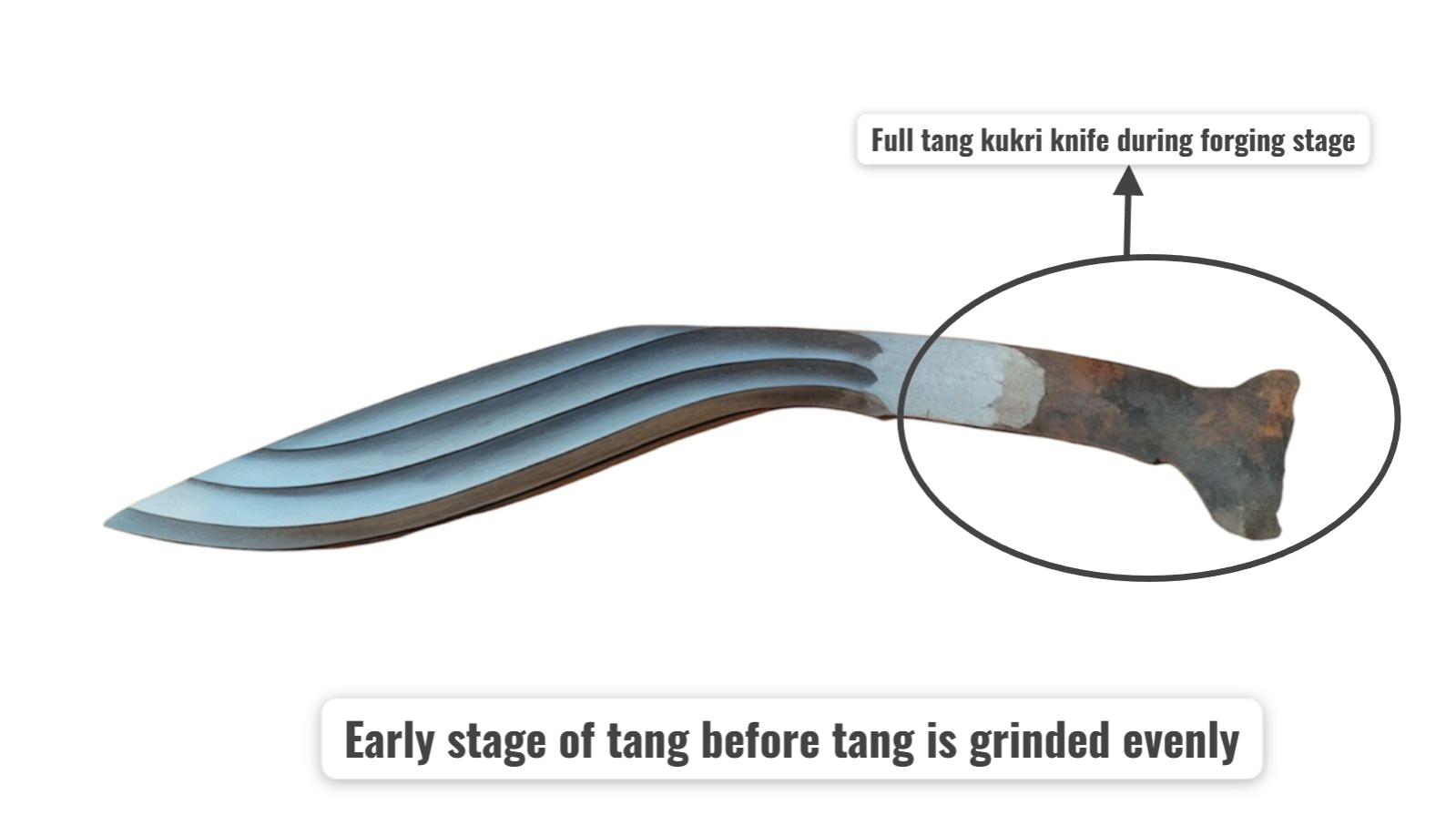
When you are chopping food, especially that not cooked skinless meat that still has the bone, you are applying some lateral force and a downward force at the same time. If the kukri tang is poorly constructed, it is most likely to loosen or fail over time.
We are not theorizing this; we have repaired many more blades of other makers and have more than enough evidence to show it. When it comes to kukris, rugged is the name of the game, and that is why at Himalayan Blades, we focus on:
• Robust tang construction
• Firm handle fitting
• Overall long-lasting structural integrity
For cooking in the wilderness, this is not something that can be compromised- it is a matter of safety.
Using a Kukri Knife in Cooking
Cooking with a Kukri/khukuri definitely requires more than the use of strength.
Things to get right:
- Cutting surface should be stable and soft (cutting board, not a stone)
- The weight of the blade should be the only cutting factor (more a matter of deciding how to cut vs forcefully doing it)
- Controlled chopping should be done rather than cutting through the object.
- Whenever you are done with preparing, ensure the knife is dry and clean the blade.
- Before you store the knife, use a little food-safe oil to coat.
Developing these habits will keep the prep food safe and keep the blade in use longer.
Handmade Kukri vs. Mass-Produced: Why It Matters for Cooking
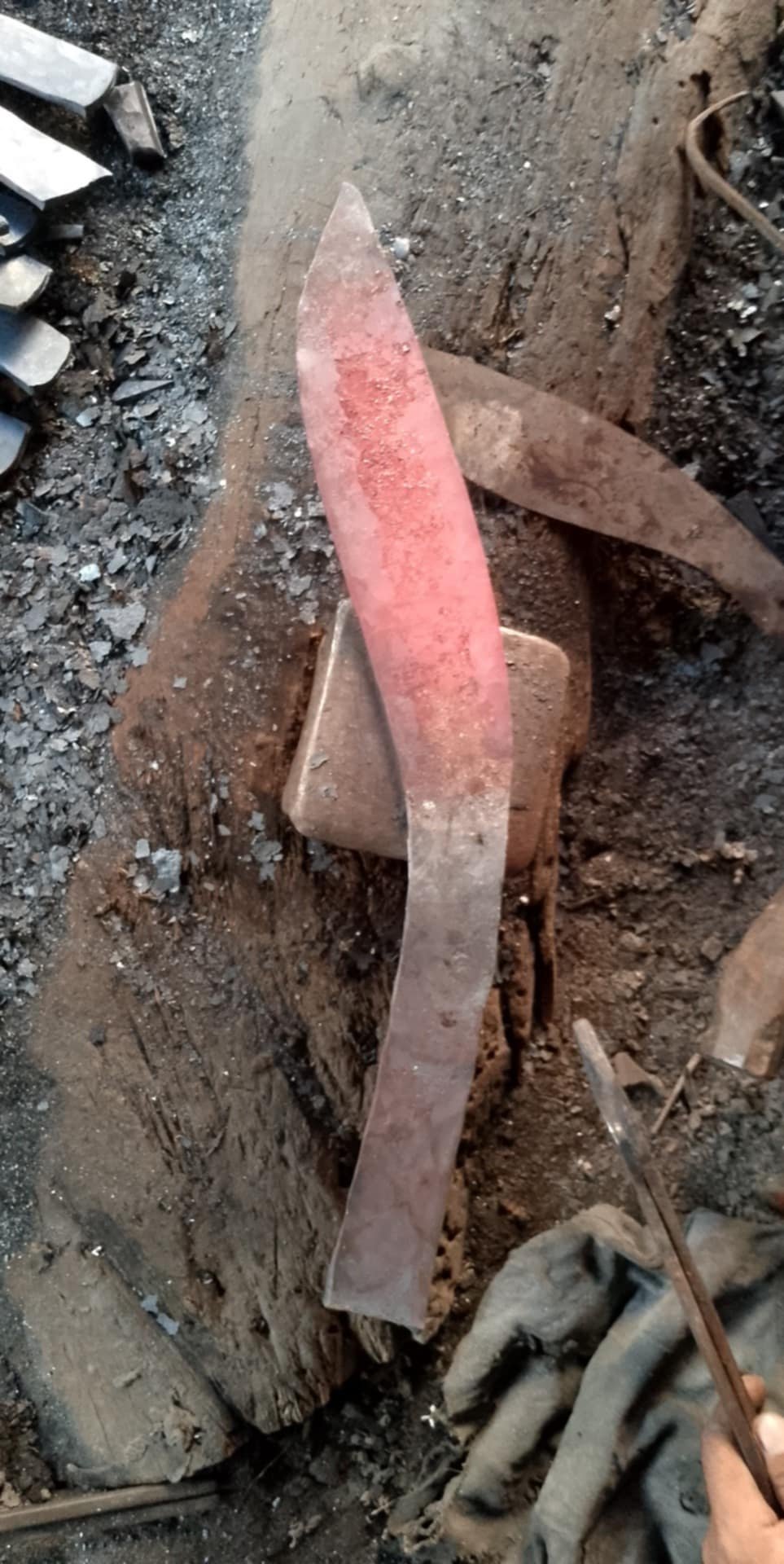
When it comes down to Kukri, not every Kukri is made the same. Noticeable difference will be found between Kukris with no attention to the maker vs. Kukris made with care, taking the time to handcraft the traditional kukri.
No attention is given to Kukri’s blades are made with the primary focus on the appearance of the blade. Masterfully crafted Kukri blades are made with attention to the ins and outs of the blade to perfection to create a Kukri for food prep and bushcraft.
Focus of the Kukri blade makers, with no primary focus on their craft, is the difference in quality for those looking to purchase Kukri online. Buying Kukri from a specialist rather than from a general retailer is more beneficial than only sacrificing risks when purchasing the Kukri.
Why Handmade Kukri Are Clearly Better?
Mass-produced kukris cut corners where it matters most. Factories often sacrifice proper heat treatment, thoughtful edge geometry, and careful balance just to speed up production and keep costs down.
Pick up a kukri handmade by a true master craftsman, though, and the difference hits you right away. These blades, forged by people who’ve spent years honing the old Nepali techniques, hold a sharp edge far longer, shrug off heavy stress without complaint, and feel perfectly balanced in your hand.
When you buy from a specialist like Himalayan Blades, you’re getting a knife made by skilled artisans who actually care about every detail. That quality shows the moment you start slicing food: cleaner cuts, less effort, and noticeably better performance overall.
Is The Kukri Knife for Cooking Practical? At home: No. In the wilderness? (Camping, hiking, survival?) Yes! used correctly, of course. With the kukri, versatility is key. This is why most seasoned campers and adventure cooks rely on the kukri even after lighter, high-tech knives come on the market.
Closing Thoughts from Himalayan Blades
Is cooking with a kukri practical? It depends. In a fully stocked home kitchen, no—it really isn’t the right tool. But out in the wilderness—camping, hiking, or surviving with just one blade—the kukri shines again and again. These knives have a clear purpose, so stick to what they do best. Use your kukri to chop large amounts of meat, process bones, and tackle heavy tasks that would destroy lighter blades.
If you carry a small knife too, save it for fine slicing and delicate work. If the kukri is your only blade, practice with it. You can definitely refine your technique and make it handle lighter prep jobs surprisingly well.
Just remember: good technique and proper cleaning always matter when you cook with a kukri.
No. It can handle many tasks but lacks precision for fine slicing.
Yes, due to better balance, edge geometry, and durability.
High-carbon steel can react with acidic foods, which is why cleaning is essential.
In most states, yes. Always check local regulations.
Choose specialized sellers like Himalayanblades.com that focus on functional, authentic blades.