
Kukri for Sale: Genuine Nepal-Made Blades Under $150
Whenever you search for a kukri for sale, it is easy to find hundreds of kukris for under $50 online. Most of them will fail after the first tough chop. Although these blades mimic Gurkha kukris, authentic kukris use better steel and better heat treatment. Unlike mass-produced kukris from lower-cost factories, blades from Nepal are forged with real quality, and the price reflects it. This guide uses metallurgical testing data to help you identify a genuine, functioning khukuri.
Functional Kukri vs. Tourist Blades
The cheap kukris for sale you see online are produced in large volumes. These blades have the look of a kukri, but are stamped from soft steel and heat-treated poorly. At best, these kukris last for a single chop before the edge rolls over or breaks. A functional Gurkha kukri lasts for decades, cutting through wood, bone, and dense foliage.
Each blade from an authentic Nepalese maker is hand-forged. The Bishwakarma kami families have shaped khukuri knives for years and begin their work with recycled truck leaf springs, a high-carbon spring steel. These blades cost more than stamped sheet metal kukris. For example, the Angkhola Kukri ($130) and the entry-level BSI Khukuri ($69).
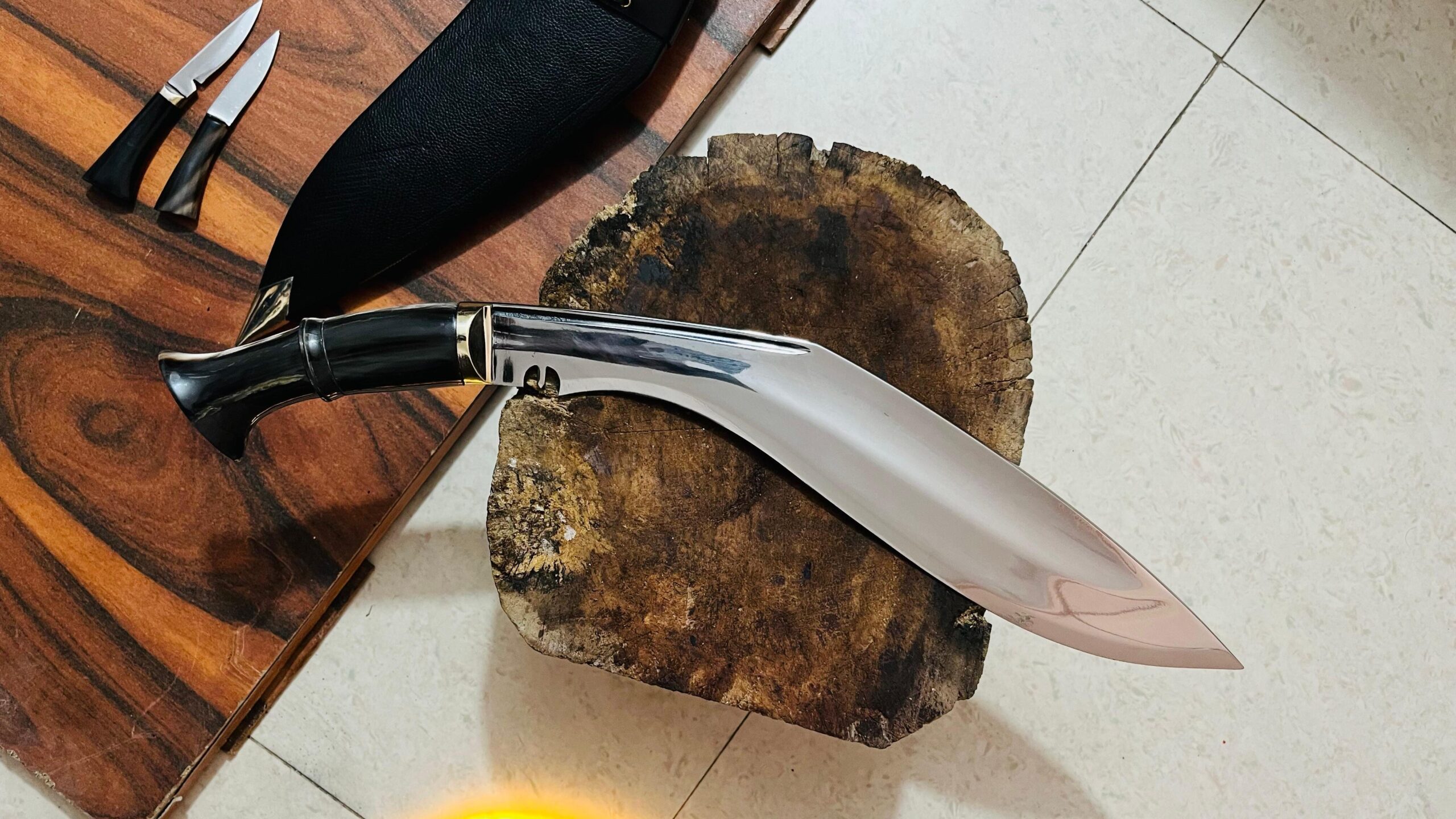
The Steel Inside a Real Kukri
5160 Steel Composition
Most authentic kukri blades use 5160 spring steel. This steel is a low-alloy steel containing about 0.60% carbon, 0.80% chromium, 0.875% manganese, and 0.25% silicon. Carbon contributes to the hardness. Chromium adds hardenability and a slight resistance to rust. Manganese and silicon raise toughness and refine the grain structure.
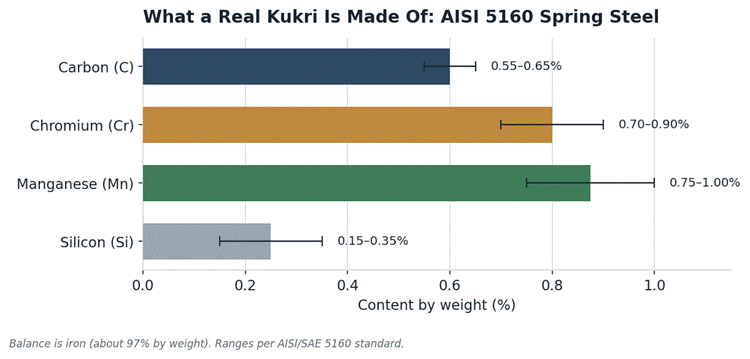
Figure 1. Alloying elements in AISI 5160 spring steel, the standard for authentic kukri blades.
Why Stainless Steel Falls Short
Knife metallurgist Larrin Thomas, author of Knife Engineering, reports toughness drops as carbide volume rises. A high carbide volume causes chipping, leading high-carbide stainless kukris to sell at two to three times the price of 5160 blades. Stainless kukris resist rust well, but a chopping tool rarely needs it. 5160 blades sharpen easily using a stone or even a smooth river rock. The Fast Angkhola Kukri ($135) and Angkhola Kukri ($130) show this 5160 toughness in a heavy chopper. For a chopping tool, 5160 wins on durability.
Numbers that Tell the Story of Hardness
Traditional smiths measure blade hardness in HRC on the Rockwell C scale. A genuine 5160 kukri performs best at 56 to 59 HRC. Water tempering yields a differential edge. The cutting edge reaches 58 to 60 HRC. The belly sits at 45 HRC. The spine drops to 22 to 25 HRC for shock absorption. The edge cuts. The spine, softened, takes the impact without snapping.
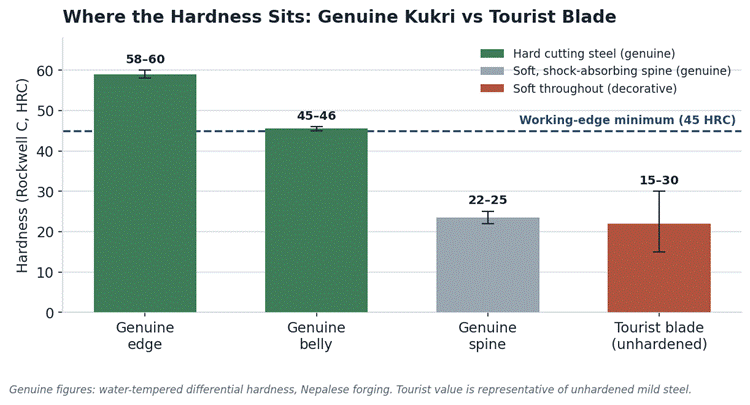
Figure 2. Rockwell hardness across a genuine water-tempered kukri compared with an unhardened tourist blade.
American collectors who conducted independent evaluations of finished Nepalese blades reported a cutting edge hardness between 53 and 58 HRC. On the other hand, tourist blades from unhardened mild steel proved to have a cutting edge hardness of 45 HRC and below, outside the working range. The number on the steel determines if the blade serves you or breaks on you.
How to Identify a Real Kukri for Sale Online
Four indicators separate a true kukri from a wall hanger. However, online shopping for kukris is pretty sketchy when knock-offs are everywhere. For instance, you can do a price comparison and find the same blade for $40 on one website and $150 on another. Yet, they both use the same picture, and one of their descriptions reads that the blade is “authentic” and “hand-forged.” So, which seller is lying the least?
1. Well-made Tang Construction
Weather a full tang, stick tang or partial tang, it does not matter as long as it is done correctly. I have posted a complete in-depth blog about kukri tangs.
2. Weight and Balance
The original kukri design places the The originalweight forward of the grip. This forward balance builds momentum during the swing. The blade drops and cuts without force from your shoulder.
3. Spine Thickness
A functioning kukri should weigh between 600 and 900 grams, with most of the weight forward of the grip. Lift it. If it feels light and uniform, the geometry is wrong.
The spine should be dense. Field blades measure 8 to 12 millimeters in thickness at the bolster. A thin spine signals a decorative build.
4. Maker Transparency
A real seller names the steel, the hardness, and the forge. Every blade at HimalayanBlades.com lists its pattern and build. If you are offered no information, you have a tourist product.
Why Cheap Kukris Are Cheap
Cheap blades bend instead of biting. It dulls after minor use and requires sharpening over and over. A poorly hardened spine snaps after a hard swing. You risk injury or lose your money. A $40 blade costs more over time through replacement after replacement. Return shipping, refunds, and a second purchase add to the trouble. The cheap blade was the expensive choice. A service blade like the BSI Khukuri ($69) delivers hand-forged steel and proper heat treatment for what a tourist blade charges you in replacements. Give it a wipe after use, add some oil, and let it dry.
Hunting Kukri Knives
Kukri knives outperform straight blades on bone work in field dressing. Their forward-heavy design drives through joints for quick separation. The curved design allows for controlled slices and skin removal. For field dressing multiple animals, some makers offer D2 tool steel for better edge retention at 58 to 61 HRC. For deep chopping and batoning on hardwoods, 5160 performs better for impact resistance. The Angkhola Kukri ($130) and MK2 Kukri ($135) handle chopping through bones and tough brush. The lighter 6th GR War Serupate Kukri ($120) favors clean skinning cuts. Match the steel and the pattern to your hunt.
What Reviewers and Real Use Prove
The best independent reviews of Nepalese khukuris come from real users, not writers. After buying khukuris from three different Nepal-based makers, one YouTube reviewer showed his audience the results of hard cutting. His conclusion holds: a handmade khukuri from Nepal outperforms a factory-made copy. First-hand results beat spec sheets every time.
Kukri for Sale: Pick Your Pattern
Each blade below is hand-forged in Nepal, ready for the field. Pick the work you do, then order directly.
| Kukri | Best for | Price |
| Angkhola Kukri | Light chopping, bushcraft, firewood, and Martial Arts | $130 |
| Fast Angkhola Kukri | Lighter, faster chopper for long sessions | $135 |
| Mutant Angkhola Kukri | Oversized chopping power | $139 |
| 6th GR War Serupate Kukri | Light, fast slicing and daily carry | $120 |
| Baspate Kukri | Slim utility and controlled field cutting | $150 |
| BSI Khukuri | Entry-level genuine service blade | $69 |
| MK2 Kukri | British service field pattern | $135 |
| MK4 Kukri | Modern military field pattern | $110 |
| Mutiny Officer Kukri | Historical 1857 officer pattern, collectors | $140 |
| Goorkhali Hanshee Kukri | Curved historical collector piece | $150 |
| Neo Hanshee Kukri | Modern take on the classic Hanshee curve | $120 |
Prices shown reflect current listings and run from $69 to $150.
Buy a Kukri Built for Real Work
When you buy a kukri knife online, you pay for steel, heat treatment, and the hands behind the blade. HimalayanBlades.com works directly with a Nepalese bladesmith and ships across the United States. For heavy work, reach for the Angkhola Kukri ($130). Take the 6th GR War Serupate Kukri ($120) for light carry. For a collector piece, the Goorkhali Hanshee Kukri ($150) carries real history. Browse the full range to purchase a khukuri online and buy a khukuri with full confidence. Skip the tourist trap. Own a kukri built to work.
Sources
- AISI/SAE 5160 steel composition and properties. https://www.thomasnet.com/articles/metals-metal-products/all-about-5160-steel-properties-strength-and-uses/
- SAE AISI 5160 alloy steel (Mn, Si ranges). https://shop.machinemfg.com/sae-aisi-5160-alloy-steel-uns-g51600-composition-properties-and-uses/
- 5160 hardness and edge behaviour. https://www.redlabelabrasives.com/blogs/news/5160-vs-1095-which-steel-is-better-for-knife-making
- Kukri steel and optimal HRC range. https://himalayanblades.com/kukri-knife-steel/
- Independent collector hardness testing and D2 hunting comparison. https://himalayanblades.com/hunting-kukri-knife/
- Leaf-spring steel sourcing for kukris. https://www.bladeforums.com/threads/choosing-springs.191909/
- YouTube review of three Nepal-made functional khukuris. https://www.youtube.com/watch?v=L4tBHnsj7vk
- Larrin Thomas, Knife Engineering (Knife Steel Nerds). https://knifesteelnerds.com/