
Kukri Knife vs. Machete: Which is Better
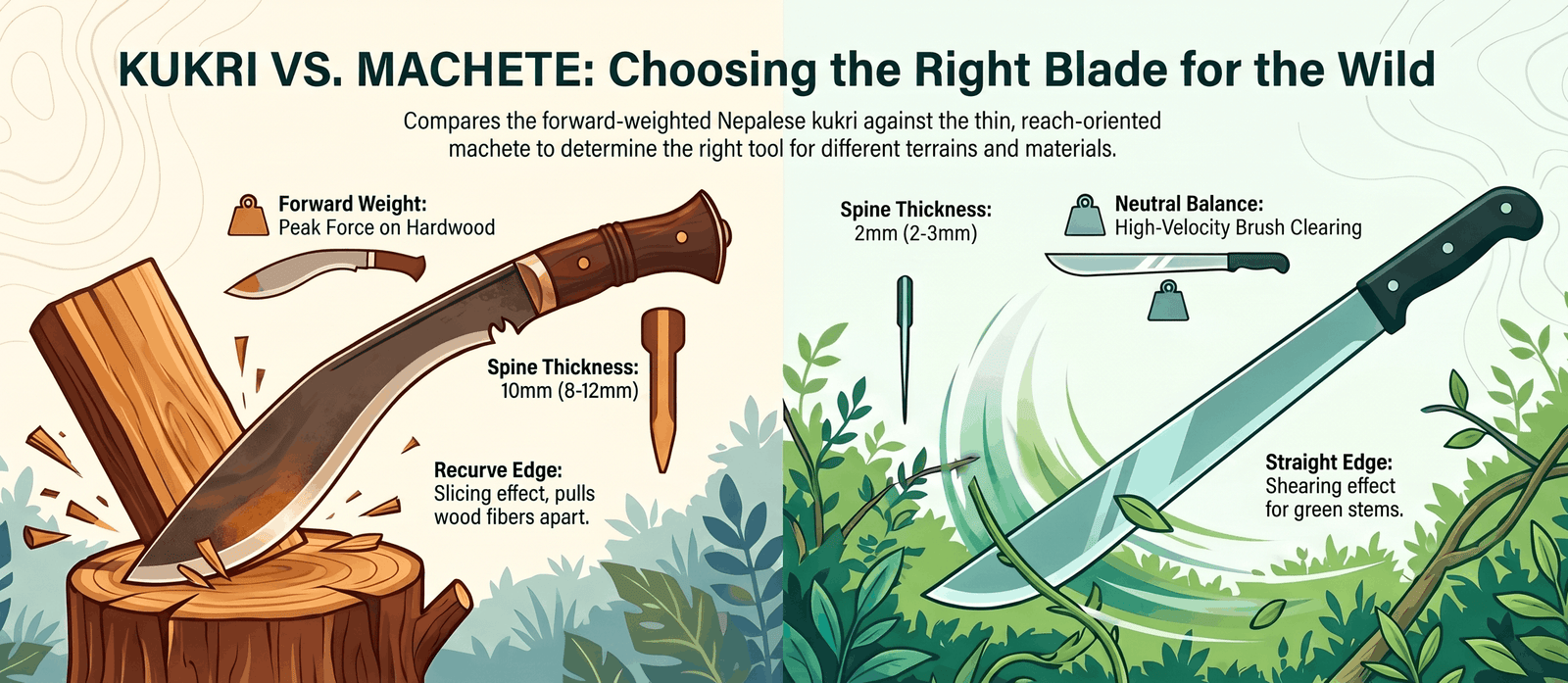
In the kukri knife vs machete search, readers are looking for something substantive. Inexperienced writers author most articles in this search. This article for the first time offers substantive content.
There is a lot to know about these two blades, but here are a few key points. One of these blades is a gardening tool at best; the other is a purpose-built tool designed to last and survive years of use. Life is tough; so is steel. At the end of this guide, you will know which blade suits the challenges of the land and which one suits the challenge of providing a lifelong tool versus a disposable one.
We build kukris to take on the great outdoors, and their steel components match that purpose. Customers will no longer be buying cheap, knock-off tools on Amazon, but rather real, honest tools that will last a lifetime.
Kukri Knife vs. Machete: Blade Anatomy
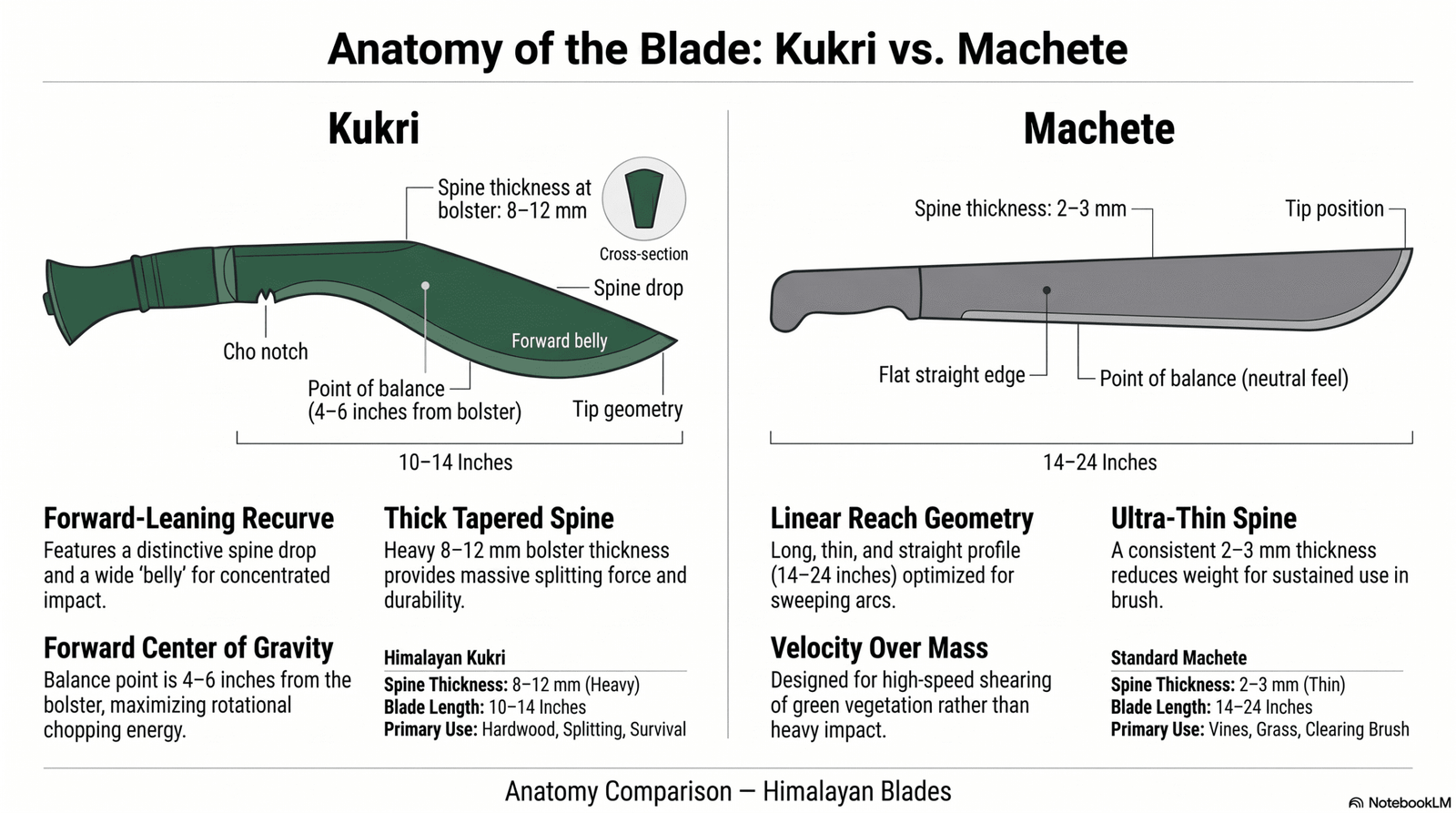
Kukri blades have a distinctive curve. The spine drops and recurve forms a rounded belly, which centers mass. This also optimizes the kukri to better perforate targets, increases balance, and enhances its chopping ability.
The cho is a small notch, and is a blood channel and grip marker commonly found on Nepalese blades. The kukri’s recurve and belly drop shape also assists with stabbing, as it creates a point to puncture that lies above the line of the edge.
Most kukris range from 10 to 14 inches, while the widest bellies on heavier models, such as the Angkhola, can range from 2 to 3 inches.
Machete blades are long and thin, with a relatively straight shape, allowing them to sweep over the vegetation they target. The spine of a machete blade is also 2 to 3 mm thick and runs 14 to 24 inches long. The tip sits above center on mostly straight blades, with a slight distal curve.
Machetes have good cutting ability due to their thin profiles, allowing them to swiftly arc through vegetation. The thin edge of the blade does little cutting and relies on the aforementioned speed and reach. Cutting through wood that is green and living is no problem for a machete; however, dry and seasoned wood stops a machete cold.
Recommended products
-
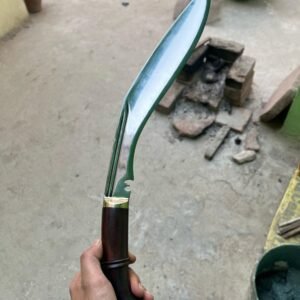
6th GR War Serupate Kukri
$135.00 -
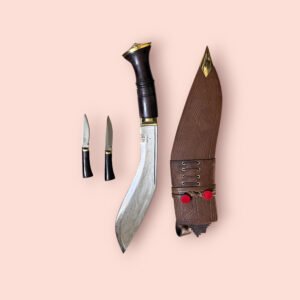
BSI khukuri
$120.00 -
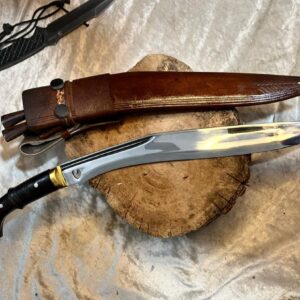
Limbuwan Kukri Knife
$185.00
From a physics viewpoint, the best blade design for chopping utilizes mechanics and steel alignment. For example, in kukri blades, the center of gravity sits in front of the blade’s belly, about 4-6 inches in front of the bolster (or guard). During a swing, kukris have very light handles because of the balance, and thus, the blade does most of the work. Impact from the kukri also transfers at the cutting zone. In a machete, the center of gravity falls 6-10 inches in front of the bolster (in an 18-inch standard blade).
In a kukri, the weight balances along the neutral axis. This occurs while clearing and minimizes fatigue. However, the effect also decreases the impact force a kukri can deliver on hardwood.
Check out 6 traditional kukri knives here.
Rotational Force, Swing Arc, and Energy Transfer
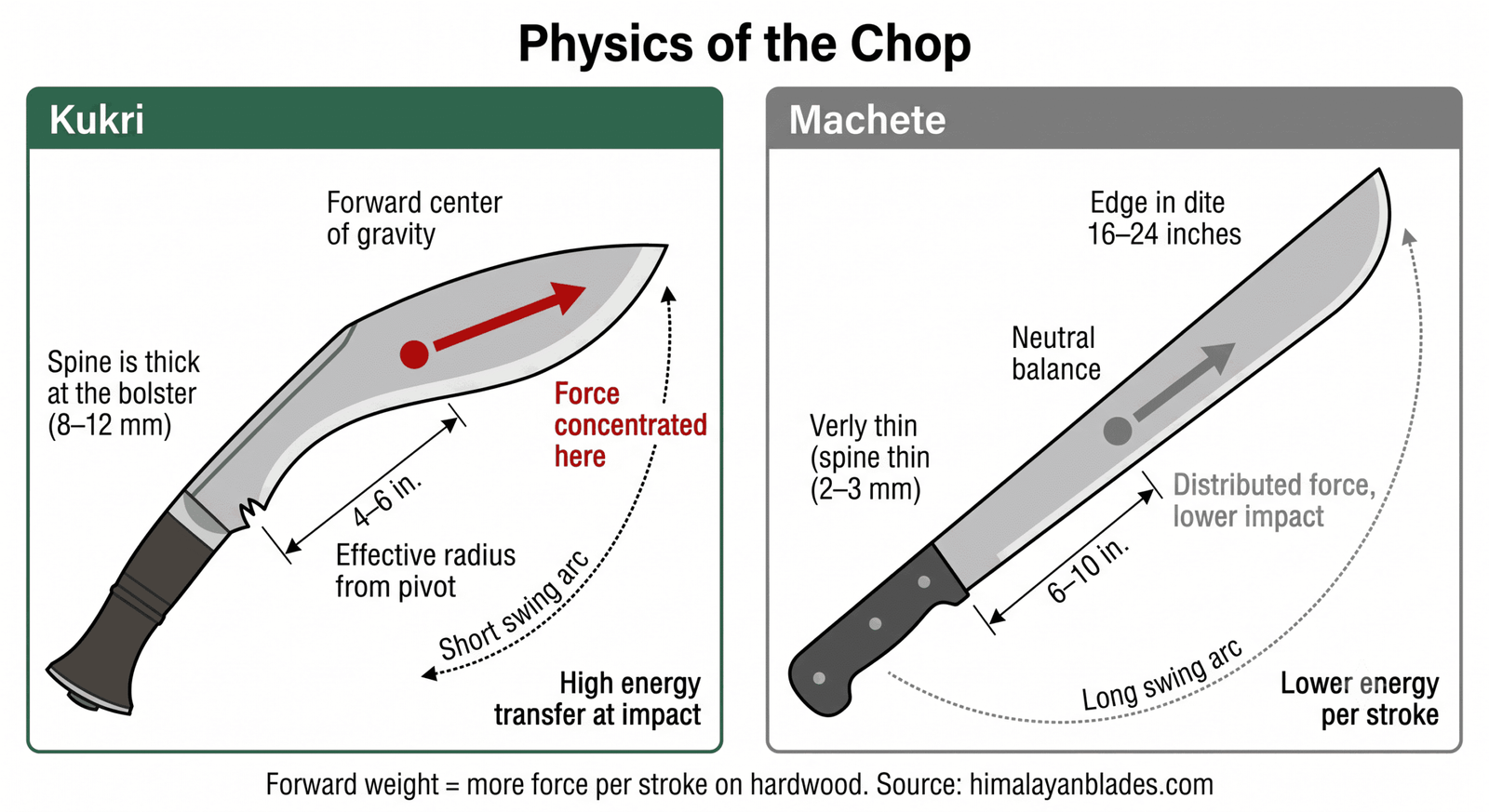
Rotational force equals mass times angular velocity times effective radius. Kukris contain a greater effective radius because of mass distribution. A swing arc that is shorter from a kukri transfers greater impact energy than a swing from a longer, lighter machete, at the same effort.
When chopping seasoned oak at around 3 inches in diameter, the forward mass geometry of a kukri is more favorable. This design concentrates mass toward the tip of the blade. The chopping geometry of a kukri also minimizes the likelihood of blade damage from knots. In this example, it would also be relevant to note the greater swing arc of the machete.
Curved Edge Engagement and Force Multiplication
Wood reacts in an entirely different manner against a curved edge than it does against a curved edge. The belly of the kukri enters a cut at a slicing angle and engages a downward chop. Combined with the kukri’s leverage effect, this will tend to pull wood fibers apart as opposed to pushing them together.
The chopping dynamics of a kukri favors wood that is fibrous and grainy in structure. The convex belly of the kukri will offer a less concentrated impact at the edge and will sustain the sharpness of the cutting edge for a prolonged period.
5160 Spring Steel vs Cheap Stainless
420 stainless steel and other mild steels are common in cheap factory kukris and machetes.
Steel is a very poor option for choppers. Stainless steel loses its edge in the following manner; chippers dull too soon, no fix exists for a dulled chipper, and the steel bends with too much impact.
The steel we use (5160) is the same used in car springs because of its springiness. 5160 has the following composition: 0.56 to 0.64% of carbon, 0.7 to 0.9% of chromium, and 0.75 to 1.0% of manganese. It retains its original shape after impact. It is tough enough to retain its edge after impact and tough enough to absorb shock without fracturing.
When it comes to cutting or chipping tools, edge retention matters more than edge sharpness or hardness. 5160 steel fulfills both the criteria for toughness and edge retention. 1095 steel also serves as a chopper steel. However, 1095 steel is brittle.
Buyers often compare kukris to machetes. Here is the difference in specs between the two blades.
Kukri Knife vs Machete: Steel Specifications
| Specification | Kukri Blade (Himalayan Blades) | Typical Factory Machete |
| Steel type | 5160 High Carbon Spring Steel | 1055 or 1075 High Carbon Steel or 420 Stainless Steel |
| Carbon content | 0.56 to 0.64% | 0.55 to 0.75% (Carbon grades) |
| Chromium content | 0.7 to 0.9% | Range of Carbon grades with negligible Chromium |
| Manganese (volume) | 0.75 to 1.0% | 0.40 to 0.70% |
| Edge hardness | 52 to 56 HRC | 50 to 55 HRC, uniform |
| Spine hardness | 30 to 40 HRC (differential) | Same as edge (no differential) |
| Heat treatment | Normalize, oil quench, double temper | Single temper or none on cheap grades |
| Edge grind | Convex, chip resistant | Thin flat or hollow |
| Spine thickness | 8 to 12 mm at bolster | 2 to 3 mm |
| Tang | Full tang pinned, or traditional fitted | Stick or partial tang common |
| Weight range | 400 to 700 g | 300 to 500 g |
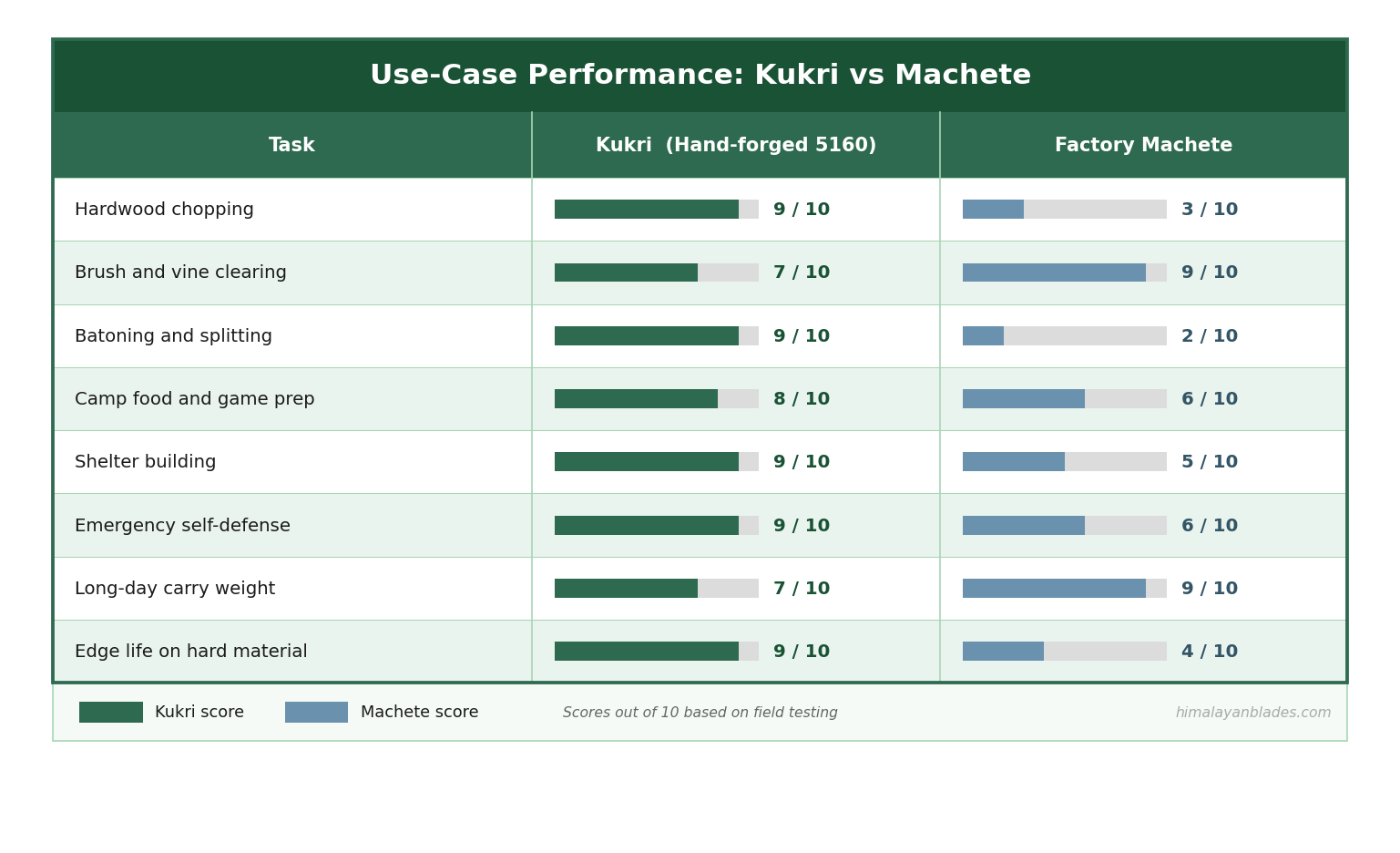
Use-Case Performance: Kukri Knife vs Machete
This table rates each blade from 1 to 10 on real field tasks.
The Authentic Nepalese Khukuri: Models, Differential Hardening, and the Forging Process
Traditional Khukuri Models at Himalayan Blades
We offer four primary patterns focused on traditional Nepalese geometry. We make each one in 5160 and customize handle material, length, and finish to order.
An example is the MK4, which is the British Gurkha issue pattern from the 1950s, scaling at 12.5 inches and 400 to 450 grams.
Lightweight, easy to wield, and ideal for chopping along the trail or at the campsite, the M43 is built for serious work with a belly that’s wide and a sweet spot that runs from 590 to 680 grams.
We build the Sirupate slim and fast for a variety of utility tasks, food prep, and clearing that doesn’t require heavy chopping. For splitting seasoned hardwood, the Angkhola has the thickest spine ridge of the group. For a mid-weight, all-terrain knife, see the Limbuwan Kukri, or check out the full offerings in the Military and Villager Series.
Differential Hardening: Why Factory Knives Don’t Stand Up to This
Differential hardening is where we set the edge to 52 to 56 HRC and hold the spine at to 30 to 40 HRC. This is a laborious process that results in a blade with a working edge that is still soft enough to flex without risk of fracture when striking a knot or taking a side blow.
When a blade runs the same hardness along its entire length, of spine and edge, it dulls quickly or chips on impact. An example of the latter would be a factory producd, press-stamped machete that undergoes a uniform, batch oven heat treatment with no differential zones or spine-edge gradient. This is the kind of difference that will determine if a blade snaps at the base of a log when it strikes a knot, or if it survives.
What Happens During Hand-Forging
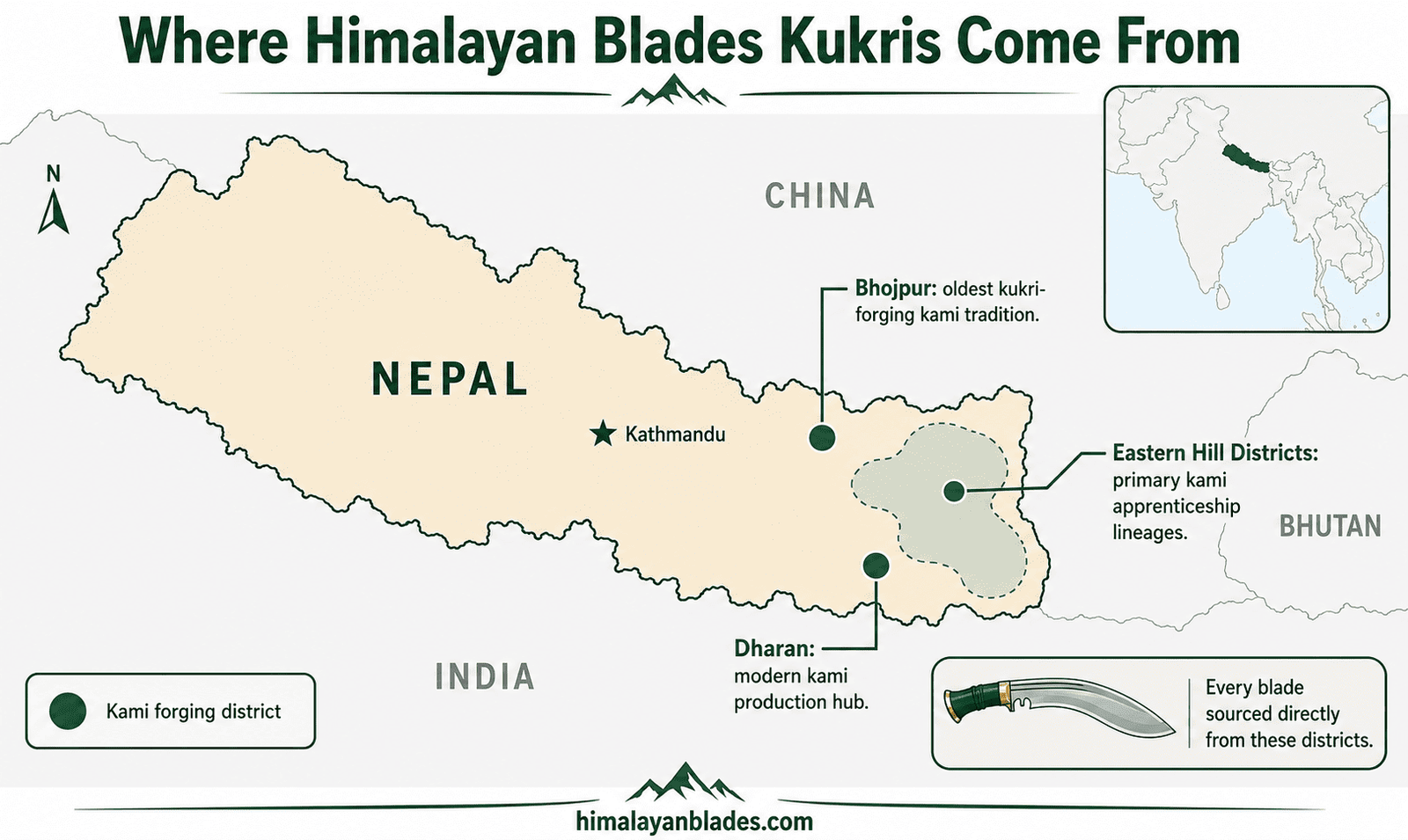
A kami heats 5160 bar stock in a coal furnace and hammers it to a recurve by hand. No use of a CNC machine, no presses. The coal and their eye sets the geometry. This is also the stage where the forward belly and the cho notch take shape.
The blade then undergoes a series of normalizations, oil quenching, and double tempering to finish.
Fitting uses Indian rosewood, buffalo horn, or micarta. We pin the tang, not glue it. We field test each blade on green wood, seasoned hardwood, and then batoning before it ships. A blade doing half the work for your arm passes. A handle shredding your palm in less than 30 minutes fails.
History of the Kukri: A Field Knife for 1,400 Years
The genuine Nepalese khukuri goes back to the Gorkha Kingdom of Nepal. There are documented examples from the 7th century. Gurkha soldiers used it in the Anglo-Nepalese War (1814-1816), World War I, World War II, The Falklands War (1982), and the Kargil War (1999).
It is a side arm and a tool for every home in Nepal. Clearing land, preparing food, and skinning game, are all uses in a village. The same blade works in a kitchen and on a battlefield. No other short blade has this dual role in history and usage.
The History of the Machete: The Jungle Knife of the Americas
The term machete traces back to the Spanish word, and then Latin, for macho. The design first went to workers in the Caribbean and South America’s sugarcane fields and now centers on the long reach of a thin edge for sustained clearing of green growth.
Explorers and workers in the colonies spread its use to all tropical regions. The US Army made it standard jungle equipment in the 20th century. At the end of the day, the machete is a farm tool.
It thrives in a vegetative environment.
Kukri Knife vs Machete for Survival and Bushcraft
Shelter Building
The kukri notches poles and cuts timber up to four inches thick. It also works great for trimming roof material by performing short, controlled swings. The forward weight of the kukri allows for precise cuts without the stress on the shoulder. The machete can only cover thin leafy material and doesn’t have the bulk to cut a ridgepole.
Kukri for Wood Chopping
The kukri batons through a hardwood log and does clean splits in less time than a machete of the same length. The edge of the kukri blade doesn’t bind due to the convex edge with bulk. The machete rolls its edge on the first striking of the baton against wood that is not green.
Machete for Brush Clearing
The machete functions best in clearing soft growth like grass and vines of the jungle. A 20-inch machete can sweep a whole arc of vegetation in one stroke. The kukri can also clear the growth but takes much longer in comparison. The machete also functions best in trail clearing due to the requirements of less effort for repeated strokes.
Food Preparation
The kukri excels in coarse butchering and camp prep. The kukri also creates a finger stop for controlled sheath draws. The machete does fine fruit skin and fillet cuts but lacks the mass for deeper cuts.
Emergency Use
In an emergency situation, you want a tool that has reach and weight, a tang that you can trust. A kukri best fits the bill.
A kukri’s full-tang construction and weighted design give it adequate stopping power for defensive use. Ideally, every tool should have a spine thick enough to withstand lateral stresses during use. A machete has a thin spine and a partial tang. A blade that bends at the handle during stress is essentially useless.
One Tool Survival Philosophy and the Best Blade for Bushcraft
When you only get one tool for mixed terrain, the kukri has the best blade for bushcraft. Machetes are better for lowland jungle terrain. Machetes can be more useful in soft terrain with little to no hardwood.
The kukri impressively handles 7 out of the 8 survival tasks on the performance table. Machetes handle 2 of the 8 tasks better. Understand the terrain before making an outdoor knife decision.
Kukri Knife vs Machete Camping: Which Camp Tool Goes in Your Pack?
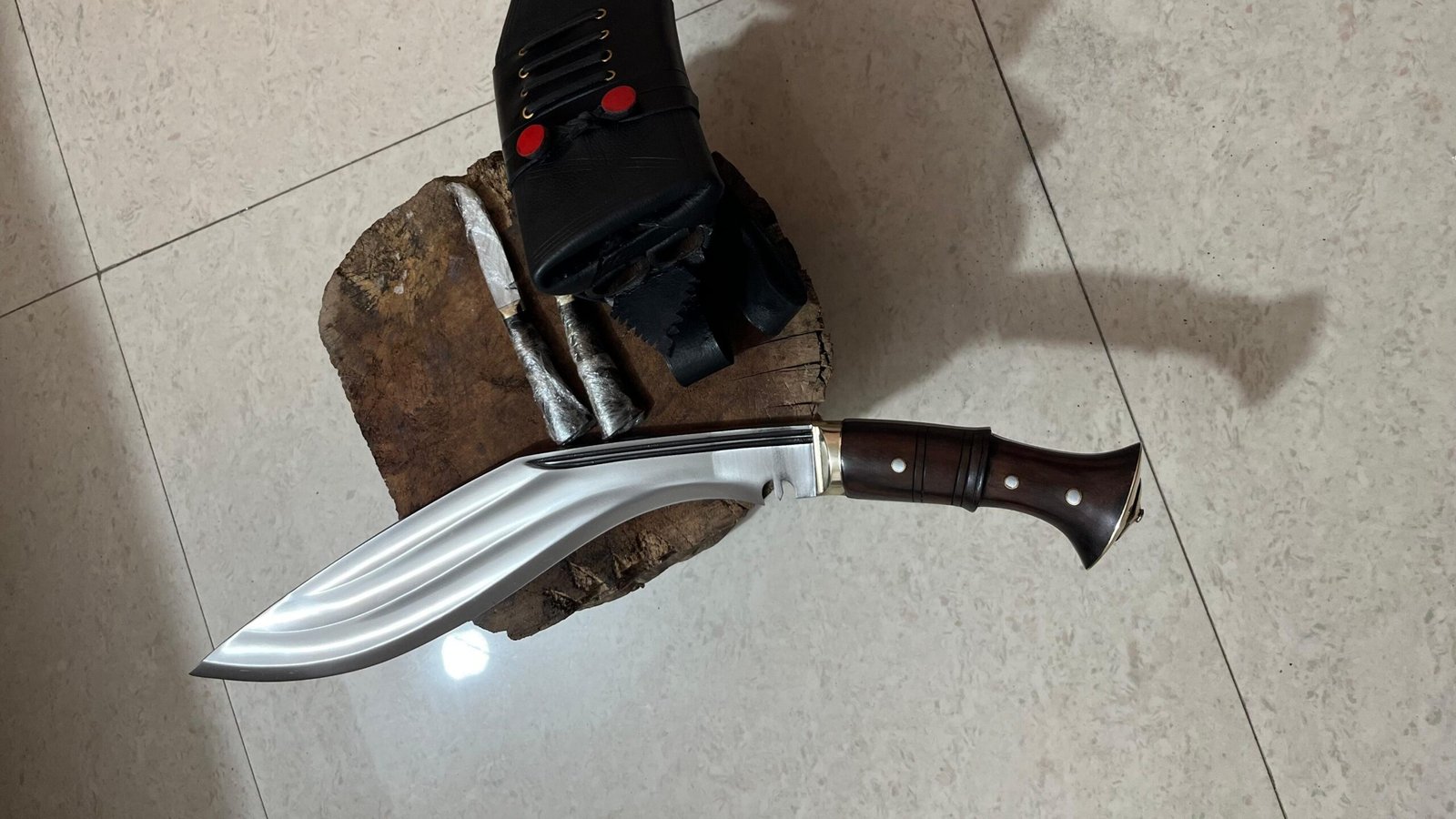
A working kukri weighs about 400 to 600 grams and a quality machete weighs between 350 to 500 grams. This gives a weight differential of 50 to 100 grams that is essentially negligible on a multi-day trip.
A kukri’s weight. The kukri earns that weight by cutting the number of strikes each task needs. A kukri can chop through a 3 inch branch in the time it takes a machete to swing through it three times. Machetes can swing through brush lowland faster, while a kukri is more useful for wood prep at a base camp.
Once again with the terrain analysis! Take the terrain you’re hiking on into account, not the terrain the knife targets, or the terrain the product photos show, when you choose a blade.
The Limbuwan Kukri can be a great mid-weight option for chopping in the wild. If your needs exceed this kukri, consider the M43.
Why Cheap Kukris and Cheap Machetes Fail in Real Use
For $25, you can find a kukri on Amazon. It looks good, but the steel is cheap, the grade is unknown, the heat treat is most likely bad, and the tang is a thin rod glued into a hollow handle. The handle snaps at the bolster after one hard baton strike. This is not just an opinion. We’ve seen this same failure on multiple kukris that we have repaired.
Kukri Knife vs Machete: The Real Cost Over Time
Cheap machetes bend when they hit a hard knot, and lose their edge after the first strike through thick brush. You replace these cheap machetes every year. After three years, the cost of these machetes is more than one good bushcraft blade a smith forged and treated correctly. A good blade should last for generations, and no one should treat it as a disposable product.
In the last three years, we tracked failures of knives with poorly done full tangs. All failures were from companies that mass-produce knives, and continue to cut corners in their production. We have never seen a failure on a properly made full-tang blade fail. The pattern is pretty clear.
What Do the Independent Reviewers Say About Himalayan Blades?
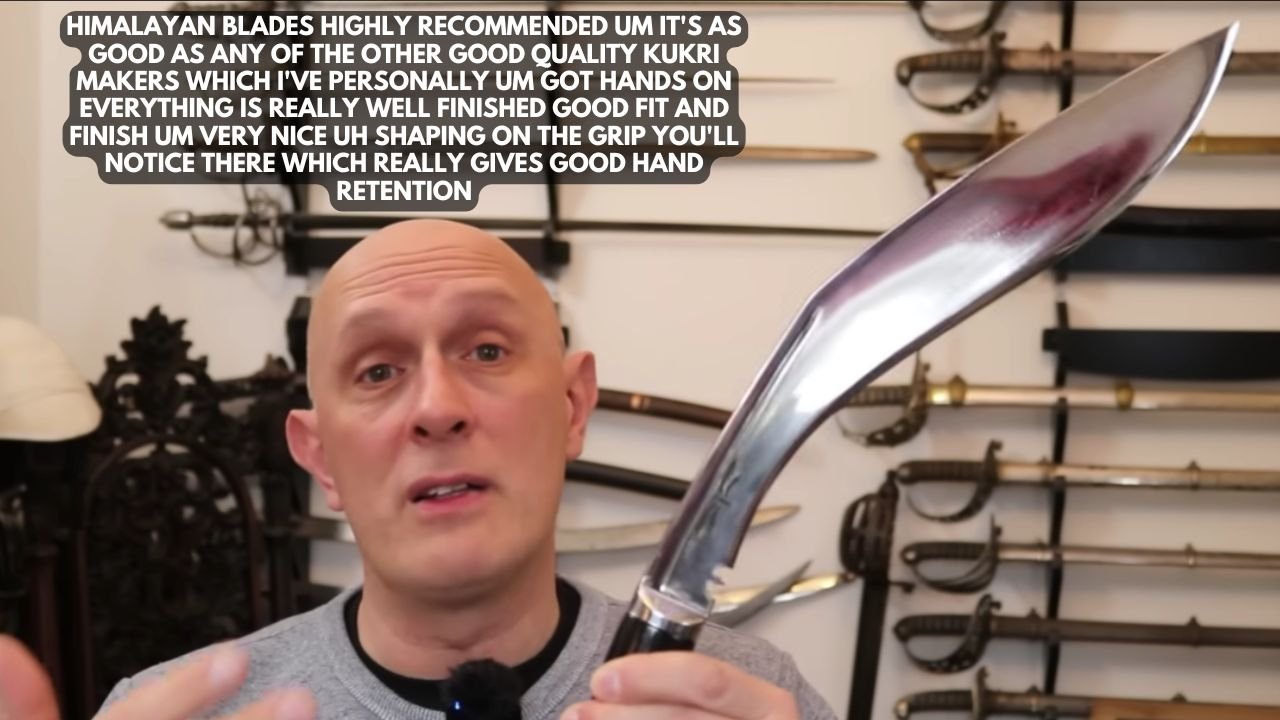
Don’t just take the maker’s word for it. Independent reviews matter because they hold the blades and have no incentive to sell.
One knife reviewer from the UK rated a Himalayan Blades Kukri as one of the best kukris after reviewing multiple quality kukri makers.
He praised the finish and noted that the grip shape gave strong hand retention in use. (YouTube review)
A second reviewer conducted a candid hands-on review of our Neo Hanshee Khukuri and described it as a high-quality, fully functional, traditionally made blade. An American kukri historian revisited our Mk4 pattern, the first standard-issue British Gurkha kukri, in a detailed documentary-style pattern review. Watch the complete video.
Where to Buy Kukri Knives Online: Buy Direct from Himalayan Blades
When you buy a khukuri online through a retail store, you pay a distributor margin and receive a factory blade with no material transparency. You receive no information regarding the steel grade, no HRC data, or the kami’s name. When you buy a kukri knife online through HimalayanBlades.com, you buy directly from the maker. You choose the steel, the handle material, the length, the finish, and the tang style.
Considering the kukri knife price, a genuine 5160 hand-forged blade from Nepal, sits well below comparable production knives from US or European brands, the Gurkha kukri price at Himalayan Blades is absolutely a steal. You get a hand-forged Gurkha knife built to specifications with no distributor margin added.
Ready to buy a khukri directly? Check out the shop, take a look at the Military and Villager Series, or reach out to us for a custom build. Each blade comes with heat-treatment notes and our direct contact to assist you with any inquiries after your purchase.
Kukri Knife vs Machete: FAQ
Is a kukri knife better than a machete for survival?
A kukri is superior to a machete for most tasks when it comes to working in mixed hardwood terrain for shelter and game prep.
For clearing jungle growth, there’s no better tool than a machete. When true survival demands a single blade, a kukri is the better option.
What chopping geometry is best?
The chop geometry is the best for chopping wood. It brings the design of the kukri, which focuses the impact along the spine and belly, the most of the design of the geometry of a kukri over any straight blade of the same size in woods.
Would a kukri be better with 5160 steel instead of steel?
5160 is better than steel when it comes to a kurki. 5160 does better when it comes to tougher steel with better edge retention when it comes to wood. Kukris perform better in 5160 than in generic steel because with the same hardness steel does not go brittle, 5160 also does better when it comes to sharpening and is better for wood than steel.
When you buy a Gurkha kukri, how much does it cost?
You pay for the hand cutting of the 5160 steel kukris made in Nepal for Himalayan Blades. These are not knives you are getting for retail cost. There is no distributor margin. The prices also vary for the different grades of steel, models, different types of handles and how you want to customize it.
Would sharpening a kukri made of 5160 steel be easy in the field?
Yes it would be easy. 5160 is a steel that is easy to sharpen and goes to a basic pocket stone. It is not a harder steel and won’t be as brittle when it comes to going over a 60 HRC. This is a real advantage.