Search Google for “kukri knife price in USA” and be ready for anything. You’ll find a $12 wall hanger above a $400 collector’s knife, both in matching leather sheaths. The search results are ruthless.
Most low-end knives are either tourist traps or Chinese knockoffs. While they often look good in photos, their only functional purpose is to chop firewood before they become a dignified wall decoration.
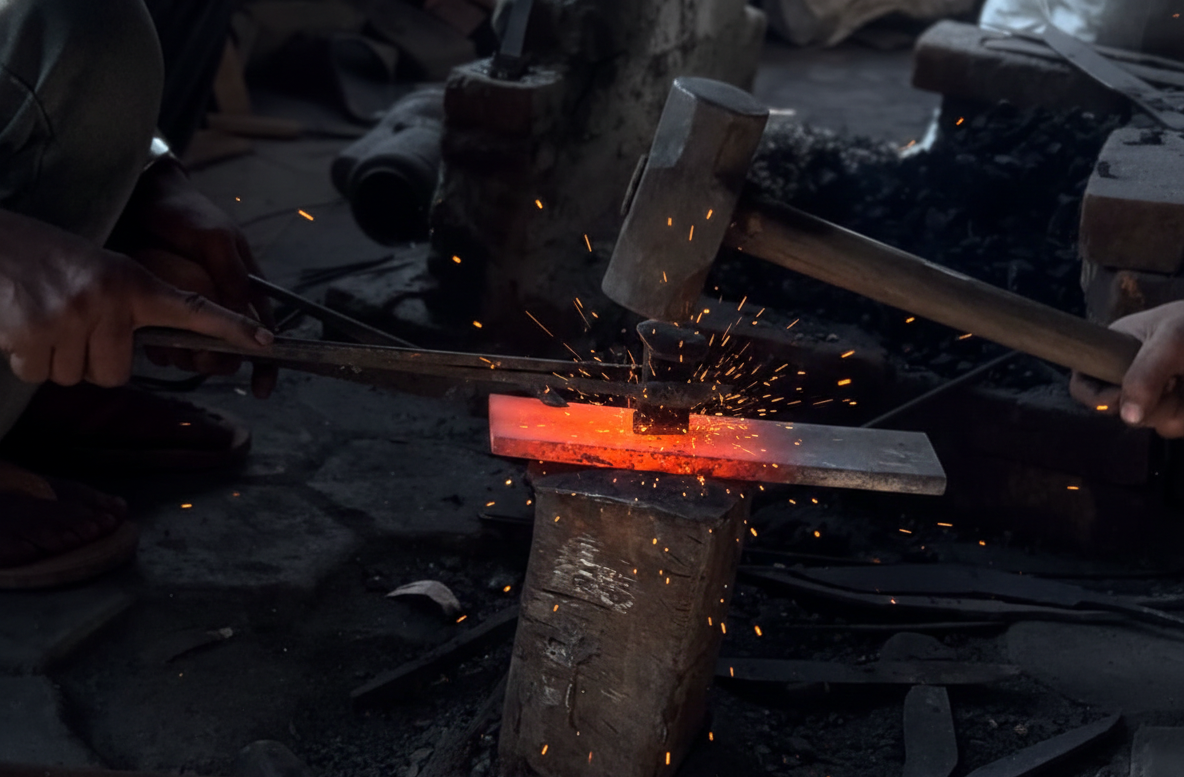
To give you an idea of what the price of a kukri knife in the USA pays for, I’ve been watching Nepali smiths at the coal forge, and I can say with confidence that the low-end prices end with tears.
The USA Kukri Knife Price: The Three Levels
Fairly honestly, kukris can be divided into three price levels in the US market. You have ones you hang up, ones you regret buying, and ones that you pass down to your grandchildren.
| Level | Typical US Price | Steel | Tang | What You Get |
| Tourist / decorative | $10 – $40 | Mild / 3Cr13 (0.30% C) | Rat-tail | Looks awesome, but awful |
| Factory production | $40 – $90 | 420HC / 7Cr17 stainless | Partial or rat-tail | Inconsistent, soft edge |
| Hand-forged Nepalese | $90 – $250 | 5160 spring steel (0.60% C) | Full flat tang | Field ready for decades |
If you look closely, there’s a pattern. The price of kukri knives in the USA typically sees that the more you pay, the better steel and tang you get, along with a knife you can trust to be near.
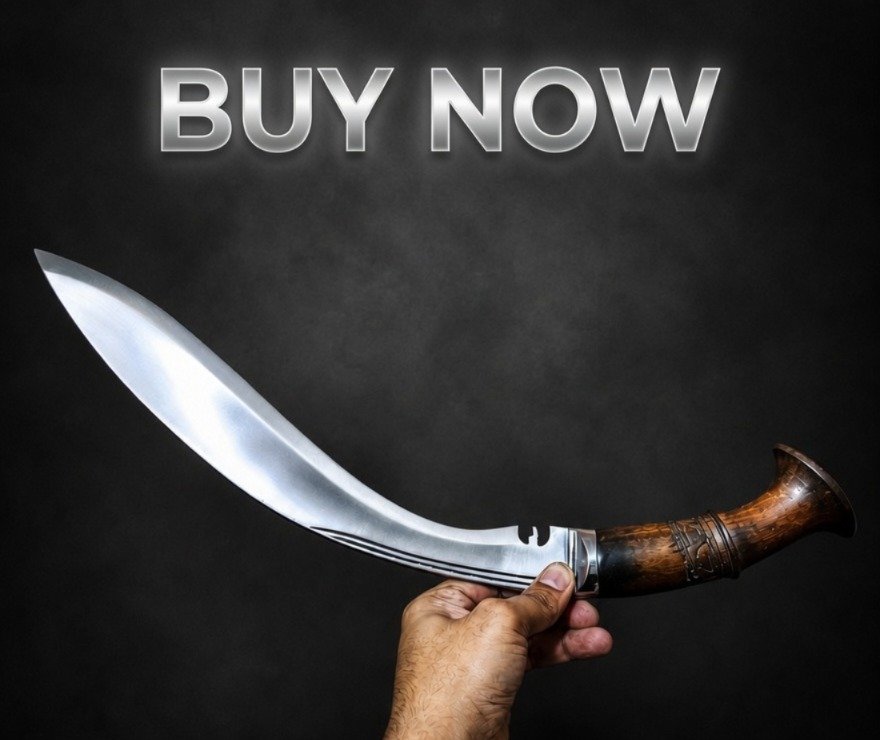
Check our Military Series for full flat tang builds: himalayanblades.com/collections/military-series
Steel: The Portion Inexpensive Competitors Rely On You Overlooking
Here comes the required reading, with a smile. 5160 spring steel contains 0.56-0.64% carbon, 0.75-1.00% chromium, and 0.15-0.30% silicon. Leaf springs are steel that bent with a shock, then returns to its original shape.
Low-quality stainless steel like 3Cr13 contains 0.30% carbon. It easily sharpens and loses its edge just as fast. While under heavy chopping, it also rolls and dents.
When hardened, 5160 has around 55-60 HRC with a spine softer at 40-45 HRC. This split is the key, and the following section will explain.
The Real Difference: Models and the Art of Differential Hardening
In a factory, blades are all stamped to have one uniform hardness. Nepali smiths have other methods: with differential hardening, the edge become hard the spine stays soft.
A factory can stamp blades in 45 seconds. A kami shapes them with multiple heat cycles, oil quenching, and double tempering in a controlled chamber. The file test shows it: the spine offers, and the edge bites.
The Four Models That Are Worth Your Money
MK4 (Mark IV): 11-12 inch blade that is the standard issue Gurkha blade and made for any and all tasks since the 1940s.
M43: a WWII blade with a broad belly designed for heavy chopping and brush clearing.
Sirupate: a slim, fast, blade for precision and field dressing.
Angkhola: a thick, fast, chopper that easily handles bamboo and hardwood.
Check out the Gurkha knives in the Villager Series: himalayanblades.com/collections/villager-series
Why Cheap Hunting Kukri Knives Fail
A hunting kukri is tough as it has to field dress elk, chop a bone, and slice near the organs.
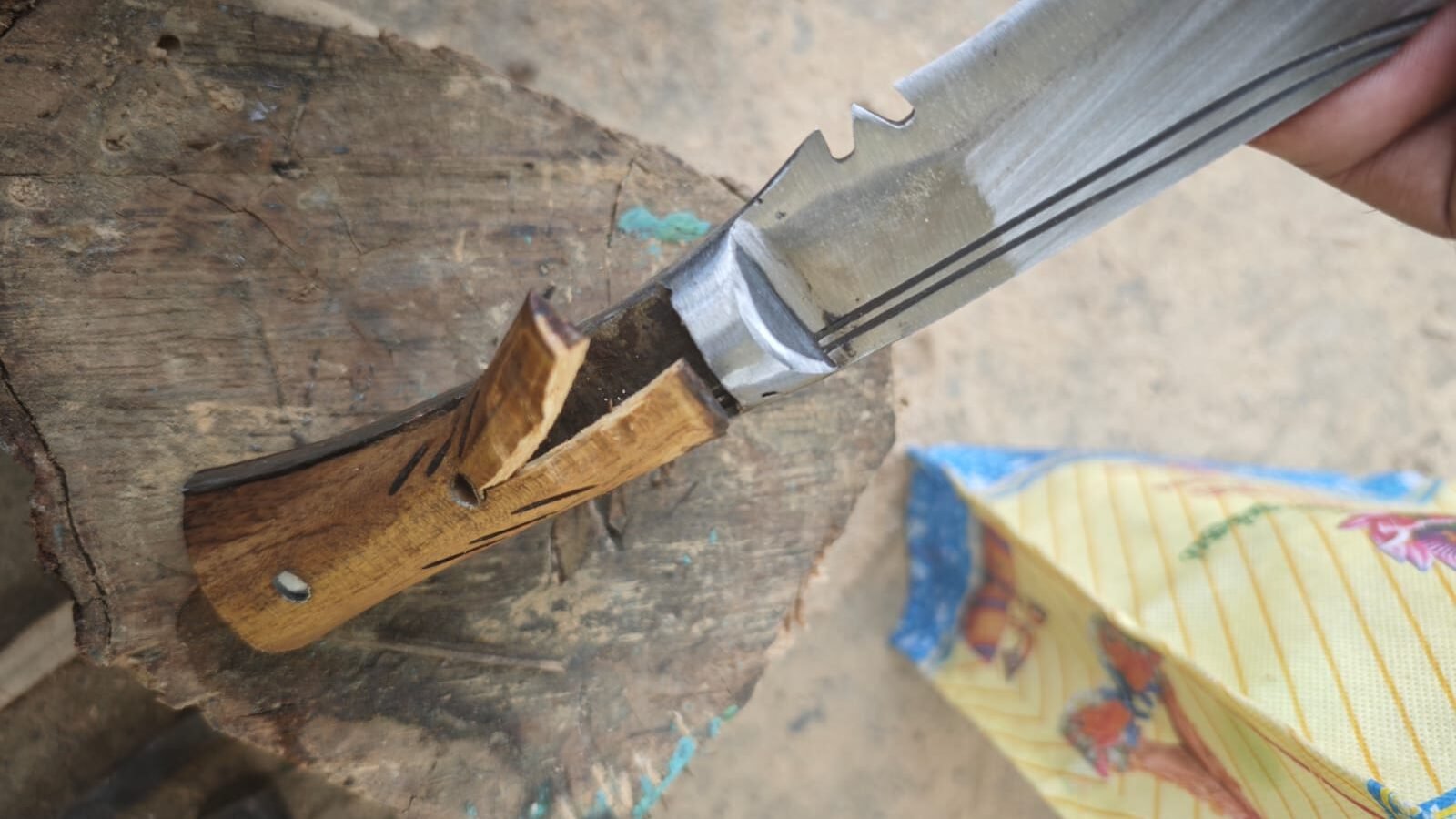
Cheap kukri knives use soft steel and the edges roll before you can even finish the job. The design of cheap kukris is a sideways cut that mimics a piece that is on display.
The Sirupate hunting kukri works best with a polished edge and a full flat tang. We shape the kukris with 15 to 18 degree edges and have handles made from buffalo horn or micarta that can withstand the wet.
Check out all Kukri knives in our shop: himalayanblades.com/shop
FAQs
How much does a real kukri knife cost in the USA?
For a real kukri, you can expect to spend $90 to $250, depending on size and what materials are used to make the steel and the handle. If it is priced at $40 or below, expect it to be a decorative piece.
Why are cheap kukris so cheap?
Low-carbon stainless steel and rat-tail tangs, along with machine stamping, are some of the many cost-cutting measures that cheap kukris use. These all affect the lifespan.
Are kukri knives legal in the USA?
Yes, we can own kukris in all of the states of the USA as they are fixed-blade knives. However, each state and city have their own rules on how you can carry them, so make sure to check your local laws.
Do you always get a better kukri at a higher price?
Not necessarily. The price relates more to the steel, tang, and forging method used. Look for kukris made with 5160 steel, a full flat tang, and a company that lists these details, like we do.
The Bottom Line on Price
A cheap kukri is more expensive in the long run when you have to keep buying replacements. Forging a hand-crafted kukri is the most expensive part of the process and provides a kukri that lasts for years.
This is why the customers of Himalayan Blades choose our hand-forged blades. We do the forging in Nepal, make the steel verifications, provide custom options, and are perfectly clear with our customers regarding what they are buying.
Do you want to buy a truly custom blade? Then, visit the himalayanblades.com/shop site to view our entire collection.
About the Author
The HimalayanBlades team works hand in hand with Nepalese kami blacksmiths and has sourced, tested, and sold kukris for over a decade. Each model is forged with 5160 spring steel and is oil quenched and double tempered and then field tested. We post the details of each model regarding steel, hardness, tang, and handle material, so you buy with open eyes.