
Tired of blades that fail in the field? Every HimalayanBlades kukri ships steel-verified, kami-forged, and ready for real work. Shop now.

What Happens When Searching “Kukri Knife Amazon”?
The first page of Google shows a huge selection of kukri knives for sale on Amazon. Price ranges vary from $15-$180. There are many listings for Gurkha knives and Nepal knife listings. These knives seem almost identical.
The images displayed rarely match the actual product. You cannot verify the labels either. Furthermore, most consumer reviews offer little use since most customers leave a review without ever testing how the kukri knife performs in demanding situations.
As a result, there is a 3-category problem on Amazon you should know about before buying a kukri knife. These categories explain why customers expecting a real tool so often receive the wrong blade.
Category 1: Tourist Kukris
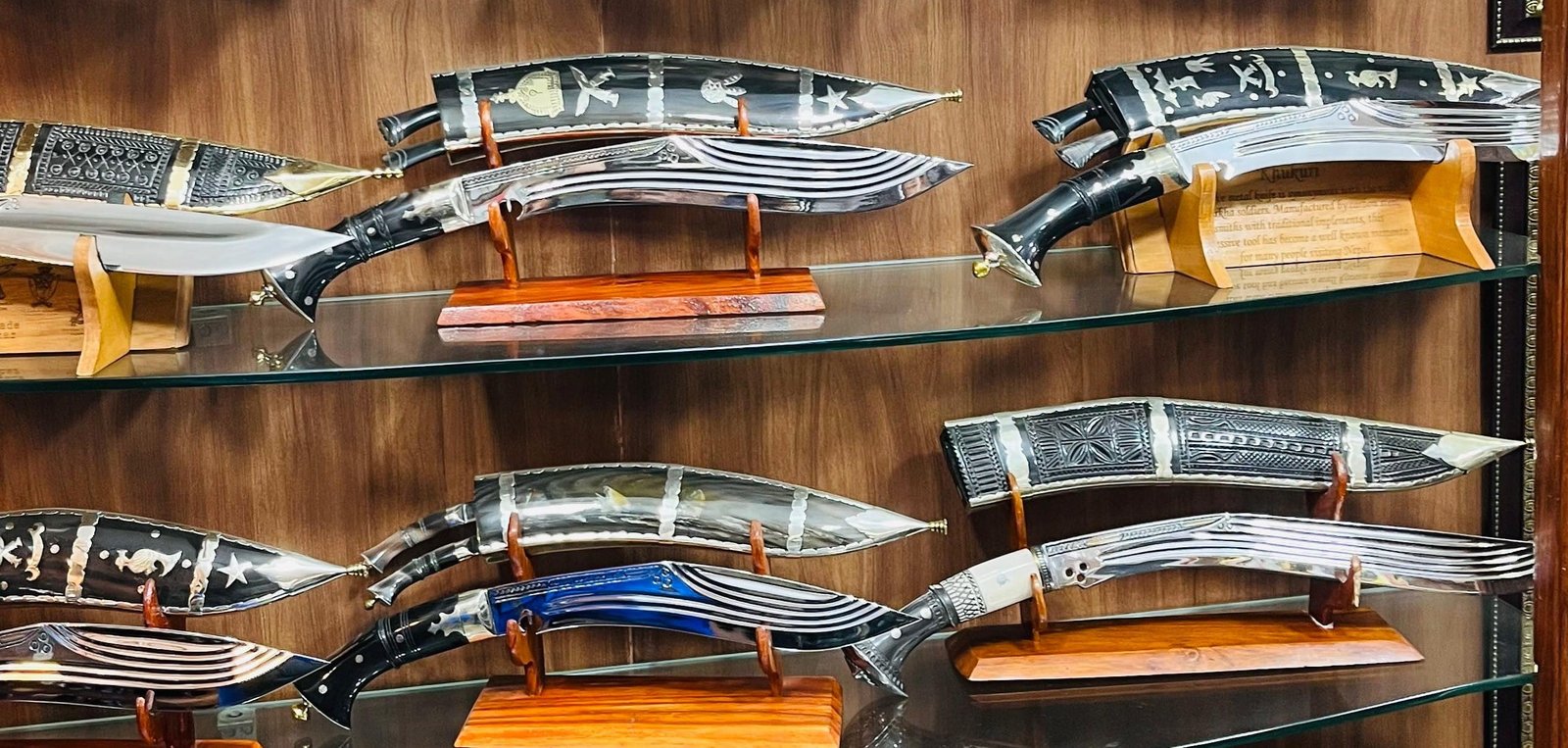
These are souvenirs from Thamel, Kathmandu. Sellers market them as “authentic” field blades, photograph them professionally, and pair them with a leather sheath.
The materials, including the steel, have poor quality and remain unverified. The handle fits loosely, and although the blade edge mimics the look of a working kukri, it fails to perform the same way a real kukri would.
These knives make for great decorations, but do not serve a real function.
Steel grades in this category include 3Cr13 at 0.30% carbon, 7Cr17 stainless, and sometimes 420HC. Under continual chopping loads, these steels lose their edge retention quickly. On top of that, their impact toughness falls short for serious field use.
The construction typically pairs a rubber or synthetic handle with a small amount of adhesive or a single pin. Worse still, the tang is a narrow rat tail.
Category 2: Mass-Produced Factory Kukris
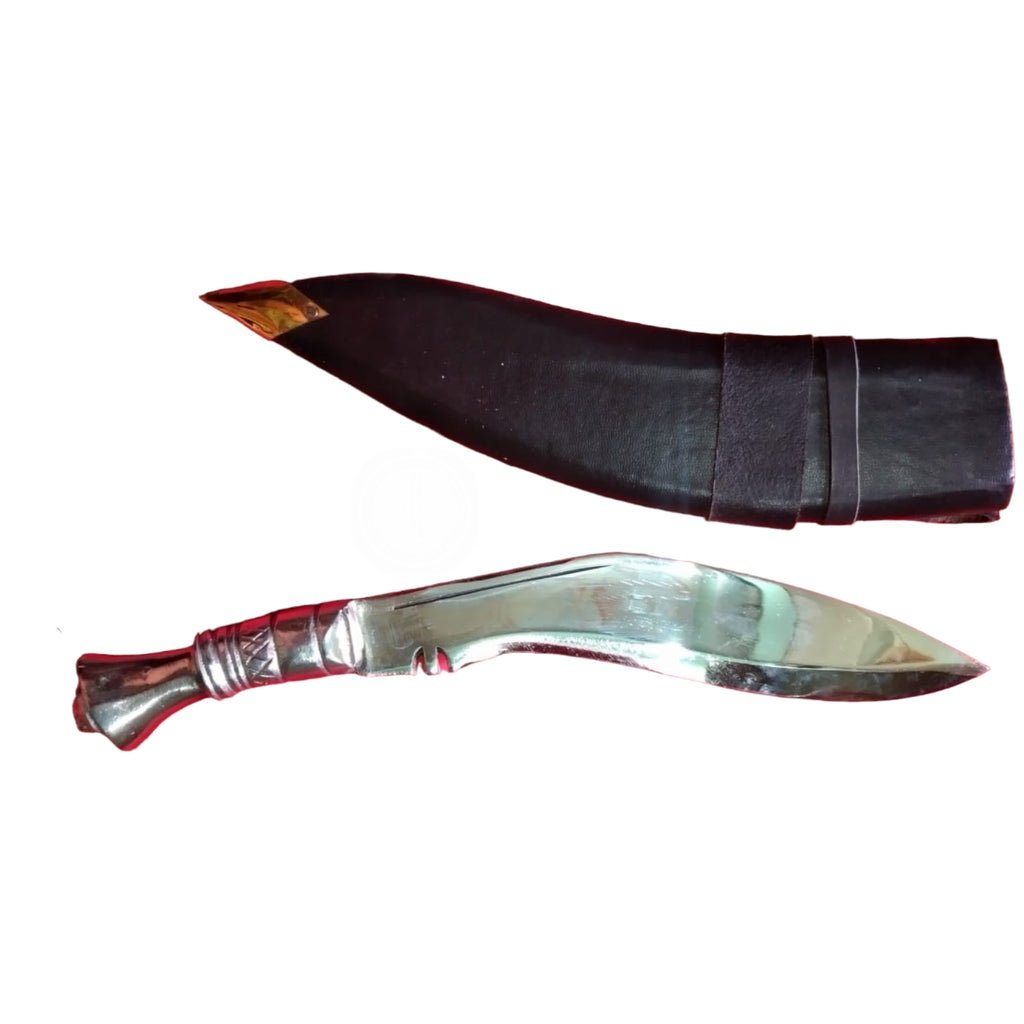
These come from production lines in India, China, and some contract workshops in Nepal, forced to meet Amazon’s price targets. As a result, manufacturers cut corners on steel quality, heat treatment, and finishing.
Steel grades here include 3Cr13 at 0.30% carbon, 7Cr17 stainless, and occasionally 420HC. Under chopping loads, these steels lose their edge fast. On top of that, the handle connects to a narrow rat-tail tang with adhesive or a single pin. These are punched from steel sheet, bevels added and then wooden handle sandwiched around the tang. The sheaths are often made of artificial fake leather or Rexine.
These are tools built to a price, not a standard. They fail in months.
Category 2: Hand-Forged Functional Kukris
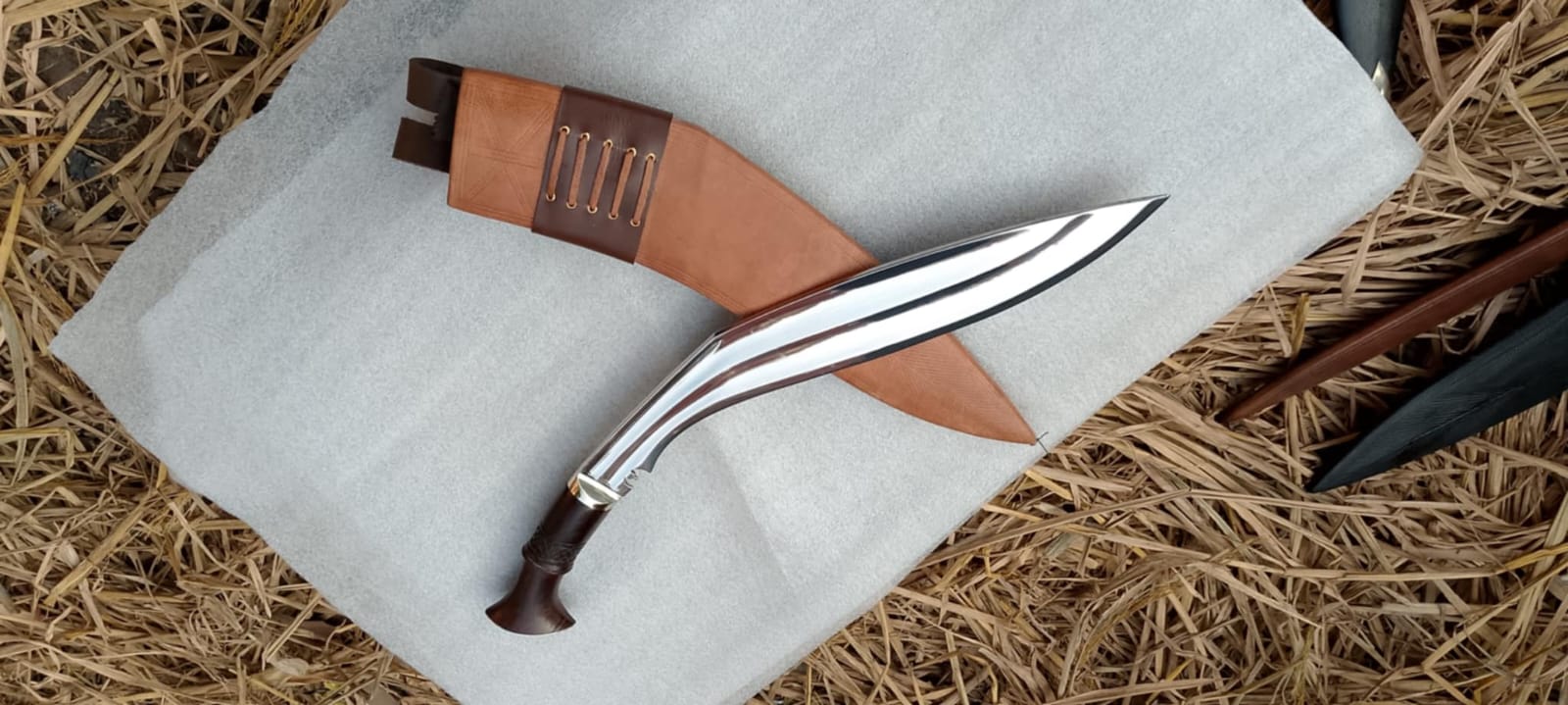
This is the category for survivalists, hunters, martial artists, and serious collectors. Notably, the steel grades here include 5160 spring steel, 1095 high carbon, and D2 tool steel. The tang runs either full or full-flat through the entire length of the handle. Because makers design the blade geometry for a specific purpose, it holds up to real-world use.
This category is truly rare on Amazon. Even when it does show up, you have little to no way to determine the quality from a product listing, since sellers usually provide no supporting documentation.
Therefore, if you want to confidently purchase a khukuri online, you have to buy from a seller who has direct access to the source.
[ Insert image: Tourist vs factory vs hand-forged kukri comparison ]
The Hidden Construction Flaw Breaking Amazon Kukris
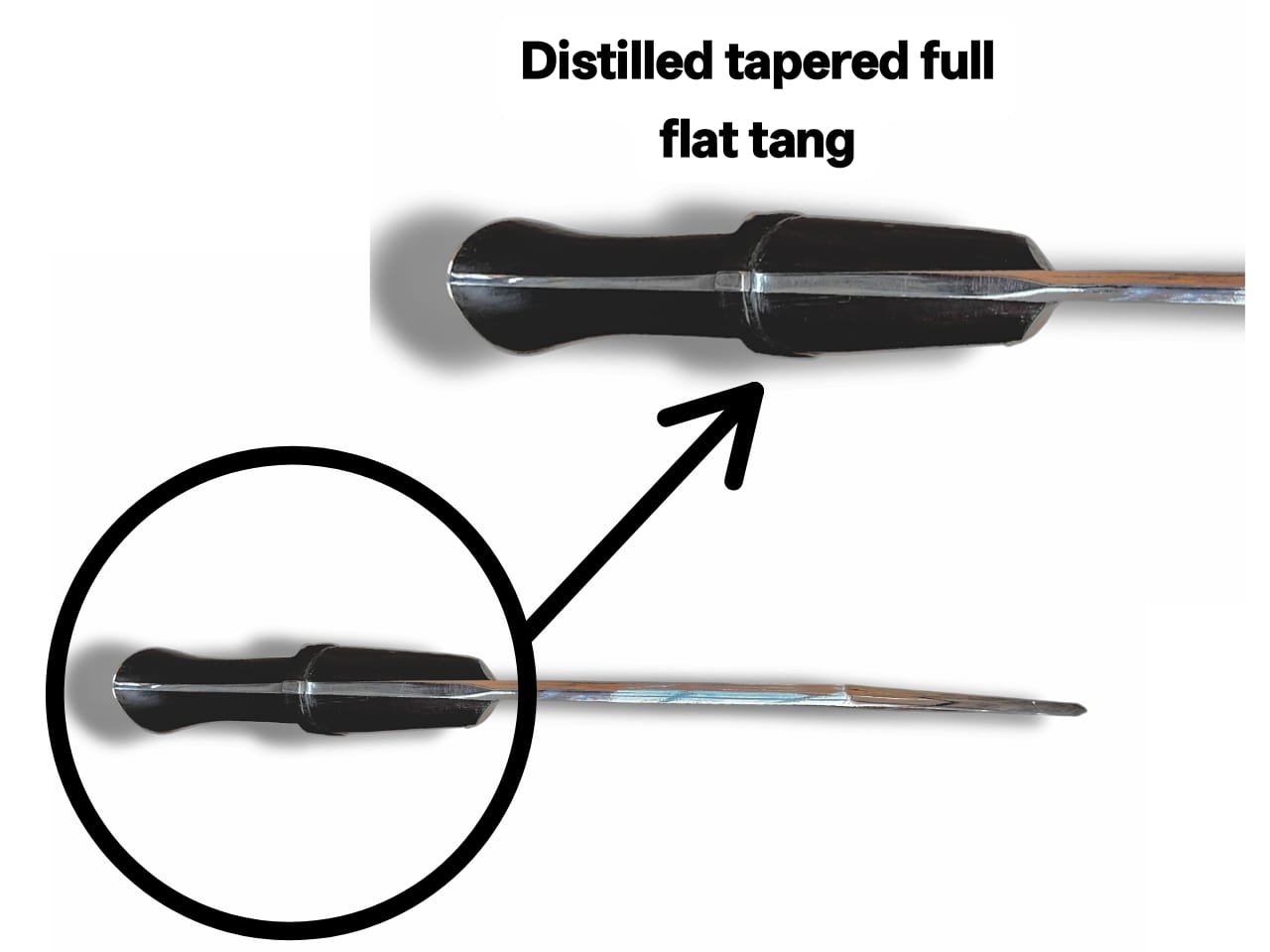
The tang is the most important structural element of a fixed-blade knife. It is the portion of steel extending from the blade into the handle. Unfortunately, Amazon sellers hide this element behind rubber grips and vague product descriptions.
Full-Flat Tang: What You Need to Know About Field Tools
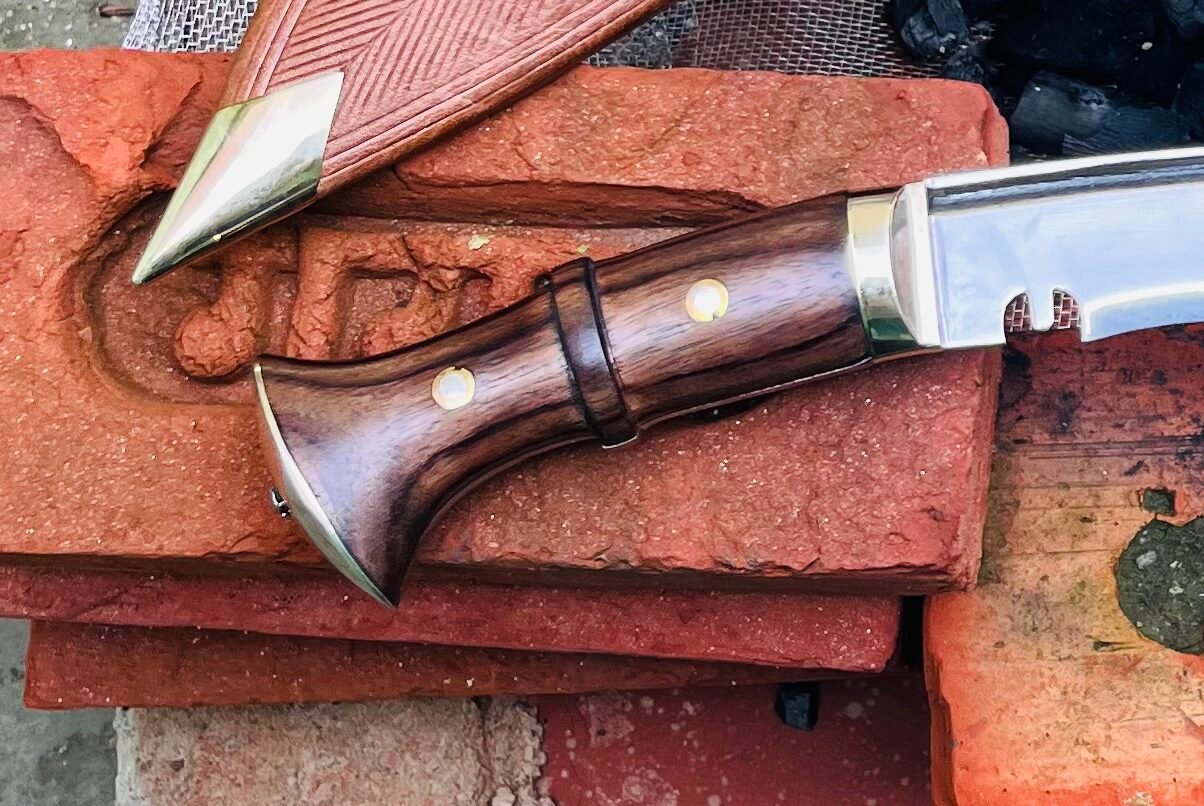
Full-flat tang construction runs the blade material the full length and full width of the tang. As a result, the blade and handle hold together far more strongly and resist failure better. The scales accept various materials, and they distribute impact across the whole grip.
Consequently, this construction withstands prying and heavy impacts with ease.
Rat-Tail Tang: Why Handle Construction Matters
Rat-tail tangs consist of a narrow length of tang material fitting into a hollow handle. While this construction works for kitchen knives designed for light cutting, in kukris, it becomes a clear failure point.
In practice, the construction cannot withstand the effect of chopping on every stroke. The loose grip that follows proves fatal in a field tool. Eventually, the blade fails outright.
Every kukri sold by HimalayanBlades features full or full-flat tang construction. The steel traverses the complete length of the handle, and you feel the solid construction the moment you first grip the tool.
Steel Grade Masterclass: The Specific Numbers Everything Else Gets Wrong
Steel is not the same across grades. A blade at 0.30% carbon and one at 0.60% sit in completely different performance categories for impact and field use. For this reason, the steel grade ranks among the most important factors that determine whether a blade survives the field.
| Steel Grade | Carbon % | Key Alloying Elements | Hardness (HRC) | Edge Retention | Impact Toughness | Typical Use |
| 3Cr13 (stainless) | 0.30% | 13% Cr | 52-54 | Low | Low | Budget factory kukris |
| 7Cr17 (stainless) | 0.70% | 17% Cr, 1% Mo | 54-58 | Medium-Low | Low-Medium | Mid-range Amazon imports |
| 420HC (stainless) | 0.45% | 13% Cr | 54-57 | Medium-Low | Low | Mid-tier import blades |
| 1095 High Carbon | 0.95% | 0.4% Mn | 57-60 | High | Medium | Entry-level working blades |
| 5160 Spring Steel | 0.56-0.64% | 0.75-1.00% Cr, 0.15-0.30% Si, 0.75-1.00% Mn | 55-60 | High | Exceptional | Military and field kukris |
| D2 Tool Steel | 1.50% | 11-13% Cr, 0.70-1.20% Mo | 60-62 | Exceptional | Medium | Precision cutting blades |
Why 5160 Spring Steel Is the Industry Standard for Kukris
5160 spring steel has a number of significant additions. 0.56-0.64% carbon aids in hardness and edge retention. 0.75-1.00% chromium aids in wear and corrosion resistance, while 0.15-0.30% silicon is the modifying additive. This silicon provides flexibility and the ability to return to shape after deformation.
For this reason, automotive engineers also use this grade of steel for leaf spring suspension systems. 5160 is able to take repeated high-stress impacts without permanent deformation, a scenario also seen in impacts of a kukri against a grown tree, a bone, or other dense materials.
Bordering on brittle, high-carbon steel deforms and chips under lateral stress, while low-carbon steel resists deformation but fails to hold an edge. Neither of these issues exists with 5160.
Differential Hardening: Hand-Forged Kukris vs. Mass-Produced Kukris
Heat treatment defines blade performance as much as steel selection. In fact, this is the specific technical area where hand-forged kukris separate completely from factory production.
In factory production, kukris go through uniform heat treatment: the entire blade reaches the same hardness throughout. On one end of the spectrum, a uniformly hard blade at 58 HRC chips under lateral stress because the spine has no tolerance for flex. On the other end, a uniformly soft blade at 45 HRC holds structural integrity but loses edge geometry fast under sustained cutting.
At HimalayanBlades, by contrast, every field kukri goes through a specific heat treatment method involving oil quenching followed by a double-temper cycle. As a result, the spine reaches a hardness of 40-45 HRC, soft enough to absorb shock and allow some lateral bending during intensive chopping. The edge, however, reaches 55-59 HRC, hard enough to hold a cutting edge for long periods.
Through this method, known as differential hardening, the spine and cutting edge of a blade achieve different levels of hardness during the heat treatment process by varying the temperature of the regions of the blade. Because of the skill required, it takes years of dedicated training to execute consistently.
What Reviewers and Testing Experts Have to Say About Blades
In documenting his approach to blade selection on his website, former professional instructor Paul Kirtley has extensive field experience testing dozens of cutting tools in the wild. He focuses on the aspects of steel and heat treatment. Kirtley writes, “a well-alloyed blade with poor heat treatment will perform below a simpler steel [blade] treated with genuine skill and care.” Kirtley incorporates his extensive field experience with cutting tools in his field-based courses.
This opinion is further supported by survival trainer Dave Canterbury, who built on his experience of testing working blades in the field with over 20,000 students, and on his video instruction. Canterbury explains that full-tang construction and steel grade are the minimum requirements for a blade that will withstand the stresses of the field. Construction shortcuts will have handle failure and edge failure.
The independent blade review space corroborates Canterbury and Kirtley. Skallagrim (Nicklas Johansson), a blade reviewer with over 2.3 million subscribers on YouTube, adopts a functional approach to testing blades beyond aesthetics, and in a comparative blade test series, claims that blade edge geometry and heat treatment are the primary differentiators in performance, with blades in the same price range exhibiting vastly different performances. The results of his numerous tests support his claims, which are also aligned with the broader field of metallurgy, that heat treatment and blade edge geometry play the largest role in a blade’s performance.
The publishing industry adds independent market data to these field findings. For instance, KnifeNews.com independently audited the Amazon kukri listings and identified sellers who repeatedly misrepresented their steel. Their team independently tested and documented bogus claims about blades sold as 1095 and 5160. In numerous instances, these blades fell into the 3Cr to 420HC stainless steel range.
The Four Authentic Models: Real Gurkha Kukris Built for Specific Tasks
The authentic Nepali kukri comes in several models, each serving a specific purpose and differing from the others. By knowing these distinctions, you can select the correct model for your specific application.
The MK4 (Mark IV): The Standard-Issue Gurkha Blade
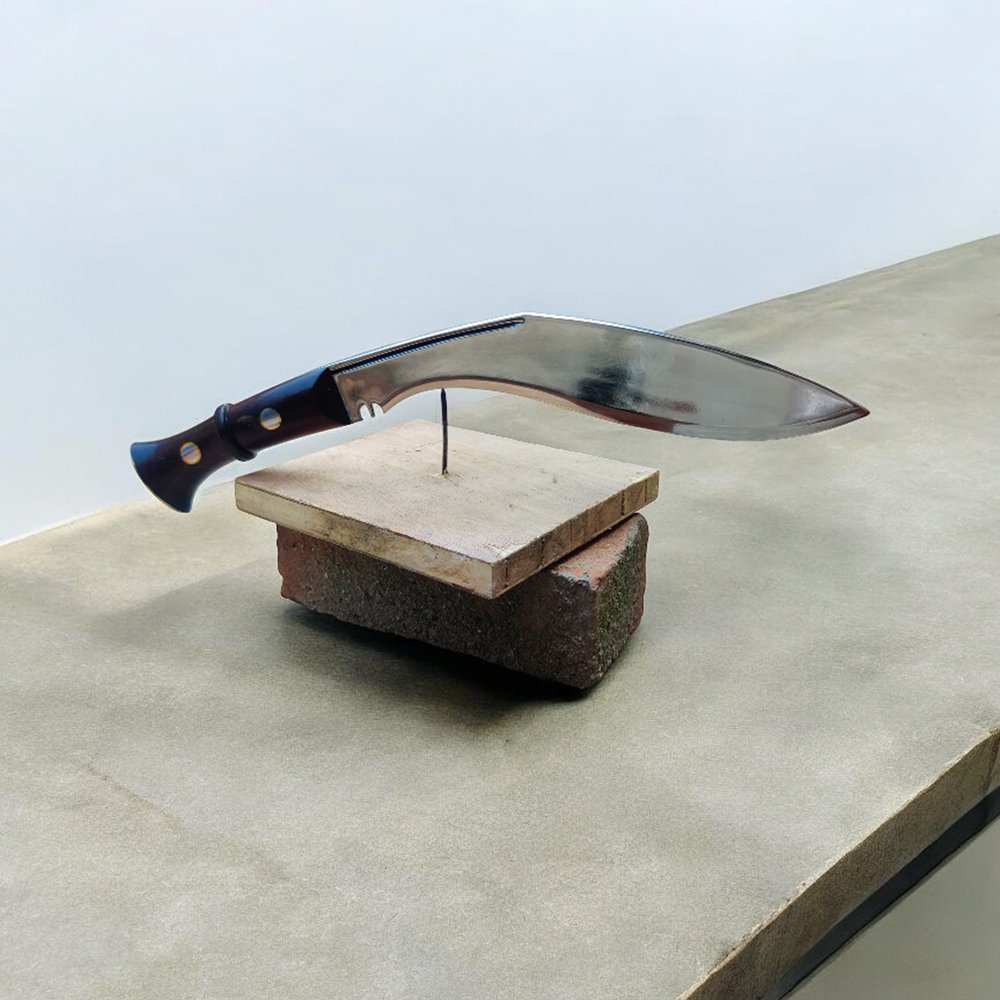
The MK4 has held standard-issue status with the British Gurkha Regiments since the 1940s. Its blade measures between 11-12 inches with a 6-8mm thickness at the ricasso. Notably, the recurved profile concentrates weight, which maximizes its striking and chopping ability.
The MK4 kukri is the most versatile kukri currently produced and seamlessly transitions between tasks, even in the most difficult field conditions, without the need for further tools.
Explore the HimalayanBlades MK4: Buy MK4 Kukri Blade – Hand-Forged Military Knife | Himalayan
The M43: Proven in World War II Combat
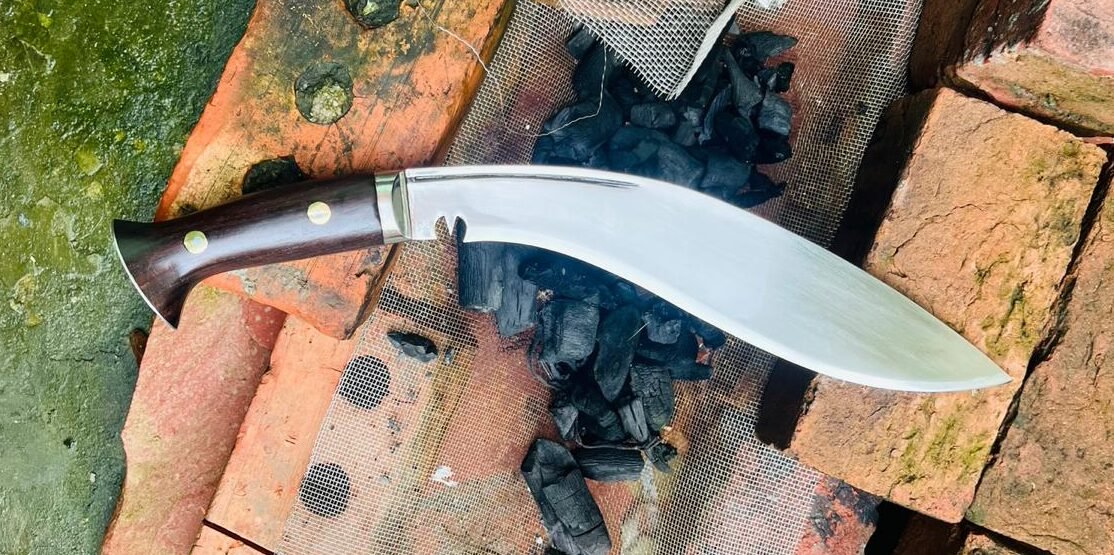
The M43 dates to a World War II design that the army issued to Gurkha troops in the Southeast Asian campaigns. Its blade runs slightly shorter than the MK4, yet carries a bulging belly and a more aggressive recurve. As a result, the M43 excels at chopping and splitting wood, as well as clearing dense brush.
Explore the HimalayanBlades M43: himalayanblades.com/collections/military-series
The Angkhola: Built to Dominate One Task
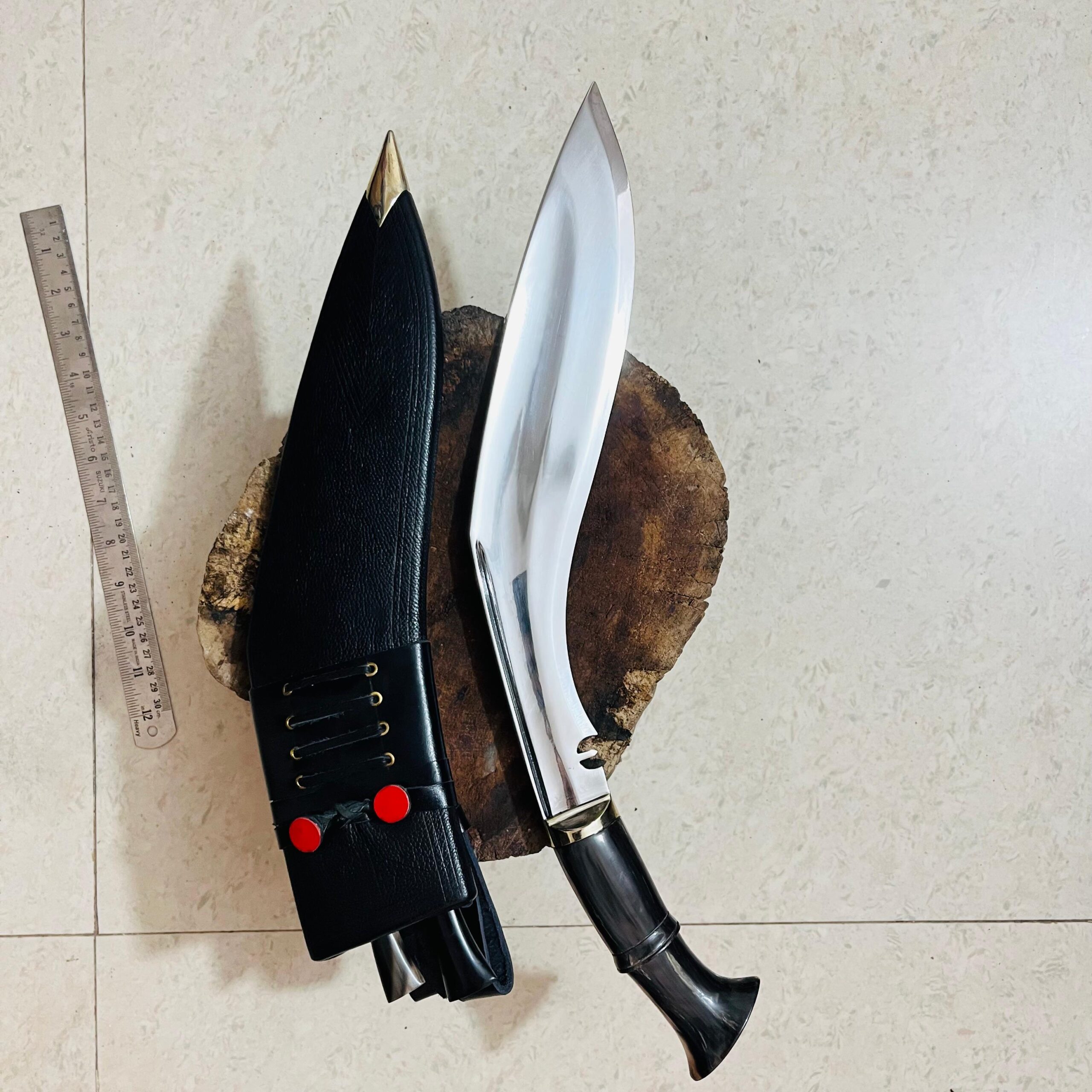
The Angkhola is an aggressively forward-weighted, thick-spined, and wide-bladed kukri with a heavy-duty chopping design. This blade laughs at bamboo, hardwood, and even dense brush, continuing to dominate all three after extended periods of use.
Explore the HimalayanBlades Angkhola: Buy Angkhola Kukri – Hand-Forged Traditional Blade | Himalayan
Hunting Kukris: Amazon’s Biggest Miss
The hunting kukri is a unique blend of field durability and precision processing. In practice, Kukri knife on amazon exhibit a total failure of this blend.
A hunting blade must field-dress an entire deer or elk without edge-deterioration. Clearly, to accomplish this, the desired blade geometry combines a sweeping belly with a thick spine and a fine edge. The fact is that it is very difficult to find actual handmade kukri knife on amazon.
Amazon kukri Knife fall short in two primary ways. First, they use soft steel, which leads to edge rollover before the animal can even be field dressed. Second, their blade design copies a display piece almost exactly. Because of this, the edge angle works poorly for slicing. On top of that, the poorly distributed weight means the blade fails even at chopping.
The Sirupate, by contrast, suits hunting perfectly. The Sirupate builds from Himalayan Blades show what a purpose-built hunting kukri looks like. They feature a refined edge geometry between 15 and 18 degrees per side, plus thicker cross sections at the distal end. Moreover, they carry a tang that runs entirely through the handle and holds up in wet conditions.
Himalayan Blades uses buffalo horn and Micarta in their handles. Both materials outlast rubber and synthetic handles, especially in wet conditions. This matters greatly for a kukri that has to perform out in the wilderness.
If your goal is to find a kukri built for hunting, then the 5160, polished edge Sirupate by Himalayan Blades is your best bet.
How Hand-Forging Works: 4-5 Hours vs. 45 Seconds
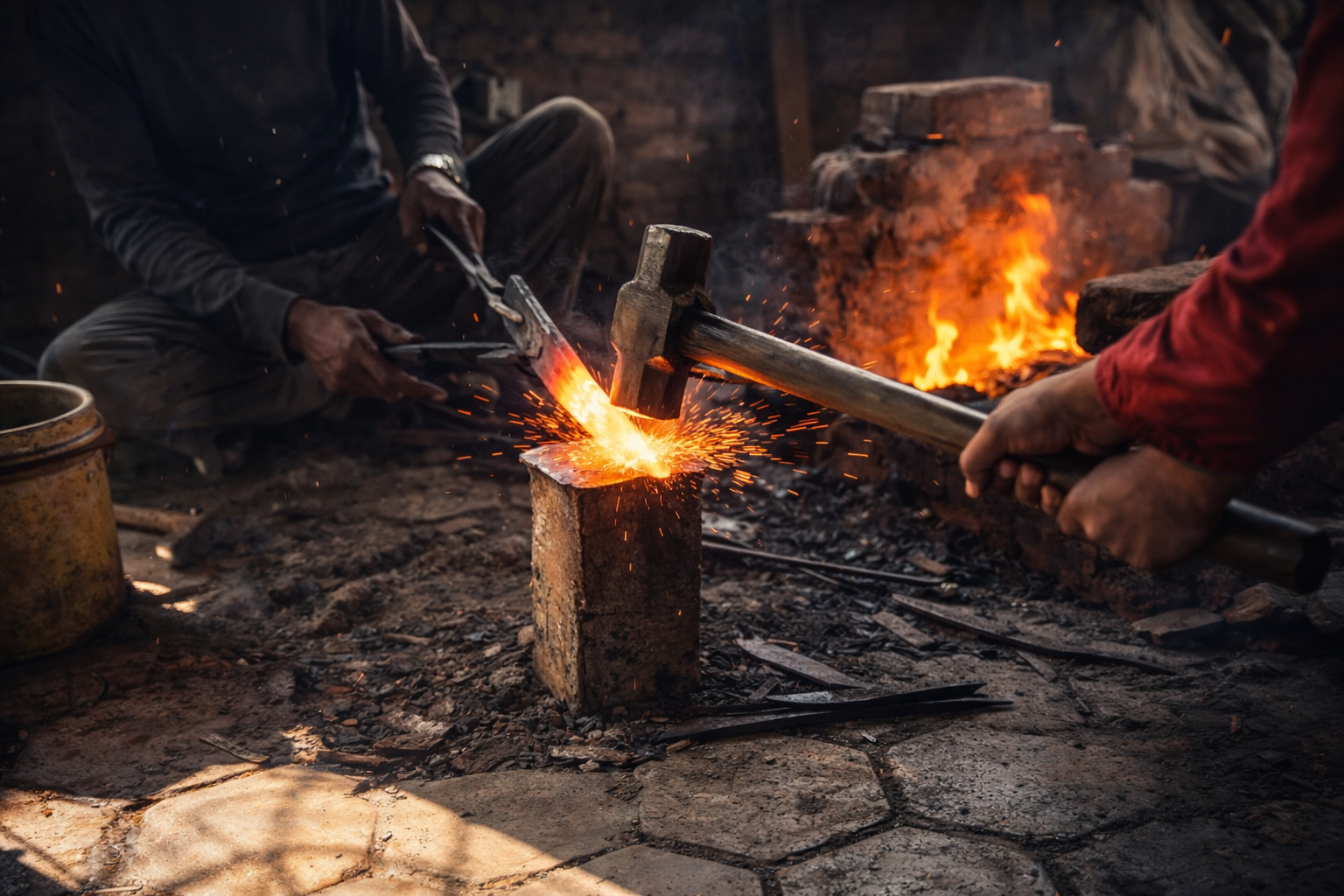
First, a kami puts the bar in a coal forge until it reaches around 800-900 degrees Celsius. Using a hand or power hammer, he then shapes the blade through many heat cycles. Through hand, eye, and decades of trained experience gained from working with senior kami, he sets the recurved profile, thick spine, and forward-weighted design.
Next, he uses a water-cooled stone wheel to grind the bevels. He sets the edge geometry by manipulating the wheel, adjusting the bevels based on the steel’s response.
After that, the blade goes through normalizing in the forge, an oil quench, then a double temper in a calibrated oven. To check the edge’s hardness, he tests it with a file. When the edge stays sharp and the spine flexes, the test passes.
With the aid of a factory press, a machine can stamp out a blank kukri in 45 seconds.
By contrast, a kami’s hand-forged kukri takes 4 to 5 hours of skilled, sequential work, and that is before carving out the fine shape with added fullers or hollow forge.
Ultimately, the production time difference is the performance difference you feel in every field session.
The True Cost Comparison: Annual Expense Over a Blade’s Real Lifespan
The checkout price is not the total cost of buying a kukri knife. Replacement frequency changes every calculation.
| Price Point | Source | Steel Grade | Tang Type | Production Method | Avg Service Life | Est. Annual Cost |
| $15-40 | Amazon import | 3Cr13 / unknown | Rat-tail | Machine stamped | 3-6 months | $60-160/yr |
| $40-80 | Amazon mid-tier | 420HC / 7Cr17 | Rat-tail or partial | Machine stamped | 6-12 months | $40-160/yr |
| $80-150 | Amazon “premium” | Mixed, unverified | Full or partial | Varies | 1-3 years | $50-150/yr |
| $90-200 | HimalayanBlades | 5160 spring steel | Full flat tang | Hand-forged Nepal | 10-30+ years | $6-20/yr |
A $40 Amazon kukri failing in six months costs $80 annually at minimum. A $120 HimalayanBlades blade maintained with basic oiling and annual sharpening costs under $10 per year of field service across its full lifespan.
The economics favor the hand-forged blade at every price point comparison across any multi-year window.
Who Gets the Most From a HimalayanBlades Kukri and not Kukri Knife on Amazon
Survivalists and preppers need structural integrity for wood processing, camp tasks, and emergency field situations. For them, the 5160 full-flat-tang MK4 and Angkhola address this profile precisely.
Martial artists and self-defense practitioners training in Nepalese kukri systems need authentic blade geometry. Because factory and tourist kukris carry incorrect balance points and grind angles, they teach the wrong habits. By contrast, a proper Sirupate or MK2 builds accurate technique and muscle memory from the first session.
Meanwhile, blade collectors building authenticated Nepalese collections need provenance and verified production documentation. To meet this, HimalayanBlades provides direct kami sourcing with full specification records on every piece in the catalog.
Finally, hunters and bushcraft practitioners need a field tool, not a decoration. The Sirupate and M43 both perform as working field blades across terrain types and weather conditions without failing under load.
When you are ready to purchase a khukuri online from a source with documented steel verification and direct Nepal sourcing, browse the full catalog at HimalayanBlades.com/shop.
Frequently Asked Questions
Q: How do I maintain a 5160 steel kukri to prevent rust?
Clean the blade with a dry cloth after each use. Then apply a thin coat of mineral oil or camellia oil to the entire blade surface to block oxidation. When sharpening, use a whetstone at 15-20 degrees per side. For extra protection, a forced patina applied with ferric chloride adds long-term corrosion resistance without affecting cutting performance.
Q: What is the difference between a khukuri and a kukri?
Khukuri is the traditional Nepali spelling, while kukri is the anglicized form that British military documentation adopted. Both refer to the same recurved, forward-weighted Nepalese blade.
Q: What is differential hardening, and why does it matter for a working blade?
Differential hardening is a heat treatment method where the spine and edge of a blade reach different hardness levels. Specifically, the smith treats the spine to 40-45 HRC for shock absorption and flex, while hardening the edge to 55-60 HRC for cutting performance and retention. As a result, the blade resists both edge chipping and spine bending under the same impact load simultaneously.
Q: Where is the best place to buy a kukri knife online?
Buy direct from Nepalese source manufacturers who publish their steel specification, tang type, and forging method. HimalayanBlades.com sources every blade directly from kami blacksmiths in Nepal with full documentation on each piece. This removes the verification problem entirely and guarantees you receive the blade specification listed.